They aim to take the unmanned aviation market by storm this year. As they say, their core competency is combining the advantages of two systems. We spoke with Quantum Systems, and they answered our 7 questions.
- Who are you and what do you do? Please briefly introduce yourself and your product!
Quantum Systems specializes in the development and production of unmanned transition aircraft for civil applications. The core team consists of Dipl.-Ing. Florian Seibel (37), Dipl.-Ing. Tobias Kloss (38), and Dr.-Ing. Michael Kriegel (40). We met in 2009 as research associates at the Bundeswehr University Munich. During our work at the Chair of Flight System Dynamics, we were able to gain valuable experience in the field of unmanned aircraft systems (training, services, aircraft, autopilot, sensor integration, ground control station).
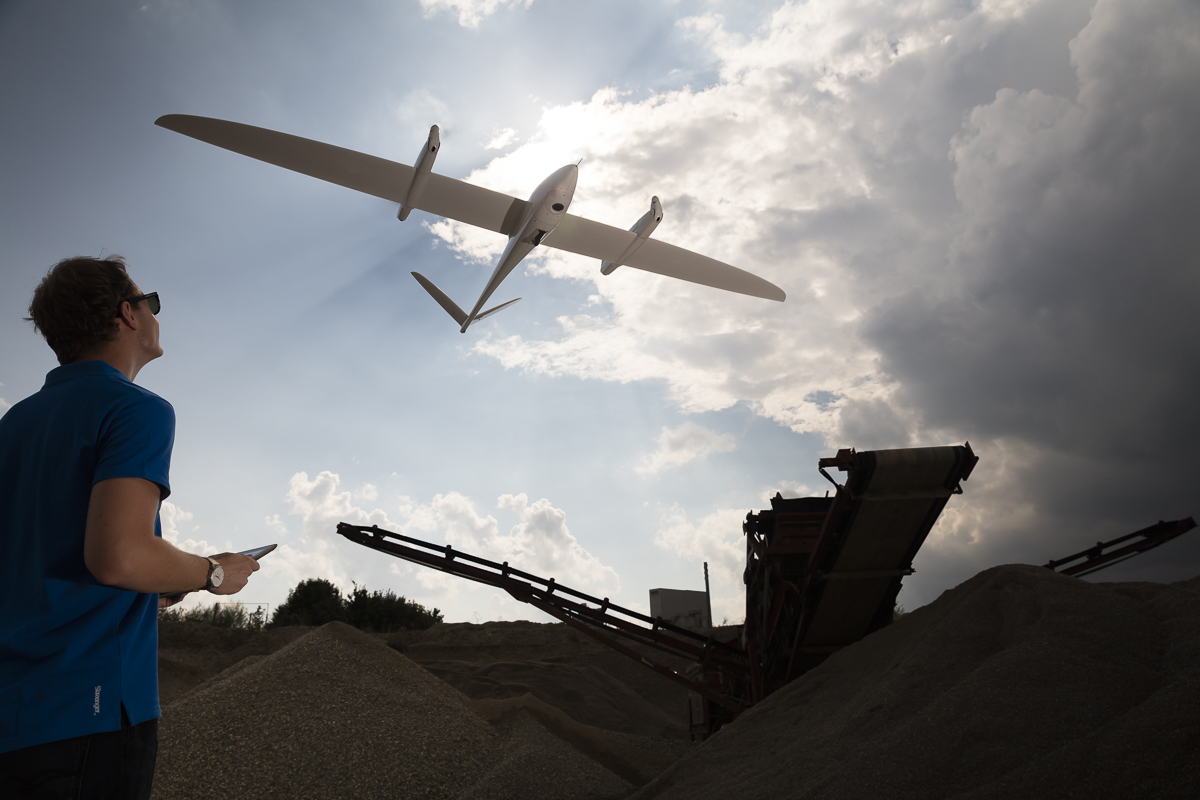
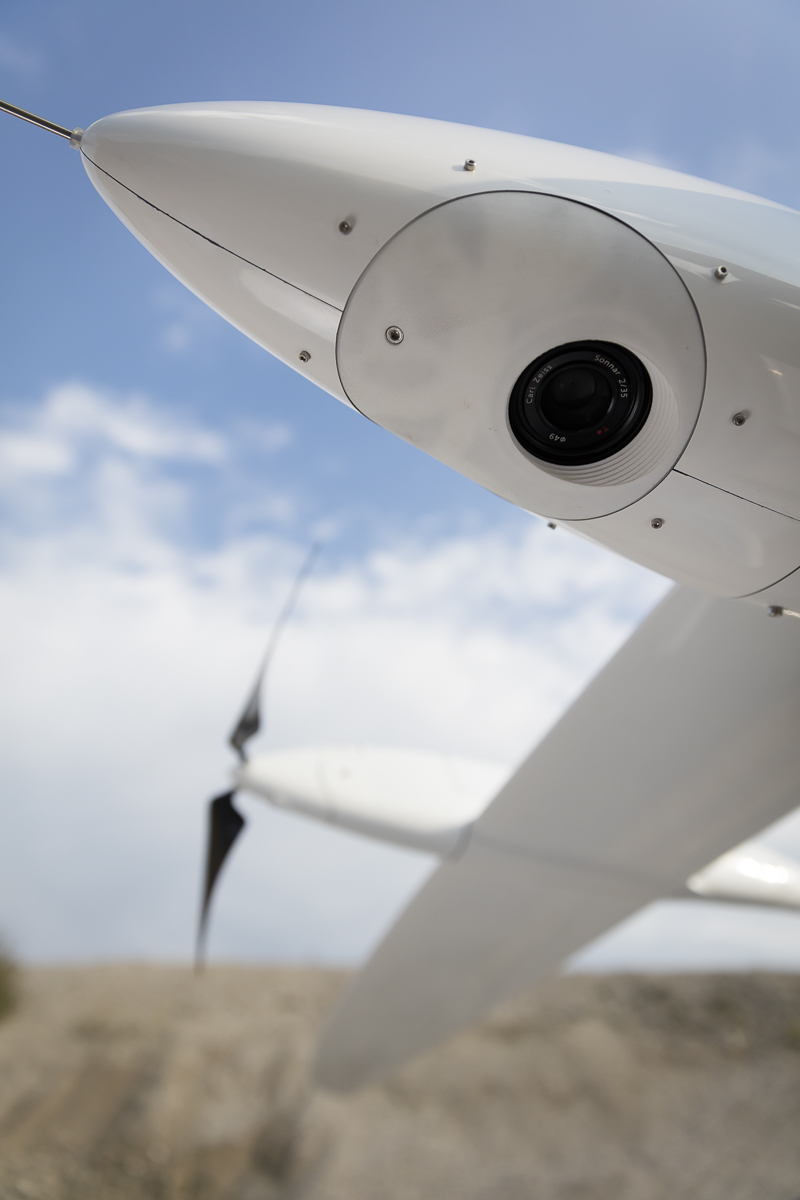
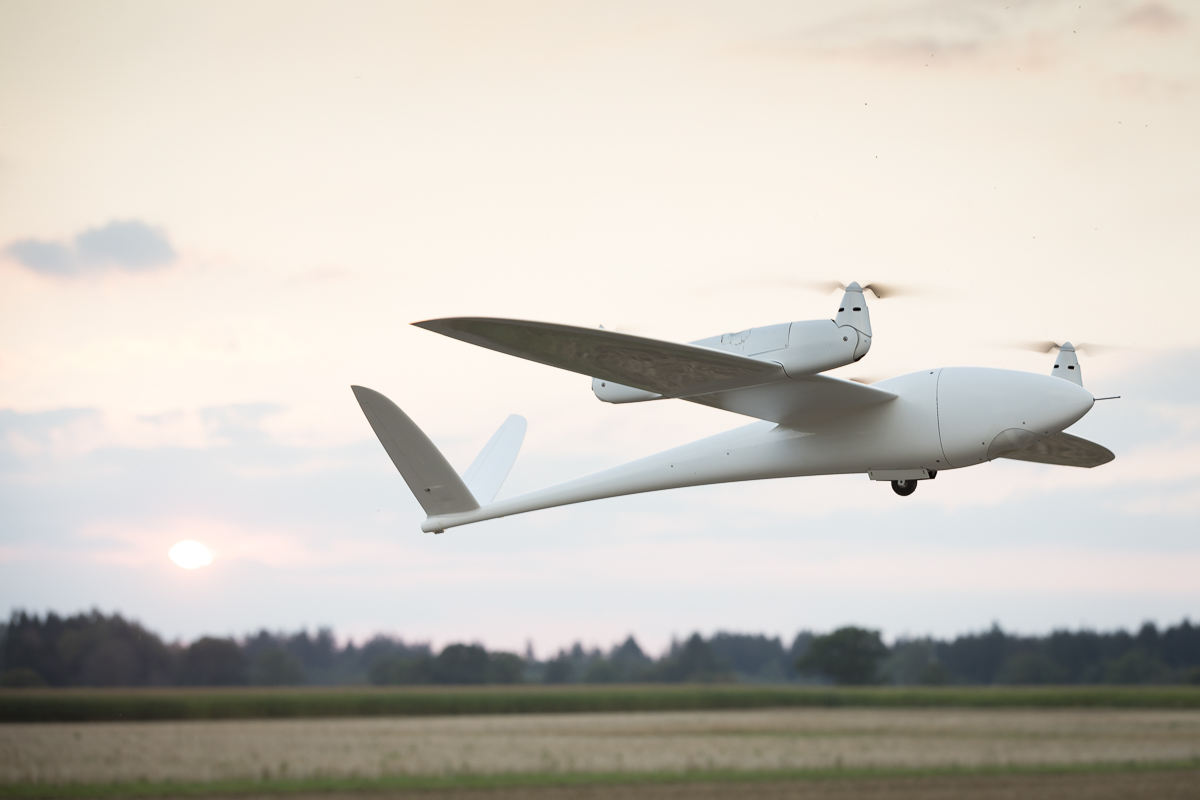
Quantum-Systems was founded in January 2015 and aims to provide complete solutions for our customers. Our main product is the Quantum TRON: A vertical takeoff and landing unmanned fixed-wing aircraft with a 3.5m wingspan. This UAV (Unmanned Aerial Vehicle) is primarily specialized for applications in the fields of 3D reconstruction, cartography, inspection of industrial facilities, security and surveillance applications, and the transport of goods.
An approach that combines the advantages of two systems
- But that's been around for a long time!
In the field of unmanned aircraft, two concepts exist for conducting takeoff and landing. First, there are conventional aircraft, which are very aerodynamically efficient during cruise flight, but require a large, flat surface (runway) for takeoff and landing. Alternatively, takeoff and landing can be performed using a catapult and safety net. This makes operating a conventional, unmanned aircraft very costly.
On the other hand, there is the concept of a helicopter (or multicopter), which, due to its ability to take off and land vertically, makes the problems described less important. However, the flight performance (range and flight time) of such a vertical takeoff configuration is far below that of a conventional aircraft due to the significantly increased energy requirements during cruise flight.
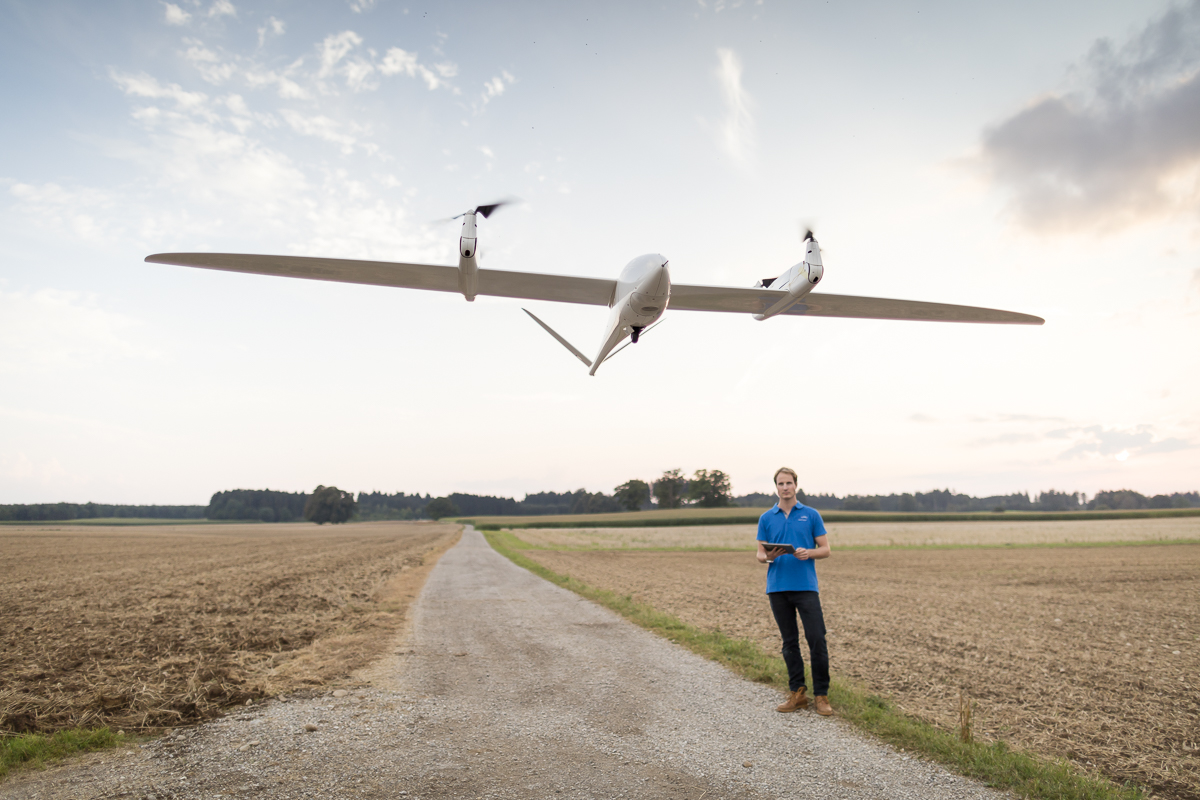
Our approach combines the advantages of two very different flight systems in a single aircraft. The Quantum TRON has both the capabilities of a helicopter and the sophisticated aerodynamics of a fixed-wing aircraft designed for cruising flight. The transition from hover to cruising flight occurs during the so-called transition phase. After vertical takeoff, the rotors are pivoted from the vertical takeoff position to the horizontal cruising position. Instead of generating lift, they now generate propulsion. The Quantum TRON thus has a very wide range of applications and speeds: from hovering to a flight speed of over 160 km/h.
Thanks to our proprietary transition technology, we can cover areas or distances up to 96 times larger, achieve eight times longer flight times at three times higher altitudes, and achieve up to four times higher flight speeds with the same minimal effort as multicopter systems. In direct comparison with currently used UAVs (e.g., Sensefly's eBee), specific monitoring tasks can be completed in just five hours instead of three weeks.
3. What are the three main ingredients for your recipe for success?
The three main ingredients of our recipe for success are:
- You have to have a very good idea at the right time!
- You must be able to put together a highly qualified team and motivate them to the point!
- You must become as financially independent as possible and maintain this status for as long as possible!
The plan is in place, the financing is
- Let’s get to the point: How is business going?
Thanks to the excellent relationship with the Technical University of Munich and the associated joint industrial projects, as well as the excellent business relationship with the MBRSC (Mohammed Bin Rashid Space Center) in Dubai, the Quantum-Systems GmbH is also completing its second year of operation very successfully. The team has grown continuously and now numbers approximately 20 employees. The roadmap for 2017, up to market launch in October, is already fully planned and, above all, fully financed.
- What does Munich mean to you?
The Quantum-Systems GmbH headquarters are located in Gilching at the Oberpfaffenhofen Special Airport. The first vertical takeoff aircraft took off from this historic location no less than 50 years ago. Since our concept is based on this ancient idea, we consider ourselves the technical heirs of these aircraft. Our special connection to the Technical University of Munich and the sensational support from the Bavarian State Ministry for Economic Affairs and Media, Energy and Technology further bind us to our home base in Munich.
A booming market that needs to be conquered
- How can your startup become the next unicorn? Or will we see you soon at Epic Fail Night?
Unmanned aviation remains one of the world's largest boom markets. Many tasks currently performed by manned systems could now be performed fully automatically and unmanned, with better quality and at a lower cost. For example, power lines, pipelines, or railway lines could be automatically inspected from the air in regular cycles in the future. This would allow tampering, corrosion, or erosion to be detected much earlier, preventing environmental damage.
The Quantum TRON is the world's only civilian drone system capable of vertical ascent like a multicopter and efficient flight like an aircraft. We have already demonstrated our advantages in initial projects with the German Federal Police, Deutsche Bahn, and RWE. Following our market launch at InterGEO 2017 in Berlin, we will secure the market share we deserve in the UAV market.
7Hiking or beer garden? Helicopter or plane?
The Quantum TRON is a hybrid—a helicopter AND an airplane! Our core competency is combining the advantages of two systems. Answering an either/or question would contradict our philosophy when you can have both: hiking AND a beer garden!