The German Accelerator reviews 2020: 3 out of 4 German startups (74 percent) were successful in this pandemic year, according to German Startup Monitor affected by the Corona crisis. Nevertheless, the year took a positive turn for many young companies. Matthias Notz, Managing Director German Accelerator:
"Some startups were able to take immediate advantage of the crisis and its effects. Others will benefit in the medium term because the growing trend toward greater digitalization benefits the entire startup industry with its digital focus."
To support startups as efficiently as possible, the German Accelerator offered its programs for preparing and implementing international expansion primarily digitally this year. 153 young companies successfully participated – mostly from home deskThey received more than 22,000 hours of consulting and coaching in over 7,000 video conferences.
For the first time, more startups from Bavaria than from Berlin
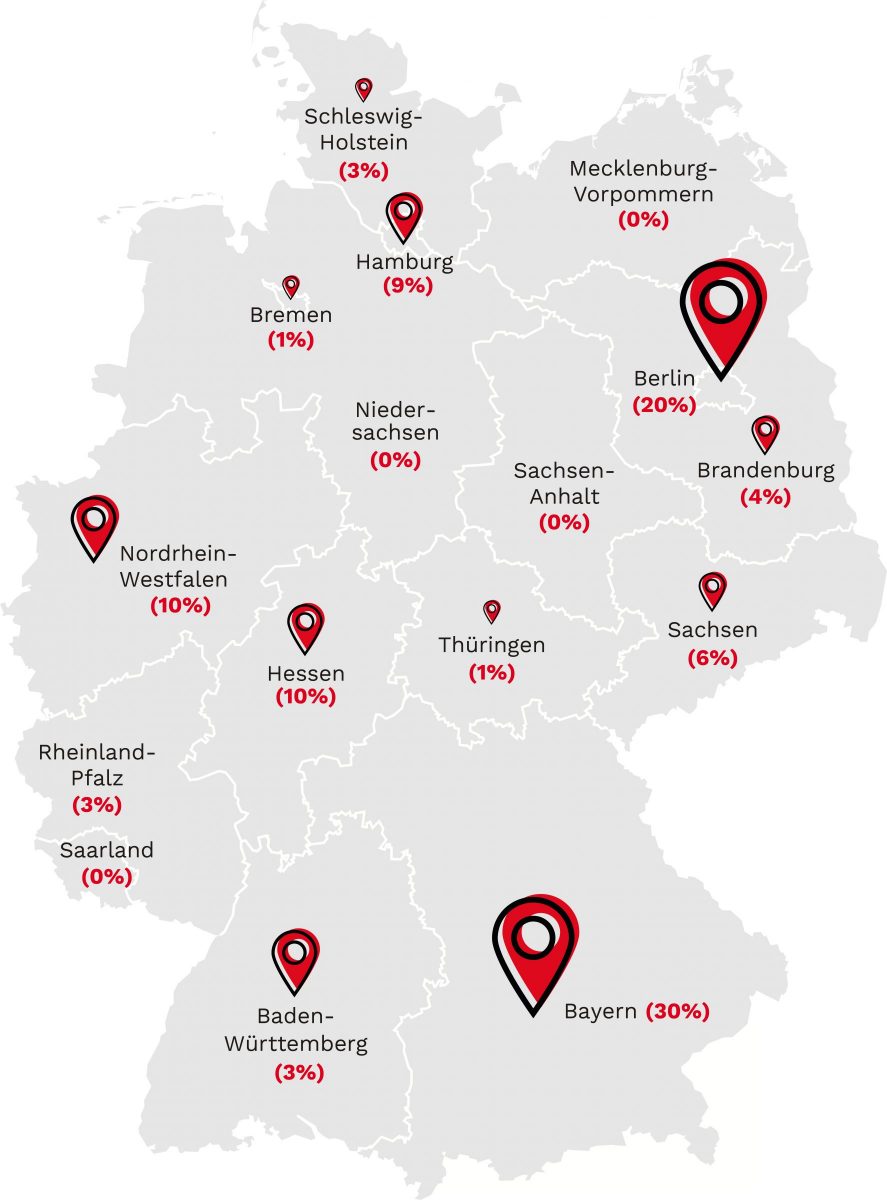
A remarkable development recorded by the German Accelerator for 2020: The number of participating startups from Germany's startup capital, Berlin, declined significantly this year. It fell from 28 percent (2019) to 20 percent (2020). This puts Bavaria at the top of the list of federal states with the most participants in the startup accelerator funded by the BMWi in 2020. Thanks in no small part to the strength of the state capital, Munich, Bavaria was able to increase its share from 28 percent (2019) to 30 percent (2020), thus demonstrating its strong role in the German startup scene. In addition, two other regional startup hubs are establishing themselves in Germany: North Rhine-Westphalia and Hesse each accounted for 11 percent of this year's German Accelerator participants.
Focus on digital business models
A look at the focus areas of the German Accelerator startups confirms the dominance of digital business models in the startup industry. 29 percent of participants offer software products, 9 percent are active in the data and connectivity sector, and another 6 percent are e-commerce companies. In contrast, only 10 percent of the young companies offer hardware products.
In terms of content, the largest proportion of startups are active in the health and life sciences sector. A full 24 percent of all participants in the various German Accelerator programs in 2020 operate in this sector.
"Over the past few years, we have built a strong program and mentoring network with a focus on life sciences in Boston. We are now even more proud of the impressive number of successful startups in this field,"
Matthias Notz is pleased.