Wolfgang Stelzle’s vision when he founded the startup Re'flect founded: to make augmented and mixed reality (AR & MR) affordable and scalable for companies. Today, a team of 50 people at locations in Munich and San Francisco enables customers such as ABB, BASF, Bosch, Medtronic, and Siemens to create their own AR & MR applications – without any programming knowledge.
Participation in the Startup Creasphere Two years ago, Re'flekt entered a completely new industry: the healthcare sector. Roche, a founding partner of the startup Creasphere, launched the joint pilot project with the goal of digitizing the areas of training, service, and maintenance in its diagnostics division.
Until now, service technicians had largely relied on thousands of pages of paper or PDF files for training and on-site lab assignments. Roche hoped that further digitization and more interactive animation of the training materials would reduce the training effort and better tailor it to the current level of knowledge and the specific portfolio of service technicians. The three-month pilot project was a complete success – and subsequently led to a further partnership between Re'flekt and the technology leader in the global diagnostics industry.
We asked Re'flekt founder and CEO Wolfgang Stelzle how the collaboration went, how training and customer service at Roche have changed through the use of AR, and why the healthcare industry is an exciting field for him.
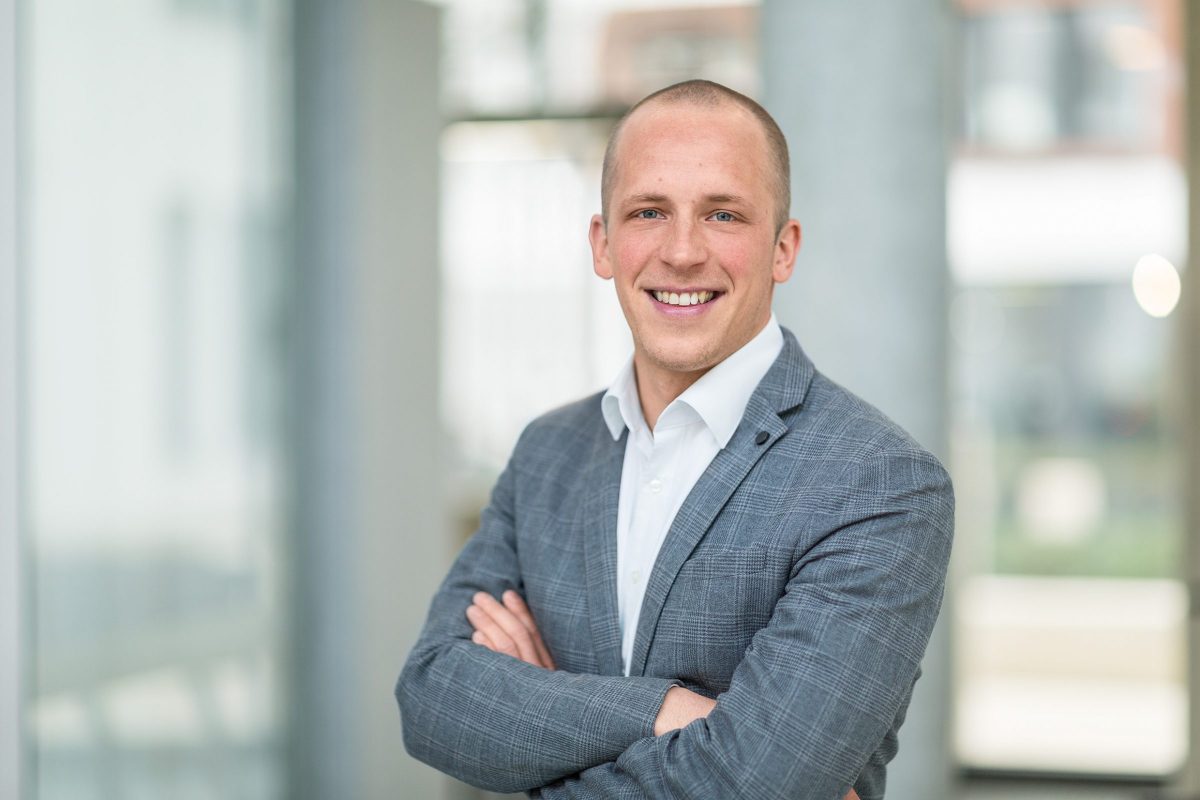
Munich Startup: How should we imagine the joint pilot project with Roche?
Wolfgang Stelzle: Roche was enthusiastic about our Reflekt One platform from the very beginning. However, there was a legitimate question about how much time, effort, and budget would be required to convert the 2D service manuals into a 3D format. We wanted to use the three-month pilot phase as part of the Startup Creasphere to demonstrate that it could be done with relatively little effort. And it worked!
Munich Startup: What happened next?
Wolfgang Stelzle: We agreed to further cooperation relatively quickly and worked intensively together to integrate Roche's specific requirements into our platform. Today, with Reflekt One, Roche has a platform that allows them to enrich their existing 2D manual content with 3D data and convert it into animated step-by-step instructions in-house – all without any programming knowledge. This is a huge step forward given the volume of training and service documents at Roche; using the traditional approach would have required significantly more resources or would have been impossible to manage.
Munich Startup: What exactly has improved at Roche thanks to your solution?
Wolfgang Stelzle: In the training area, Roche saves time and money with Reflekt One, allowing it to personalize training sessions much more effectively, allowing service technicians to be trained specifically according to their knowledge level and their specific laboratory system portfolio. The use of virtual user manuals, which service technicians will access on tablets during on-site visits, will further improve the quality of support.
Munich Startup: So, a complete success. And what was it like for you as a startup to work with one of the largest companies in the healthcare industry?
Wolfgang Stelzle: We're already used to working with large customers from other industries, but since this was our first major collaboration in the healthcare sector, we were very excited to see what requirements Roche would bring. Since AR & MR applications were nowhere near as widespread in the healthcare industry as, for example, in the automotive sector, we were initially concerned that we might have to do a lot more convincing. But here, Roche lived up to its reputation as an innovation leader in its field. From the very beginning, the team was fully committed to the joint project and caught up in our pace and enthusiasm – that's not a given for such a large company with rigid and often lengthy processes. But this was the only way we were able to achieve the proof of concept and implementation so quickly.
Munich Startup: And what’s next for you – do you want to further expand your healthcare sector?
Wolfgang Stelzle: The successful collaboration with Roche has shown us the enormous potential in healthcare to simplify complex processes and technical documentation using AR technology. In addition, the industry and its challenges are currently attracting particular attention. In medical technology, for example, there is an urgent need to quickly find innovative solutions and drive digitalization forward. With our AR platform and expertise, we can support companies in precisely this and are already working on implementing additional use cases.
Munich Startup: Would you recommend other startups to participate in Startup Creasphere?
Wolfgang Stelzle: Absolutely. What we particularly liked about Startup Creasphere was the strong focus on co-creation. So, it wasn't just about pitching our own solution and getting some coaching over the course of the three-month batch; Roche was also very actively involved in the joint pilot project and fully supported it. This way, at the end of the day, we not only get an outside perspective on our own solution, but also have a concrete opportunity for further collaboration.