The "MUST – The Munich Summit" has established itself as a true "must-attend" event within three years. The conference aims to connect leading tech startups with established technology companies, investors, and academics. Open, multilingual, and packed with exciting content—that's what the 2018 MUST conference was like.
The annual three-day event in Munich aims to initiate new partnerships between key industry players. From February 20 to 22, 2018, MUST once again welcomed the latest generation of outstanding ideas and brought them together with the most important players in the Bavarian ecosystem.
“Come together, mingle and meet!”
so welcomed Helmut Schönenberger, CEO of UnternehmerTUM, and alongside the SCE and the LMU EC, one of the three founders of the MUST conference, the participants. Because that's exactly what the third summit should be about—coming together and, more specifically, deal-making.
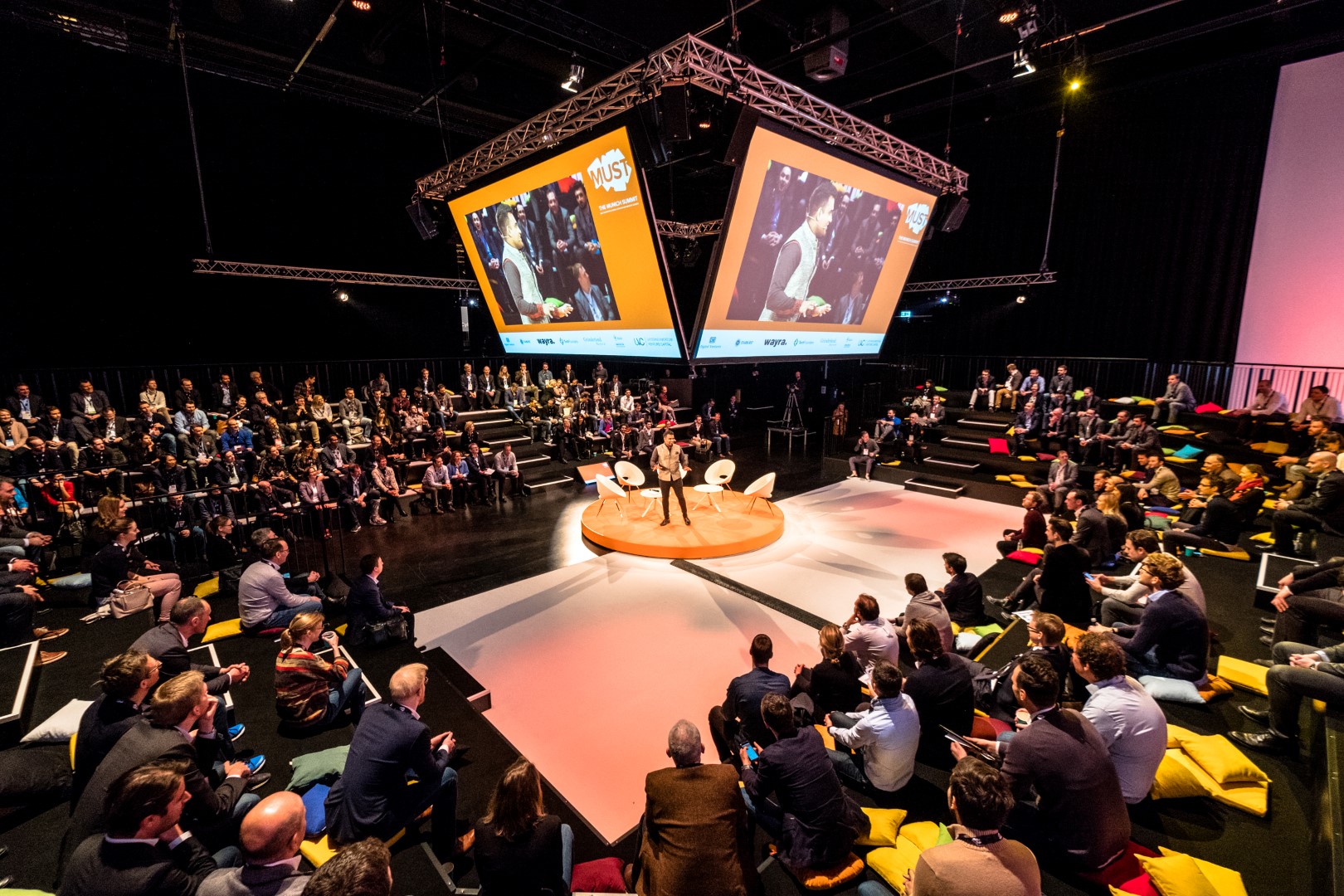
More than 100 startups from over 20 nations were present at the Eisbachstudio in Munich. The international startups had presented their ideas the day before as part of the Cashwalks already through Invest in Bavaria received a brief introduction to Bavarian culture and the local ecosystem. Right at the beginning, one of the first panels also clarified where in Germany startups should best establish themselves.
Hidden champions or unicorns?
In the discussion about “Ecosystem & Innovation – Hidden Champions vs. Unicorns”, Klaus Dittrich, CEO of Messe München:
"Maybe Berlin has more startups than Munich. But Munich has the more successful startups."
What Dan Ram, the moderator, then summarized:
Do you want to have a startup? Go to Berlin! Do you want to have a really successful startup? Come to Munich!!
Here is a little insight into what others say about MUST and the Bavarian ecosystem:
Munich's startups on site
In addition to many well-known Munich startups, MUST included Blickfeld, Toposens or e-bot7 There are also many fresh ideas that have so far flown under our radar. For example, Hyperganic Technologies, founded by serial entrepreneur Lin Kayser. The software startup surprised everyone during its pitch with a 3D-printed rocket turbine. Or DyeMansionthat color additively manufactured products and provide them with beautiful surfaces — and are currently in the process of scaling them up properly.
https://twitter.com/munich_startup/status/966321227454443521
In the third year of the Summit, the topics adapted to the current challenges and innovations of the global markets: It was about Internet of Things (IoT), Autonomous Machines & Advanced Manufacturing, Smart Mobility, AgTech & FoodTech and Cyber Security.
More than 400 participants came together at the conference to exchange ideas, pitch their ideas, and support and encourage each other. The exclusivity of the event and the relaxed atmosphere, for example, during the famous dinner crawl, made deal-making easy. After all, the enthusiasm for exquisite food in diverse locations connects the global tech community across borders. And this—perhaps, hopefully?—will lead to long-term collaborations.
Speed dating with siren
The concluding B2B speed dating event was also a MUST-attend highlight this year. Not only because of the exciting business ideas that were exchanged there, but also because the speed dating event was ended by sirens. In the newly opened Internet Security Hub At Munich Airport, a hacker attack was simulated in keeping with the conference theme of 'Cyber Security'. The airport is working with many partners on this highly topical issue. And, in keeping with MUST, collaboration is also a key focus for the future-oriented Munich Airport.
The discussion of Kirstin Hegner, Managing Director of Digital Hub Mobility, Peter Schwarzenbauer, Board Member BMW and Andy Goldstein, Managing Director of LMU EC, on the subject 'City of the Future' and with a clear focus on mobility.
https://twitter.com/munich_startup/status/966606127847927808
Autonomous driving and the social change it inevitably entails were discussed intensively. The advantages of car sharing were also addressed. In addition to more efficient use of space in cities, Peter Schwarzenbauer described how BMW plans to earn more money per car through car sharing than is currently the case. At the same time, however, he also bluntly admitted that the question isn't where the future of the automotive industry is headed. But that there are still a few question marks about exactly how the path to get there will look. Thus, some frank words at the end of this year's MUST conference.