Munich Startup: What problem do you offer a solution for?
Christian Bauer, CEO: Until now, space infrastructure has largely consisted of individual satellites, most of which were deployed in the same orbit. However, the majority of satellites launched today are part of larger satellite networks, known as constellations, where dozens or even hundreds of satellites must fly in a precise formation in different orbits. Currently, there is no way to deploy multiple satellites simultaneously in different orbits, meaning that a separate, small, but expensive launch vehicle is required for each orbit. We want to change that.
Through the new TechnologyThe technology we are developing will allow us to build a small, high-performance spacecraft. With this, we can reach any orbit from any launch vehicle, enabling us to travel to multiple orbits with a single launch and thus deliver constellation satellites to their destinations faster and more cost-effectively.
Uniquely miniaturized technology
Munich Startup: What can you do as of today?
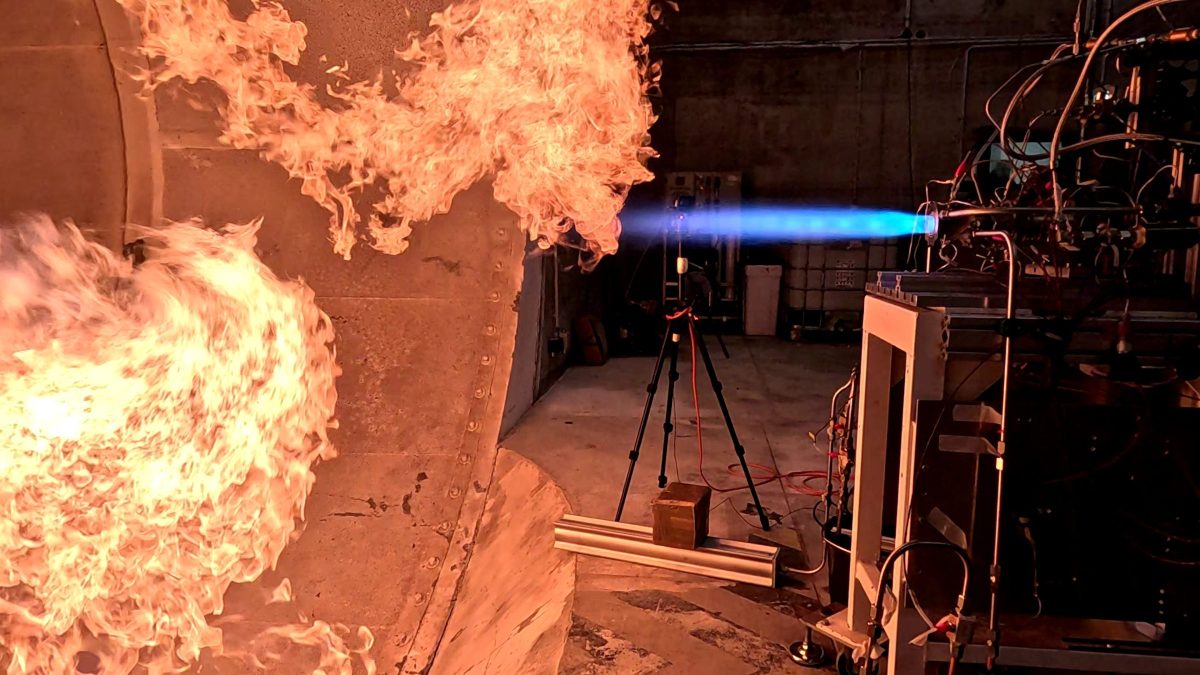
Christian Bauer: As a true deep-tech hardware startup, founded on scientific principles, our focus is clearly on technological innovation. We use the same highly efficient propellants as, for example, SpaceX's Starship, but we are the only ones who have managed to miniaturize the technology to such an extent that we can even use it on satellites. We also have a sophisticated concept for the long-term storage of these propellants in orbit, something I haven't seen from any other player in this level of detail.
Munich Startup: What triggered the founding?
Christian Bauer: During my doctoral studies at TUM, I worked on new ignition methods for green propellants. Passive resonance igniters have been in development since around 1955, but until then, no one had managed to develop this technology to the point of practical application. In 2016, I was finally able to demonstrate a successful ignition for the first time and file a patent application for the design. At that time, "New Space" was virtually nonexistent, and the major aerospace companies had no interest in the technology, which they considered not yet "ready." However, there is now a real opportunity in space exploration for smaller companies as well, so from 2020 onwards, I actively worked on founding my own company to bring this technology into practical application.
Munich Startup: Was there ever a moment when you thought about giving up?
Christian Bauer: The space industry is extremely competitive, often conservative, and sometimes ruthless. Just a few years ago, many experts deemed our ideas impossible, and their feedback was sometimes brutal. This is incredibly frustrating, but we never really considered giving up. And now we routinely demonstrate the "impossible" during our prototype tests.
The test of endurance remains deployment in space.
Munich Startup: How would you know in a year that you're on the right track?
Christian Bauer: Despite all the care taken in designing and testing our systems, the only truly representative test remains deployment in space. If, in a year's time, we're assembling the flight version of our in-orbit demonstrator and have booked the flights to the launch site, that will be a pretty good start.
Munich Startup: Would you start a business in Munich again, and why?
Christian Bauer: I think for DeeptechFor startups, especially in the aerospace, defense, and hardware sectors, Munich is currently the place to be. The entire ecosystem has developed a dynamism that is hard to find elsewhere. I can visit several clients in a single day and quickly stop by a few suppliers on my way to investors. For us, the Technical University of Munich (TUM) is a particularly important factor, not only consistently providing highly trained and motivated engineers but also offering testing infrastructure without which we could never have achieved such rapid progress.
Munich Startup: Perfection or speed?
Christian Bauer: Space is unforgiving, and every mistake can have devastating consequences. Nevertheless, a good solution today is better than a perfect solution in ten years. Therefore, we must weigh up every day how much risk and speed we can afford. We strive to be as fast as possible and as perfect as necessary.