Satellites are the backbone of our modern world. Without them, navigation, communication, and many security-relevant applications would cease to function. However, this critical infrastructure is increasingly under pressure – not only from growing space debris, but also from targeted attacks. Stefan Frey, CEO and co-founder of the Munich-based spacetech startup Vyoma explained in our Videocast Pitch & People:
Pitch & People Episodes
PITCH & PEOPLE Episode 29: Vyoma


"Satellites face dangers such as jamming, spoofing, and also eavesdropping, i.e., eavesdropping on communications. There are already satellites that can capture other satellites. This is a real danger."
What long seemed abstract has now become concrete reality. In orbit, it's no longer just about technology, but also about control, influence, and security.
Like in Star Wars: spy attacks on satellites
A particularly striking example was recently provided by a Russian satellite that deliberately moved close to European communications satellites and monitored their data traffic. This is not an isolated incident since the war in Ukraine. The systems involved are often older and were developed at a time when such scenarios were hardly considered.
The consequences can be serious. Anyone who understands how a satellite is controlled can, in extreme cases, manipulate or disable it.
"And if you don't notice it yourself on the ground, then suddenly you have a spy on your own satellite. That's already a problem today. We see it all the time."
so Frey.
At the same time, the lines between civilian and military use are becoming increasingly blurred. Technologies originally intended for the removal of space debris can also be used for attacks.
"Such satellites can fly directly towards other satellites and capture them, for example with a robotic arm or even with nets. Although these technologies were originally developed for the active removal of space debris, they naturally also have a clear military dimension."
An overcrowded orbit as a risk factor
In addition to these targeted threats, another problem is growing rapidly: the sheer number of objects in space. Thousands of satellites, old rocket stages, and countless pieces of debris are moving through orbit at enormous speeds.
Even small parts can cause massive damage. Consequently, operators must regularly perform evasive maneuvers – often based on inaccurate data.
"We often don't know exactly where the objects are located in space – accordingly, it is difficult to reliably assess the collision risk. Therefore, operators currently have to proceed very conservatively and initiate evasive maneuvers relatively frequently."
With the planned expansion to millions of satellites, this situation threatens to worsen. Frey is clear: the current system is not scalable.
From niche problem to systemic threat
Actual collisions in space are still rare – four major collisions have been confirmed so far. But the dynamics are changing rapidly. Every collision creates thousands of new pieces of debris, which in turn increase the risk of further collisions.
At the same time, the number of satellite operators and applications is growing exponentially. What seems manageable today could quickly become a chain reaction that renders entire orbits unusable. This would be a massive problem for the space industry, as well as for the economy and society.
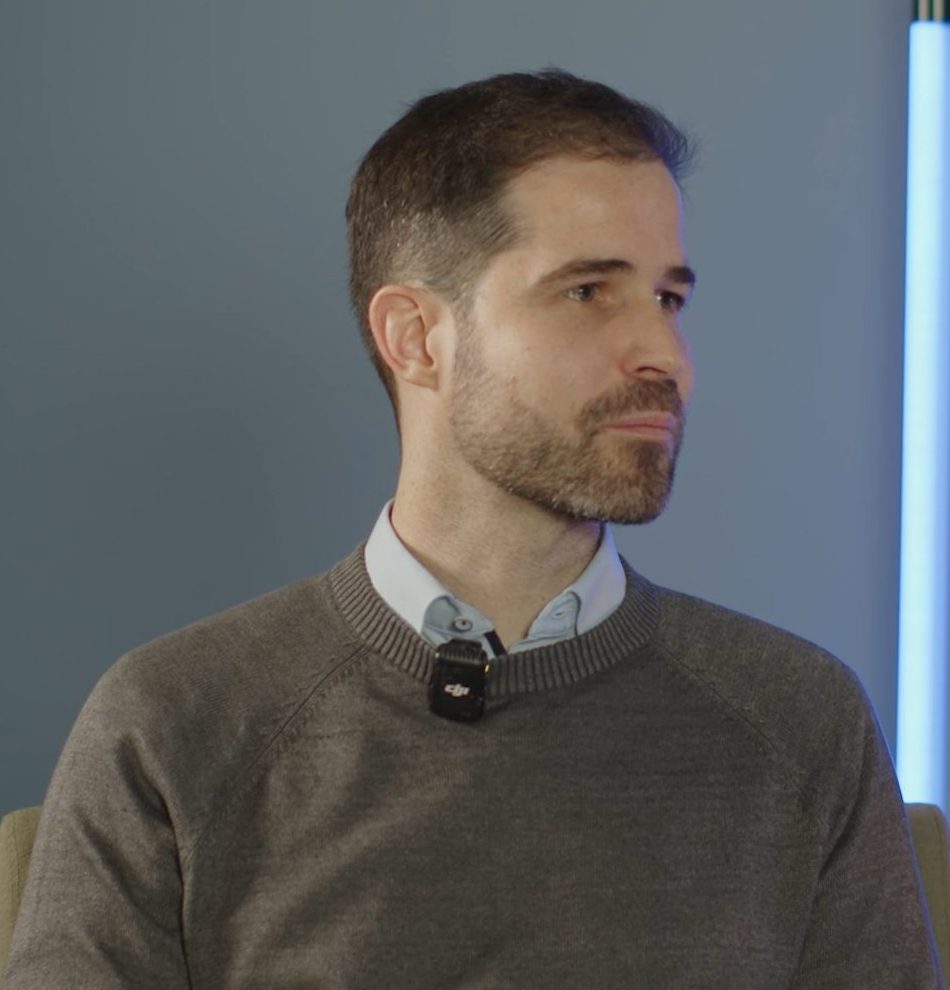
Dr. Stefan Frey is co-founder and CEO of Munich-based spacetech startups Vyomathat develops solutions for space traffic management and satellite safety. The Swiss Frey is an astrodynamics expert and began working on space debris and collision risks early on. During his time at Space Debris Office At the European Space Agency (ESA), he deepened his work on the sustainable use of space. He completed his doctorate at the Politecnico di Milano, where he investigated the effects of orbital fragmentation on other satellites. Vyoma Frey's goal is to make space safer and more sustainable in the long term – among other things through better data, automated satellite operations and its own space-based sensor systems.
Europe's dependence – and Vyoma's approach
A key problem lies in the availability of data. Europe is currently heavily reliant on information from the USA – with all the uncertainties that entails.
This is where Vyoma comes in. Startup It is developing its own space-based surveillance system. Instead of only taking measurements from the ground, its own satellites directly observe other objects in orbit and generate precise movement data.
And this isn't just on paper: Vyoma has already launched its first satellite into space. The approximately 100-kilogram satellite has been in orbit since January and is currently undergoing commissioning. The first data is expected to be delivered to customers in the coming weeks. Vyoma plans to deploy a constellation of several satellites to provide comprehensive monitoring of low Earth orbit and significantly more accurate data.
"We need better data, in Germany and in Europe. To achieve this, we need to become more independent and start producing our own data."
In the long term, this is not just about a better overview, but also about greater autonomy in space. Satellites should be able to react to risks independently in the future – without constant control from the ground.
For Frey, this is just the beginning of a development that extends far beyond individual technologies. Because anyone who loses track of things in orbit risks nothing less than the functionality of key infrastructures on Earth.