The Internet is POP — at least that’s the claim of re:publica 2018, which is inviting people to a three-day conference in Berlin under this motto.
Day 2 at re:publica in Berlin. No sun in sight, but a long line at the entrance. Before we start the second day of the conference, let's take a quick look at last night and Sophie Passmann's session on "Less filter bubble, more detox tea! – What can we learn from influencers?“
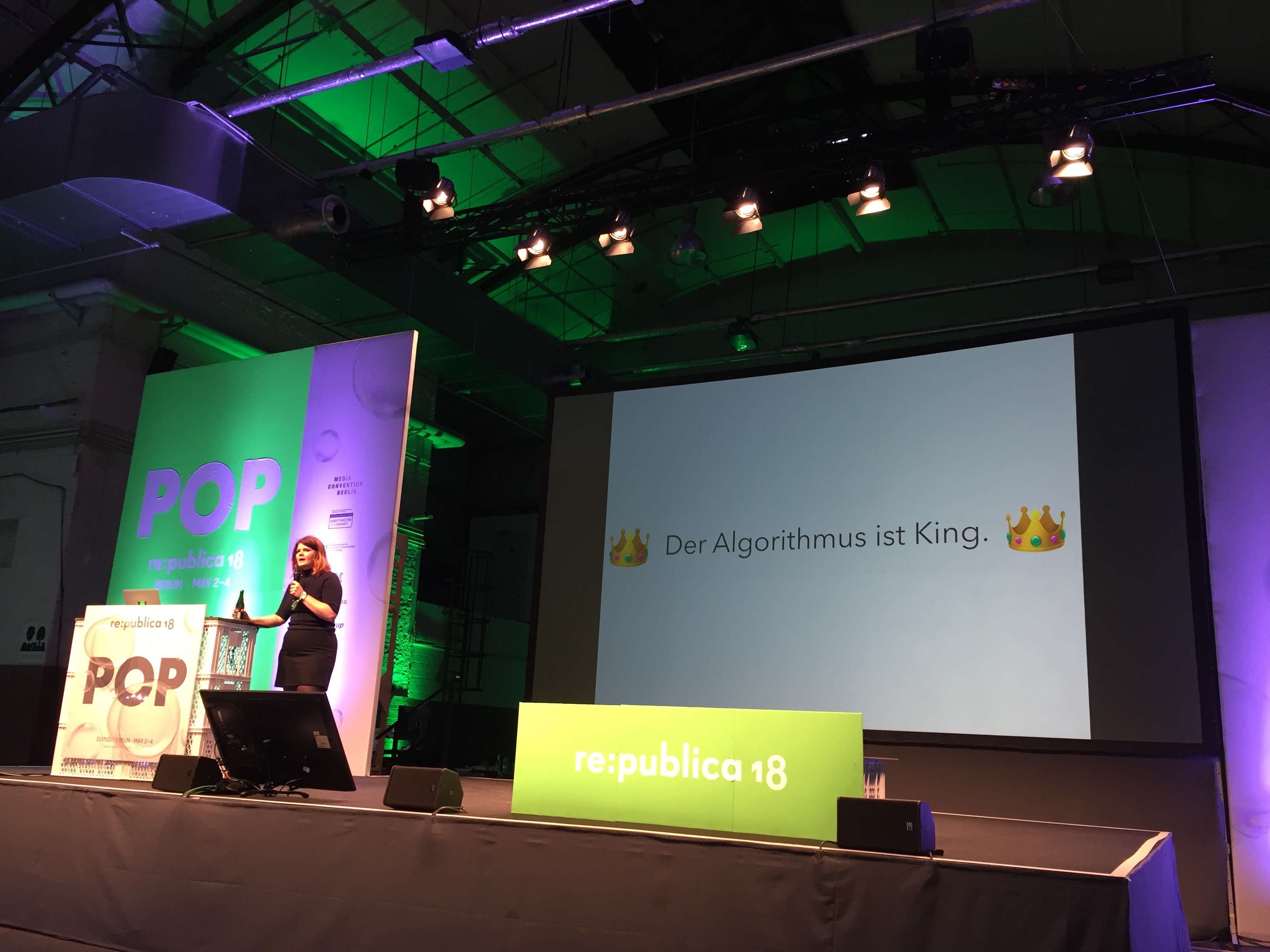
Passmann, who is a radio presenter and columnist for Spiegel Daily and herself a very active Instagram and Twitter user, is of the opinion that media people have finally had enough of making fun of Bibi & Co and should instead focus on why and how influencers reach so many people.
The Mad Men era is coming!
In her very entertaining presentation, Passmann then delves into how the job profile of "influencer" will change in the near future. That it will change is beyond question for her, as the pressure to succeed grows with every micro-influencer on the market—after all, you're considered one on Instagram with as little as 10,000 followers. So, how do you differentiate yourself as an influencer from the masses, all of whom want to close an advertising deal with watch brands and detox teas? Passmann predicts: A Mad Men era is coming to Instagram and the like. In other words: advertising on social media channels will once again have to convince with creativity. And the creators, aka influencers, must be compensated accordingly for their creative work—just like any good old advertising agency. Creativity will therefore become king again. In her opinion, the user will also benefit from this development. After all, there will be advertising as long as there is money. But advertising doesn't have to be dull per se; it can also entertain. And Passmann has nothing against good entertainment.
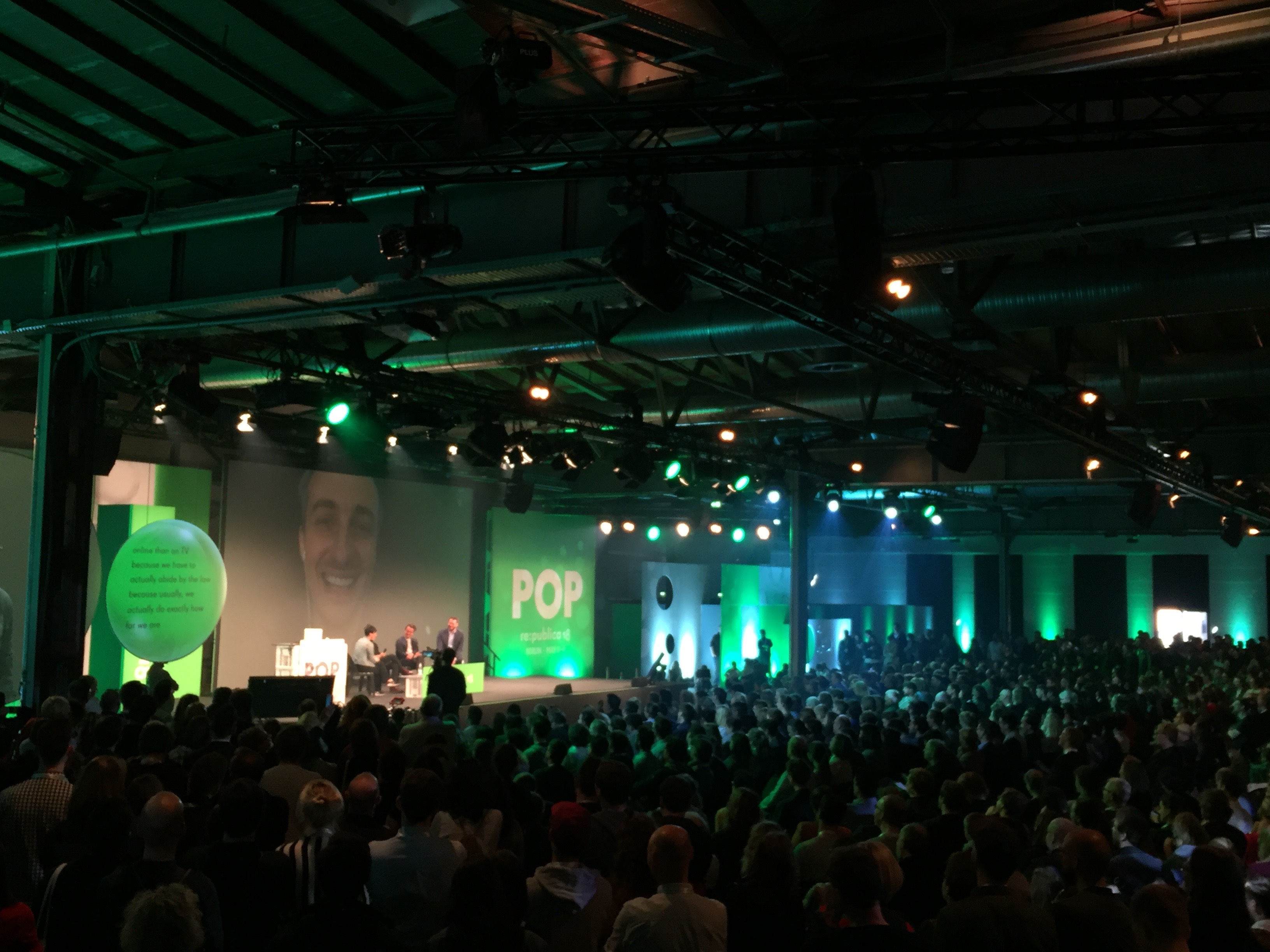
If Sophie Passmann looks familiar to you, it's probably from the Neo Magazin Royal. She can be seen in several episodes there. And this brings us full circle to one of the highlights of the second day of the conference: Jan Böhmermann himself will be speaking. While he won't appear directly on stage, but "only" via live broadcast, larger than life on the screen, he has a lot to say regardless. Together with funk, Neo Magazin Royale published research on the right-wing extremist troll network "Reconquista Germanica." Böhmermann himself founded a network in this context. Nearly 44,000 people have now joined his "Reconquista Internet," a network that wants to counter right-wing online activists and hate trolls.
Böhmermann: Time for Action!
While Böhmermann is convinced of this idea and encourages the audience not only to talk but also to do something, Patrick Stegemann from the documentary “Delete yourself: This is how hate is organized on the Internet" is somewhat more critical of this approach. In his opinion, the discourse must also be sought outside the internet, because he believes hate is not a phenomenon that can only be attributed to right-wing online trolls. In conclusion, one can say about this session that Jan Böhmermann was literally given a bit too much space. The makers of the undercover documentary "Delete Yourself" (Lösch Dich) around Rayk Anders almost got lost. But that seems to be the case for many people besides Jan Böhmermann. For those who don't want to spend a lot of time searching the internet, here is the worthwhile documentary "Delete Yourself" and Böhmermann's call for "Reconquista Internet":
Vero NOT the new hot thing
But it's not just established figures in the German media landscape who are attracting the attention of the audience. Presentations by younger speakers belonging to Generation Z are also very well attended. Generation what? Depending on the definition, Generation Z includes either those born after 1999 or those who are now between 10 and 23 years old. Charles Bahr speaks on the topic “Generation Z: How Media & Marketing Work in the Age of Social Natives” — and gains credibility simply by belonging to this generation. At 16, he is also considered the youngest founder in Germany, having launched his own social media agency two years ago. The audience listens spellbound as he hears how to reach these “young people.” Bahr speaks confidently — but doesn’t just share new things. Creativity is king, advertising must tell stories, creators — as he calls influencers — must be supported in high-quality productions and shouldn’t just hold Daniel Wellington watches in front of the camera. This sounds quite familiar to us after Sophie Passmann’s talk. What is interesting, however, is that according to Bahr, Generation Z is less bothered by labeled ads than one might think. Rather, they see it as support when they consume the product promoted by their favorite influencer.
And which platform is the right one to reach Generation Z? Bahr believes Facebook is no longer suitable for this, and Instagram is flooded with advertising. He's waiting for a new platform that offers more space for authentic content. Oh yes, and Vero is definitely not that!
And otherwise?
FOMO — the Fear Of Missing Out — is also present at re:publica 2018. So much to see, so little timeBut what reassures us is that many panels and talks can be found on the re:publica YouTube channel can also be viewed afterward. With this in mind, we can begin our journey home to Munich with peace of mind. So long, re:publica.