It all started in Munich…
The roots of voxeljet AG lie in the Technical University of Munich. Launched in 1995 as a small-batch project called "Generation of 3D Structures," three doctoral students from the Department of Precision Engineering at the Technical University of Munich conducted their first 3D printing experiments. In 1996, they participated in the first Munich Business Plan Competition, and in 1998, the first patent was granted. That same year, the first prototypes were completed and the first sand molds were printed—one of the most gratifying moments for the three founders during the initial phase.
Today, voxeljet AG is one of the leading manufacturers of industrial 3D printing systems and operates on-demand production of molds and models. The patented process is used in design patterns, art and architectural parts, in the aerospace and automotive industries, research and medicine, as well as in the film and entertainment industry.
The first steps – a company is founded
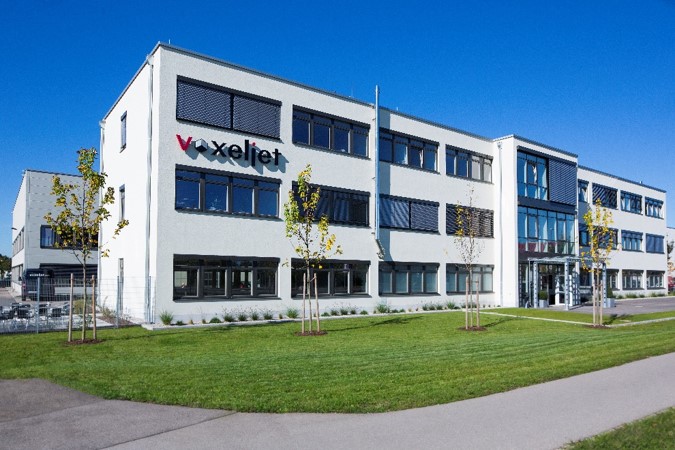
In May 1999, Ingo Ederer, Rainer Höchsmann, and Joachim Heinzl founded Generis GmbH at the Technical University of Munich. The predecessor company of today's voxeljet AG focused on developing new additive processes for the production of cast and plastic components. Operations began at the Technical University of Munich with four employees. Shortly thereafter, the company moved to Augsburg. voxeljet AG's headquarters are in Friedberg, Bavaria.
Successful participation in competitions supported the company's further development: In 2000, the young company achieved fourth place in the STARTUP business plan competition, the forerunner of the German Founders' Award. The young company prevailed among 1,261 nationwide competitors with its business model, received a cash prize, and received free support from a management consultancy for a year.
The highlight was the first orders for the delivery of large-format, sand-based printers to renowned companies such as BMW AG and Daimler AG in 2002. And the company continued to grow: in 2003, the service center opened at the Augsburg location to offer customers on-demand printing capacity. In the same year, the Bayern Kapital GmbH, the Start-up Capital Fund Augsburg and the Franz Industrial Holdings AG Shareholders of the company and thus support further growth.
The innovative company establishes itself
In the following years, the startup established itself and developed new 3D printing systems. The existing systems were continuously refined and the production facilities were expanded to meet increasing demand.
In 2008, voxeljet technology GmbH received an award as part of the Bavarian Innovation Prize from the hands of the then Bavarian Minister President Günther Beckstein. In 2010, voxeljet was included in the List of Germany's 100 top innovators and receives the “Top 100” seal of quality.
voxeljet presents further innovations – and grows
Already established in the market, the company focuses on research and development. Accordingly, 2011 is a year full of technical innovations for voxeljet. In April 2011, the company enters a new dimension of additive manufacturing processes. With the VX4000 3D printing system, objects can be produced at up to three times the build speed of previous systems while maintaining the same resolution.
The world’s first continuously operating 3D printer (VXC800) enables the parallel running of the process steps “build” and “unpack” while the system continues to operate and is therefore an important step towards industrial series production. In the same year, voxeljet celebrated the world premiere of another system (VX1000), tailored to the increasing demands of the industry. In 2012, voxeljet presented its smallest system, the VX200, which provides a cost-effective entry into 3D printing technology.
In addition to the system innovations described above, the company is also developing a new material (Polypor Type C) and can now produce pure white plastic models upon customer request. At the same time, this allows for the implementation of more stringent requirements regarding the strength and surface finish of the models.
Capital sought – the IPO
The rapidly growing company wanted to avoid capital bottlenecks and therefore decided to go public on the New York Stock Exchange in 2013. To this end, voxeljet technology GmbH was converted into a stock corporation and has since been trading as voxeljet AG.
The financing is extremely successful: In October 2013, voxeljet raises around 64.5 million US dollars through its IPO (after deducting the discount granted to the underwriters and the issuing costs). Half a year after the IPO, voxeljet AG was able to raise an additional $41.4 million through a capital increase.
Market proximity is important
The company’s success has also been positively influenced by the diverse contacts with established sales partners worldwideBut customers want to be able to see the 3D printers for themselves – market proximity is important. So, in 2014, voxeljet AG began building its own international factory halls as demonstration service centers. In October 2014, voxeljet acquired the British company Propshop (Model Makers) Ltd. and established its first location outside of Germany with this wholly-owned subsidiary.
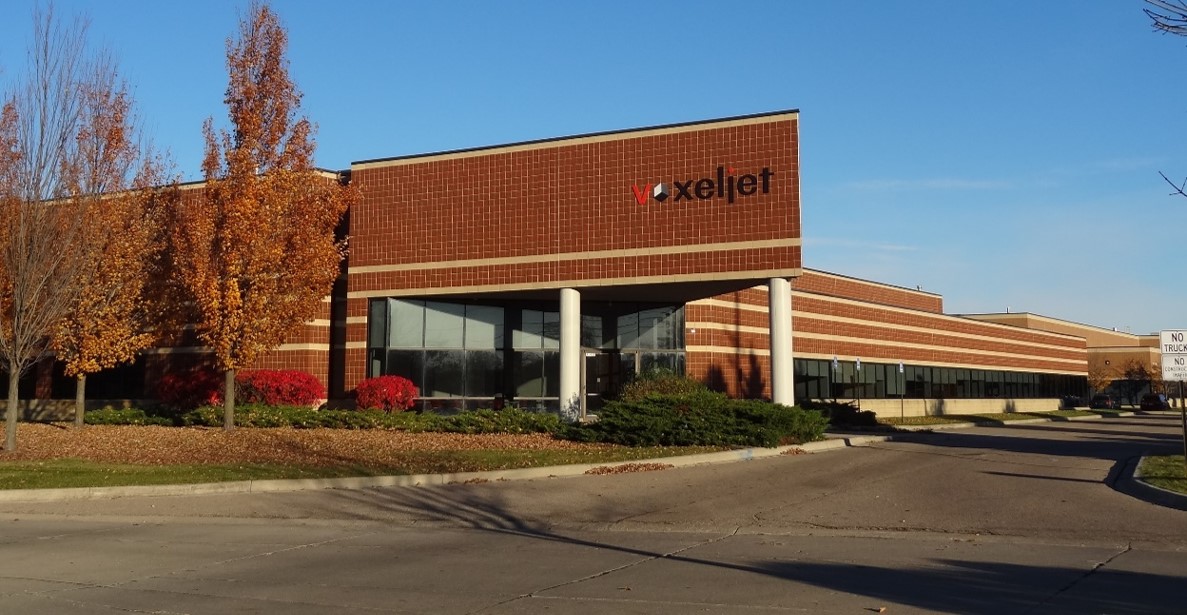
In the same year, voxeljet founded a company in the USA. In January 2015, the company opened a service center for on-demand mold and model production in Canton, Michigan, where it aims to achieve a printing capacity similar to that at its home location in Augsburg-Friedberg by the end of 2016. voxeljet has also already put out feelers in Asia...
… and what technology is behind it?
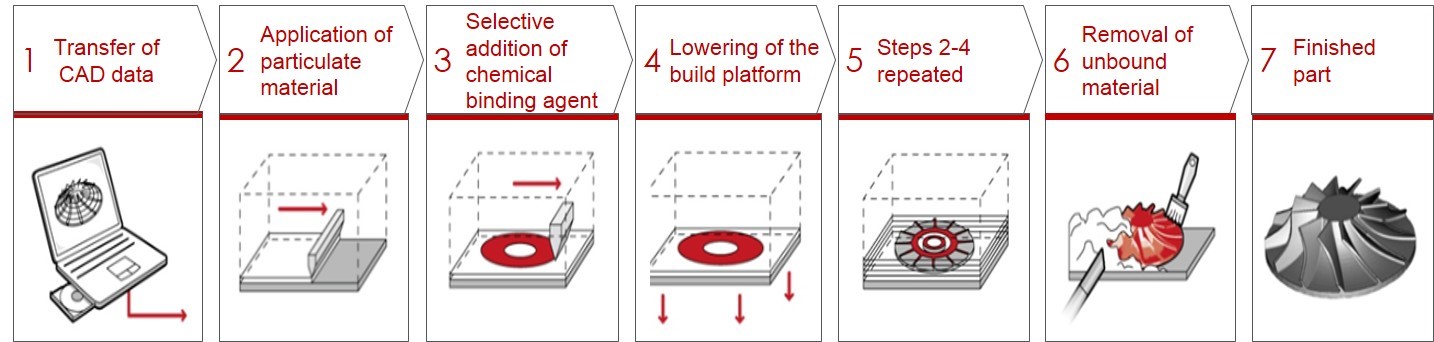
The 3D printing systems process particulate material, which is applied to a build surface in 80–400 μm thin layers. A high-resolution print head then selectively prints the surface with binder according to the component data and bonds it. The machine repeats these two application steps until the desired build height is reached. The unprinted and therefore unconsolidated material is then removed, revealing the finished component. Depending on the application, the component can be finished with various materials.
If you want to learn more about voxeljet, here to the website.