Munich Startup: What does your startup do? What problem do you solve?
Hendrik Reimers, Fairafric: 751,000 tonnes of the world's cocoa comes from West Africa, but less than 11,000 tonnes of chocolate is produced there. We're changing that by producing chocolate directly where the cocoa is grown, namely in Ghana. This creates skilled jobs and multiplies Africa's income per bar. To this end, we built the world's first solar-powered organic chocolate factory and have created almost 100 jobs so far. With our vision of "Use business to end poverty," we are strongly committed to SDG 1 "Fight poverty." The goal: to create 10,000 climate-friendly jobs on the African continent.
Fairafric: Truly fair chocolate
Munich Startup: But that has been around for a long time!
Hendrik Reimers: Not directly. Sure, there are plenty of "fair" chocolates on the market, but you have to look closely at why they're labeled "fair." However, the chocolate is usually still produced in the Global North: The cocoa beans are exported and processed into chocolate here.
Not with us! The chocolate arrives pre-packaged in Germany, and we distribute it throughout Europe. This increases the local income per chocolate bar in Ghana by more than €400,000. While a bar of chocolate produced in Europe leaves about €0.13 in the cocoa-growing countries, Fairafric leaves €0.74! Furthermore, for us, being "fair" means being just to people and nature. Our chocolates are organically certified, plastic-free packaging and climate-neutral produced.
Munich Startup: What is your founding story?
Hendrik Reimers: In 2013, I traveled to East Africa and saw how agriculture and poverty are connected. I was moved by the question of why raw materials are always exported from Africa and not processed directly in the country of origin. Driven by this thought, I focused on cocoa and chocolate, traveled to Ghana, and met people working in the industry. In 2016, we launched the first Crowdfundingcampaign, where we offered Fairafric chocolate, made in Ghana, for the very first time.
Financing through bonds and chocolate notes
Munich Startup: What have been your biggest challenges so far?
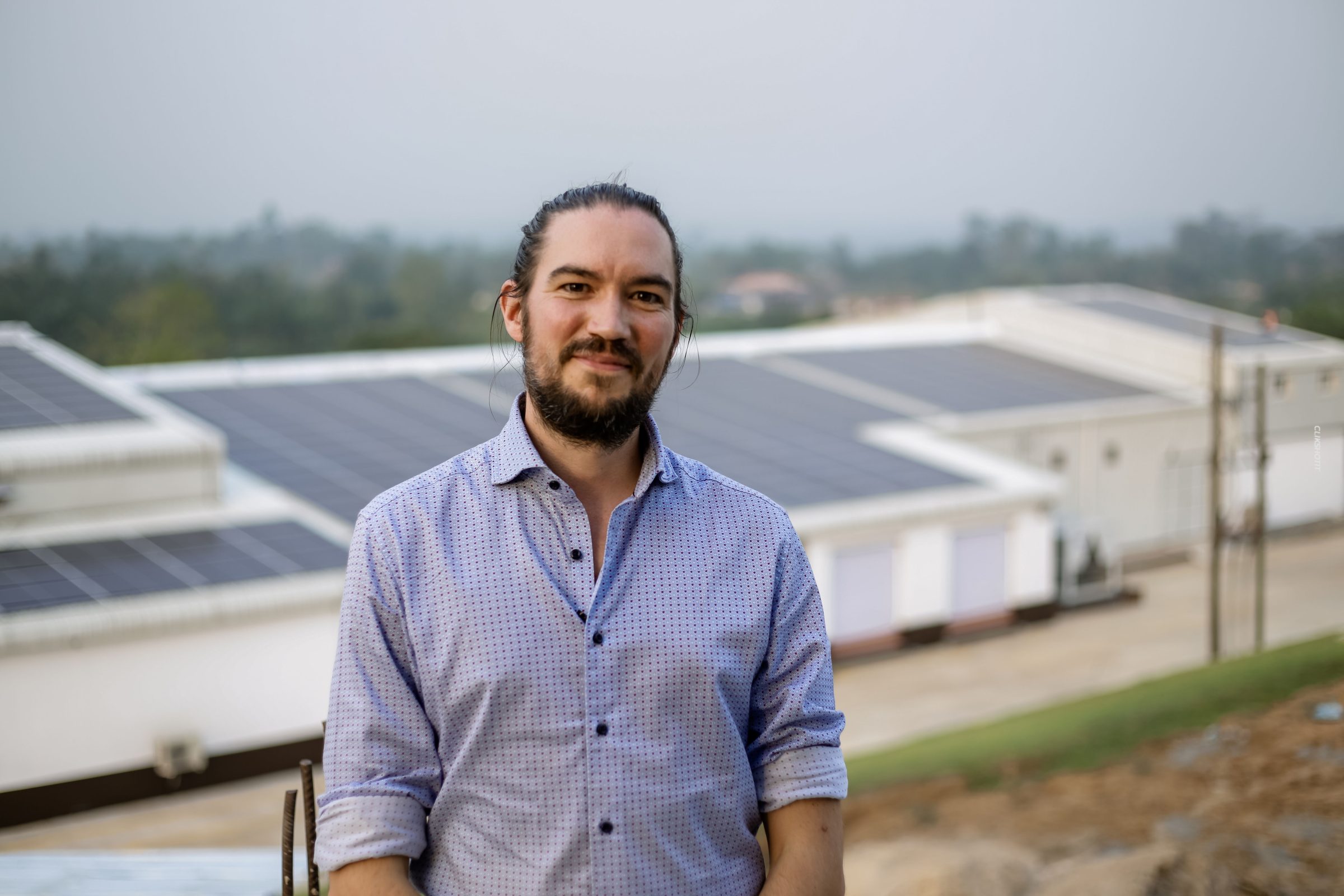
Hendrik Reimers: Financing was and remains very challenging, as many institutions do not invest in Africa. We have more than 2,000 private investors on our side and have proven that anything is possible when we work together: In 2020, we built our own solar-powered factory in rural Ghana, right next to the cocoa plantations, in just five and a half months. Despite the pandemic, we managed to build infrastructure and hire a team, and our dream of owning our own chocolate factory became a reality.
Munich Startup: How are things going?
Hendrik Reimers: Unfortunately, the pandemic and inflation have not spared our sales in recent years. Through financial products such as bonds and the chocolate certificate—a loan with interest paid in chocolate—we give our community the opportunity to revolutionize the chocolate world with us. We are constantly developing Fairafric and launching new products such as Drops, Fruit Balls, and other surprises this year.
Since our factory opened, we've increased sales by more than 150 million units and now aim to gradually increase capacity utilization to reach a capacity of 50 million tablets per year. We'll already reach the break-even point at 150 million units. We aim to achieve this in the coming years.
Chocolate is just the beginning
Munich Startup: Where would you like to be in one year, where in five?
Hendrik Reimers: With our new business areas of Contract Manufacturing and Semi-Finished Products, we produce both finished chocolate products and chocolate for further processing for existing brands. We aim to revolutionize the chocolate industry and establish 'Made in Africa' as a new industry standard. Long-term, we want to launch our own agroforestry project, cultivate sustainable cocoa in direct partnerships with our farmers, and release more CO2 into the soil than we emit throughout the entire value chain. Chocolate is just the beginning. There are many products where there is no added value in West Africa yet, such as cashews.
Our concept is transferable to a wide range of raw materials from the African continent!
Munich Startup: Outsource or do it yourself?
Hendrik Reimers: Do it ourselves in Ghana to build infrastructure there, provide people with jobs, and have the greatest possible impact in the country. We want to ensure a completely sustainable value chain and exploit its full potential. This requires the closest possible partnership and our own commitment along every step. Therefore, passing responsibility on to others is not an option for us. We want to set a positive example here and set a new standard for the entire industry.