What is there to say about crowdfunding in Munich? A lot, we think. Here are eight arguments in favor for crowdfunding for a startup? An overview with tips, networking information, and funding opportunities in Munich.
Crowdfunding is a special type of financing from a large number of people. Why is this exciting for startups? After all, a rapidly scaling business model often requires a large amount of funding. Especially for startups—but also for established companies—crowdfunding can be more than just financing, but much more. It can be a market test on the one hand and a marketing tool on the other. A business idea or product can be tested and promoted directly to the target audience through a crowdfunding campaign.
All eight arguments in favor of crowdfunding in Munich at a glance.
The stress test
Argument 1: Project starters must thoroughly consider all important aspects of the product and the market. Therefore, crowdfunding is not only a market test for the product but also a stress test for founding teams, Alexander Schmidbauer He has a position with the City of Munich in Referat für Arbeit und Wirtschaft own funding instrument introduced to financially support young entrepreneurs in their campaigns. Schmidbauer believes:
"Crowdfunding, in a way, is the democratization of startup financing. But it's also more: Consolidating all relevant startup topics into one campaign requires excellent and professional preparation as well as entrepreneurial skills. Campaign starters therefore have to overcome a steep learning curve."
Successful crowdfunding as an argument for further financing
Argument 2: More money. For founders just starting out, a successful crowdfunding campaign can also be a good argument for follow-up financing, explains Alexander Schmidbauer:
“After a successful campaign, founders have good arguments for follow-up financing and can act with more confidence.”
Communication and dialogue
Arguments 3 and 4: A communication strategy — and real dialogue. Mona Knorr, Crowdfunding specialist which the monthly crowdfunding meetup launched two years ago, it looks like this:
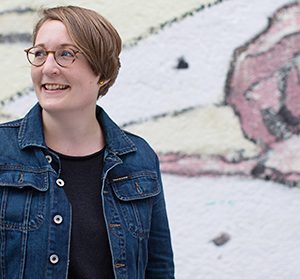
"Crowdfunding forces project initiators to formulate and communicate an idea or project in a concise and understandable way for the target audience. At the same time, they must present their startup to the public and engage in dialogue with future customers."
In concrete terms, this means: A project starter must clearly define the idea and its unique selling point. Who the target audience is and where they can be reached. After all, supporters don't just come along. Unfortunately, it's still a common misconception that simply putting a project on a platform with a good video is enough, says Mona Knorr. Therefore, she recommends the following approach:
- Make 'Family and Friends' multipliers for your project,
- research networks,
- create mailing lists,
- build a community,
- seek contact with the press,
- get involved in groups that are relevant to your project,
- think about ads and paid marketing.
- And start as early as possible!
Founders benefit greatly from a clear approach, as it prepares them for market entry. Furthermore, through open communication with future customers, a startup learns a lot about their pain points. This helps both with more targeted communication in the future and with improving the product for the customer—even if it's for the next product batch.
Expert Mona Knorr can confirm this. Through the monthly meetups, she speaks with many projects and sees that all campaign starters gain something from learning or gain valuable feedback. And this is regardless of whether the campaign is successfully funded or not. Some project starters only realize through the campaign that they might need to take a different path. Mona Knorr believes:
“You can simply fail in crowdfunding without taking much risk.”
Market testing and customer loyalty
Arguments 5 and 6: Digital market research and marketing, as well as sustainable customer loyalty. Florian Kemmelmeyer finds the topic so exciting that he wrote his master's thesis on "Crowdfunding as a digital marketing strategy" for startups. His key findings? The feedback from numerous expert interviews was clear, says Florian Kemmelmeyer:
"Crowdfunding can be used as a targeted digital marketing tool, especially for startups. The favorable market validation and increased awareness have had a particularly positive impact here."
Firstly, a campaign helps a start-up learn what makes its target audience tick and what resonates with the market. Secondly, a campaign is a good way for young companies in particular to gain attention and build trust in a previously unknown brand. Companies that continue to communicate with the crowd even after sending out thank-you gifts, and report on progress and challenges, are particularly likely to retain customers in the long term. Kemmelmeyer draws further conclusions: While a crowdfunding campaign requires considerable financial and human resources, if a start-up plans well and engages in dialogue with its target audience, the company will benefit sustainably from its crowdfunding campaign.

It can also be an exciting tool for companies and industries that have not yet had any connection to crowdfunding. This is also true for the skilled trades. Many Munich residents are familiar with the successful crowdfunding campaigns of Giesinger Bräuthat have had a particularly lasting impact on customer loyalty. Currently another campaign by the brewery is being planned. Georg Raess, The Commissioner for Innovation and Technology (BIT) of the Chamber of Crafts for Munich and Upper Bavaria, believes that crowdfunding and crafts generally fit together very well, especially in the food craft sector:
“Hunters and gatherers, Giesinger Bräu or Chocolate³ have impressively demonstrated this. But in my opinion, it also applies to other craft areas where you as a craftsman have an exciting story to tell and where you directly address the customer with your product or service, for example in the area of Furniture or even on two-wheelers.”
Network: Where can I get help?
Argument 7: There is a very open crowdfunding network in the city. First, current and former project starters are willing to share information and tips. Second, there are various exchange platforms that often offer help for crowdfunders in Munich free of charge.
First and foremost, the free network breakfast is worth mentioning: Every month, “Wake up, Crowd“ a free breakfast meetup on the topic of crowdfunding at Cafe Blá. Each participant is given a brief introduction, usually followed by a short keynote speech from a speaker, followed by extensive networking. Here, crowdfunding newbies meet experienced veterans who have already successfully mastered several campaigns. A truly fruitful exchange on equal terms. Meetup co-founder Mona Knorr finds:
“No matter how many tutorials and manuals are available online, talking to other campaigns is still the most valuable thing!”
The 'KuK Café' also regularly offers advice and Crowdfunding breakfast. In addition, the team of Competence teams for cultural and creative industries regularly offer free workshops on concrete campaign planning. Individual orientation sessions with a consultant can also be arranged there. Campaign starters can also receive individual consultations at the Munich Business Start-up Office. A consultation with one of the two aforementioned institutions is also necessary to receive Munich crowdfunding funding.
Regarding exchange and knowledge transfer, a well-known highlight of the Crowd Dialog (which unfortunately will not take place in Munich in 2019). And with 'Oekom Crowd' There is also a publishing house with its own platform for book projects in the city.
There are a variety of contact points for crowdfunders in Munich. Mona Knorr is enthusiastic about the local scene:
"No other city in Germany has as many institutions dedicated to this topic, offering information, advice, and support specifically for crowdfunding. I personally greatly appreciate everyone's willingness to share knowledge and experiences, to exchange ideas, and to help others with tips and contacts."
Financial support for Munich crowdfunders
Argument 8: There is a financial subsidy for crowdfunding projects in Munich. When it comes to crowdfunding, Munich is truly well-positioned. This is especially true because the city offers a crowdfunding funding program that is unique in Germany. The Bavarian capital supports the preparation and implementation of the campaign with a 50 percent subsidy up to a maximum of €3,000.
The subsidies cover expenses for photos or videos, texts, proofreading, translations, graphic services such as infographics, as well as storytelling, communication, PR, or social media. Another advantage of the funded projects: Those who can demonstrate a successful campaign have Stadtsparkasse München with the “Munich Crowd” program greater chances of successful financing.
Finally, a note for campaign starters who are starting their own business out of unemployment: Individual coaching sessions can be funded upon application, for example by the employment agency.
Anyone who always wants an up-to-date overview of If you would like to receive information about crowdfunding offers and events in Munich, you can find them on the specially created website.
Top tips for crowdfunders
And finally, a concentrated load of tips and tricks. Alexander Schmidbauer's ultimate tip:
“Professional and long-term preparation as well as networking, networking, networking — at the crowdfunding meetup.”
This also applies Georg Raess:
“Networking, networking, networking!!!”
And Mona KnorrThe ultimate tip is:
“Put enough thought into how you can reach people with your campaign.”
This was actually for project starter Maria Olinger from Raumio One of the biggest challenges: getting enough people aware of the campaign. She explains:
"That's why I advise every founder to actively use their time during the campaign, plan measures in advance, engage their entire network, and be persistent—it's worth giving it your all and not being shy! Only those who are persistent will be successful!"
For Carolin Kunert by Knister Grill The campaign was the "ultimate" (and successful) market test. Her tip for other project starters:
"Plan everything long-term in advance! Seek support and don't run a campaign alone."
Also for Benedict Daschner from Chocolate³ Meticulous planning in advance was important. He also advises:
"Take whatever advice you can get! If you hear something often, there's usually something to it (even if you think you know better). And in the end, just do what works for you!"
So is it worth tackling crowdfunding in Munich?
To be honest: Crowdfunding isn't suitable for every startup or every product. Additionally, the effort involved in running a campaign shouldn't be underestimated. However, if you're willing to give it a try, Munich is the perfect place. If you want to find out whether this tool would appeal to you, there are numerous exchange platforms. And if you ultimately decide to launch a campaign, you should take advantage of all the benefits: Crowdfunding isn't just a stress test for founders; it can also be used as a market test and marketing tool. In Munich, the Munich Crowdfunding program offers a non-repayable grant and, if necessary, even follow-up financing with 'Munich Crowd'.
For a campaign to be successful, good preparation, transparent communication and dialogue, as well as a network, are essential. Munich offers good support for this: the monthly Crowdfunding meetup as well as crowdfunding advice from the Munich business start-up office or the Competence team for cultural and creative industries.