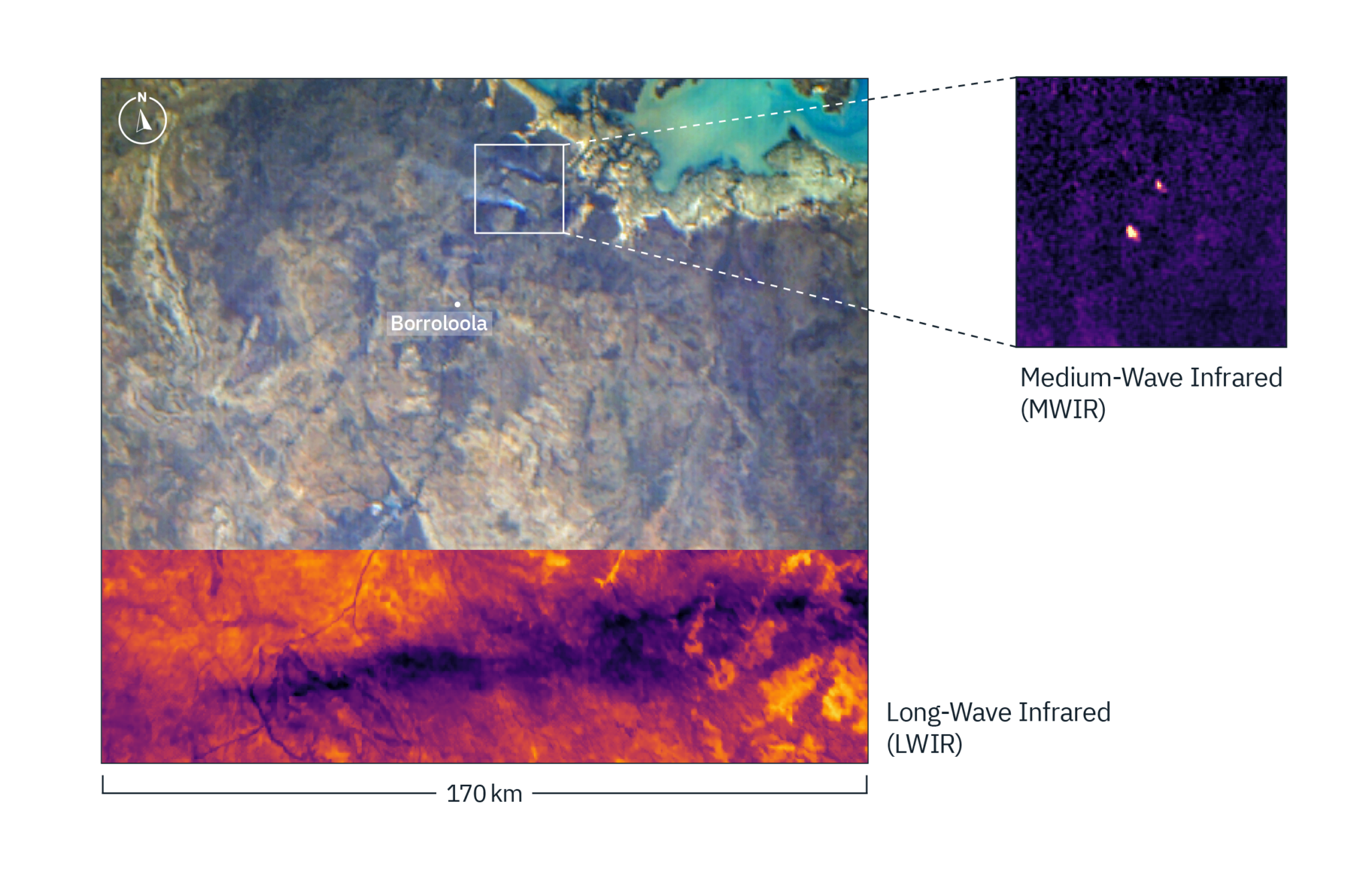
Ororatech is celebrating the success of its first satellite mission, Forest-1. The space tech startup is working on an early warning system for extreme weather events and is currently focusing on forest fires. For its forest fire management platform, the Munich-based company is still accessing data from various other satellites. With Forest-1, the startup launched its first satellite into space in January 2022 (Munich Startup reported).
This nanosatellite is equipped with a thermal imaging camera with long- and medium-wave infrared sensors, as well as a camera in the visible spectrum. It also has a graphics card on board for data processing. This allows the satellite to send time-critical messages to the ground in real time via a special satellite network. As the startup has now announced, it successfully detected and reported a forest fire for the first time at the end of May, thus proving its functionality.
"This is a very important step for the company. Our team has shown that the thermal imaging camera on a nanosatellite can surpass current technologies,"
says Thomas Grübler, CEO of OroraTech.
"By the end of 2023, we will launch the next eight satellites to completely close the current afternoon data gap and provide our customers with even better information. In a few years, our constellation will be able to detect wildfires worldwide within 30 minutes."
Additional Dcubed components achieve TRL-9
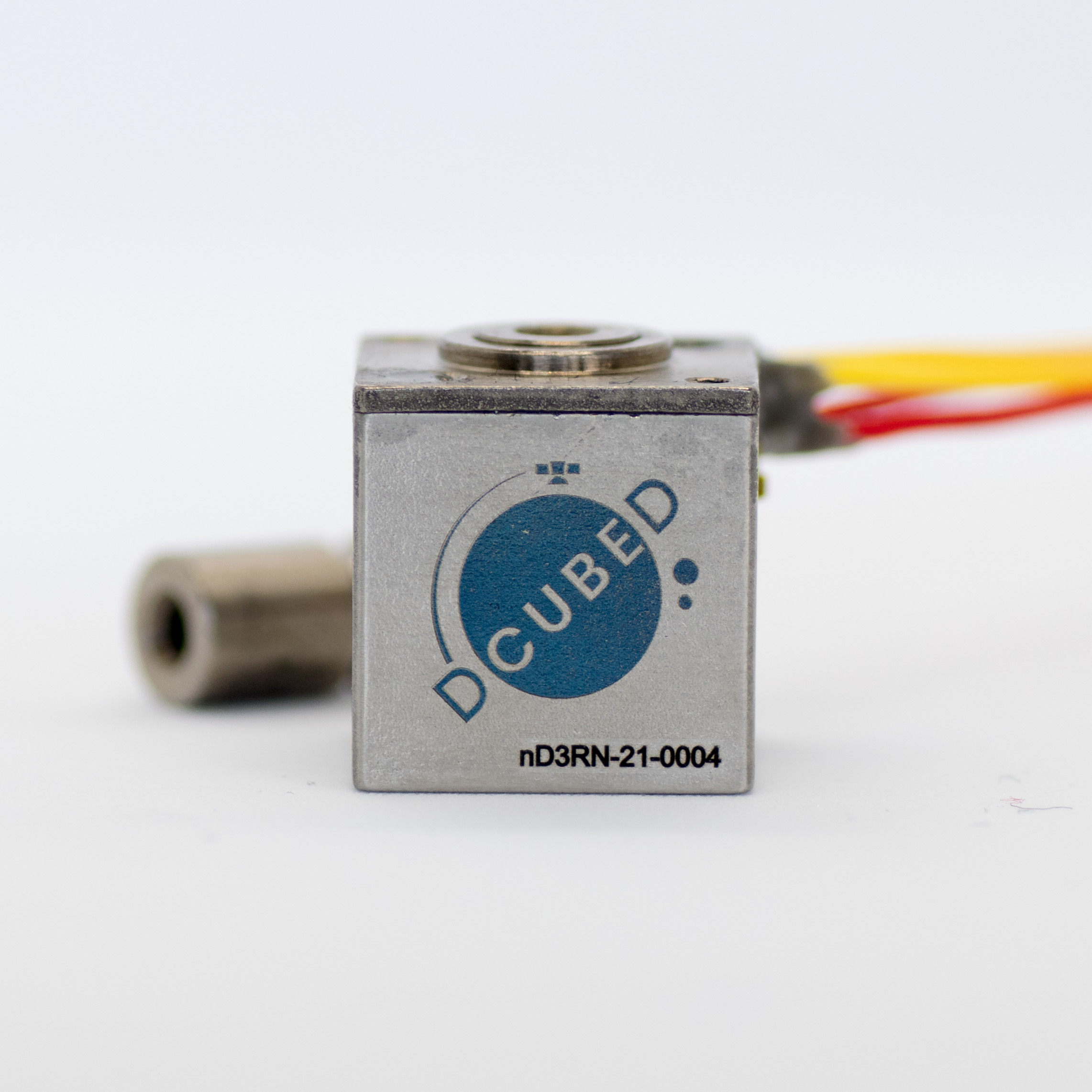
NASA uses the Technology Readiness Level (TRL) to assess the development status of new technologies for space travel. TRL-9 is the highest level and represents proof of successful deployment. For young space tech startups, this represents an important milestone in their development. Dcubed Having already achieved TRL-9 for its Nano Pin Puller nD3PP in January, the Nano Release Nut nD3RN is now following suit. This was achieved as part of a joint mission with the Polish satellite manufacturer Satrev.
"In this industry, demonstrating technologies in space is essential. A successful in-orbit demonstration will catapult the TRL of our Nano Pin Puller, Nano Release Nut, and Space Selfie Stick to 9, paving the way for their use in many more space missions and applications requiring TRL. We are very excited to be working with Satrev to integrate our products into their satellite and can't wait for launch day."
so Thomas Sinn, CEO of Dcubed.
In addition, Dcubed recently won the startup competition Techmatch Live from Texas Instruments.
Isar Aerospace concludes another important partnership
Isar Aerospace has signed a firm launch services agreement with the Italian space infrastructure provider D-Orbit. Under the terms of the agreement, the Munich-based company will use its Spectrum launch vehicle to launch the D-Orbit ION Satellite Carrier into sun-synchronous orbit starting in 2023 as the primary customer. The launch site will be Andøya, Norway. Spectrum was developed for small and medium-sized satellites and satellite constellations. The Italian space technology company's ION satellite carrier can align satellites to specific points in orbit and accommodate multiple payloads on each mission. The solution is expected to reduce launch-to-operation time by up to 85 percent and launch costs for an entire satellite constellation by up to 40 percent.
"We are delighted to welcome D-Orbit aboard the Spectrum flight and thank the D-Orbit team for the trust they have placed in us. We look forward to working toward our shared goal of breaking down barriers to flexible access to space,"
says Stella Guillen, Chief Commercial Officer of Isar Aerospace.
The startup is currently looking for a new location where it can continue to grow. The Haar municipal council recently voted to begin preliminary planning and in-depth discussions about relocating to the Munich suburb. According to media reports, Taufkirchen is also on the shortlist.
Thetaspace wins Copernicus Masters
It's been quite some time since Thetaspace won the Copernicus Masters competition. The Gilching-based space tech startup removes optical obstructions such as clouds from satellite images. In the European Commission's competition, Thetaspace prevailed in the challenge run by Up42 and Airbus Defence and Space. For its solution, the company relies on the fusion of synthetic aperture radar and optical satellite imagery from the Sentinel-1 and 2 constellations with the aid of artificial intelligence.