
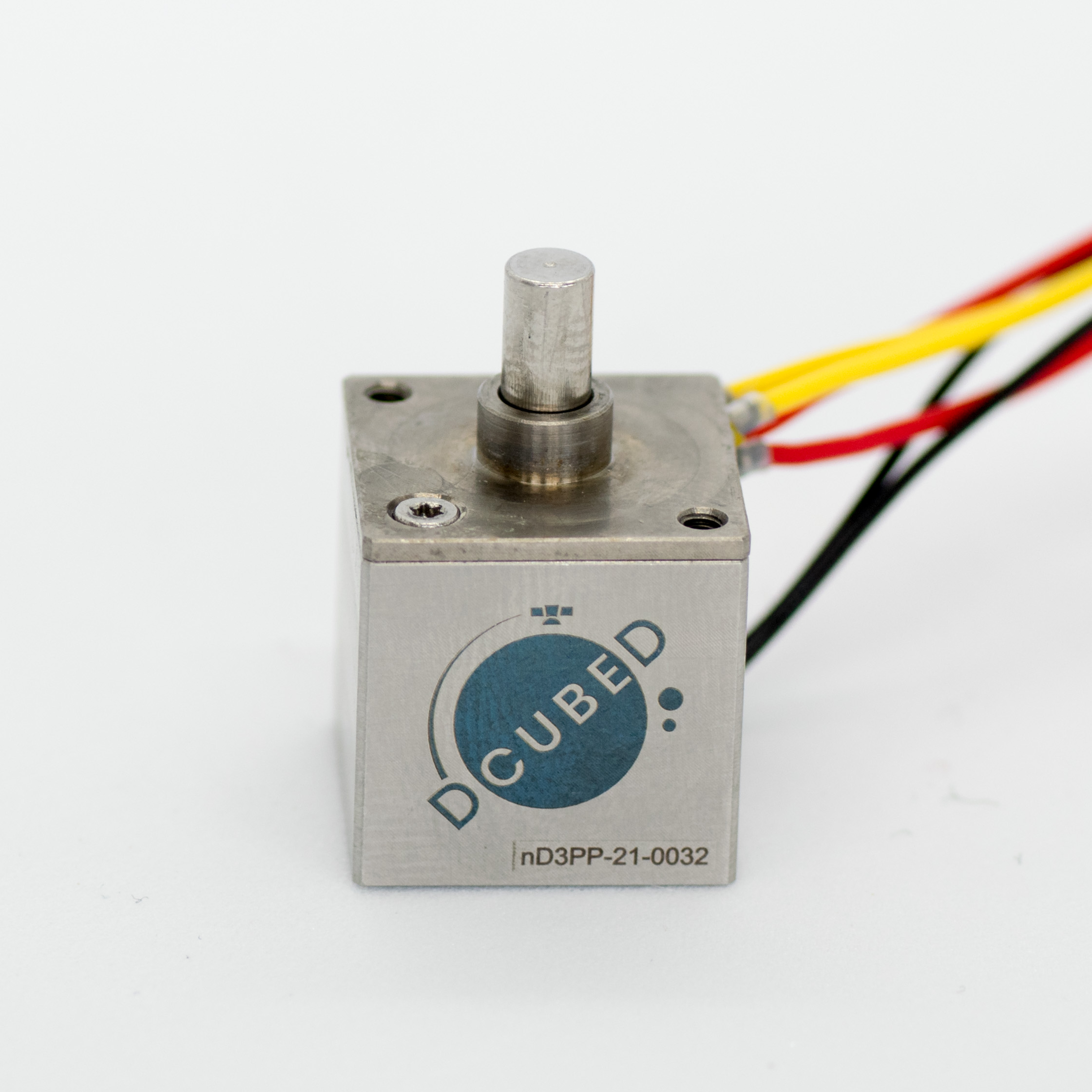
On January 13, the time had come: With the launch of a Falcon 9 rocket from Spacex, Dcubed launched its technology into space for the first time. The Munich-based space tech startup develops and markets actuators, i.e., trigger mechanisms for deployable structures such as antennas or sails.
"You can imagine it a bit like an umbrella, which is first folded and then unfolds when needed. Our first product, the actuator, is essentially the button that triggers this unfolding,"
explained Thomas Sinn, Founder and CEO of Dcubed, in an interview with Munich StartupThe solution, called Nano Pin Puller nD3PP, was part of the mission of Fossa Systems, a Madrid-based company. Fossa Systems launched the first six satellites of its IoT constellation and also demonstrated its PocketPod deployer for the first time. The deployer uses the Nano Pin Puller to open the pod and release the payload. With the successful activation of the four pin pullers, Dcubed gained flight experience and advanced its products to the next and highest level of technology readiness, TRL 9.
The launch also included an in-orbit demonstration (IOD) mission of Dcubed's Space Selfie Stick and Dcubed Nano Release Nut to demonstrate their functionality in the space environment. The IOD mission is part of the SWIFT satellite of the Polish space technology company Satrevolutions.
Ororatech was also on board the Spacex rocket
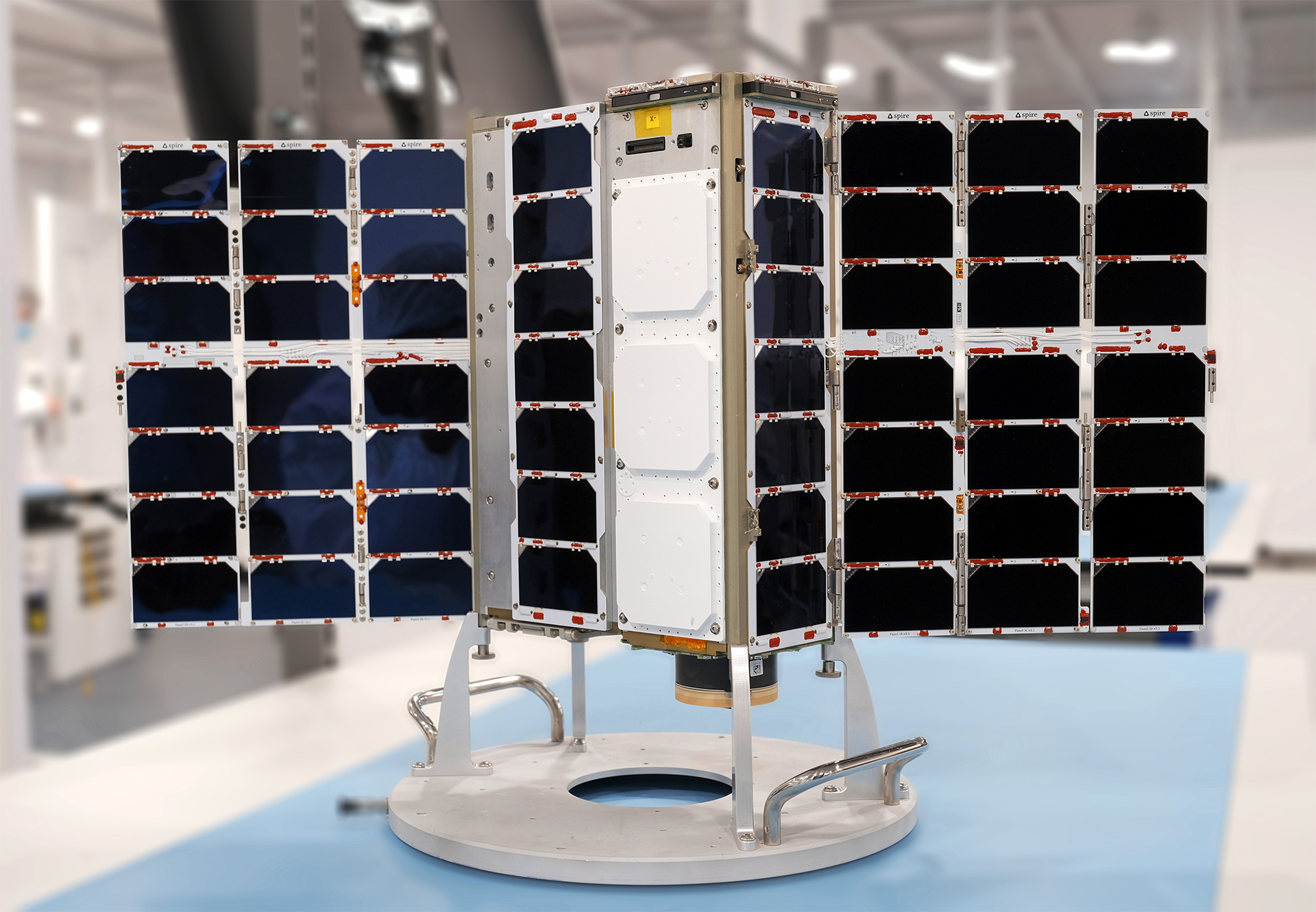
However, Dcubed was not the only Munich startup to secure a place on the SpaceX flight was able to get hold of: Ororatech, which is working on an early warning system for extreme weather, launched its first satellite into space with this mission. The Munich-based company's Cubesat, roughly the size of a shoebox, will orbit the planet at a distance of approximately 525 kilometers and capture high-resolution thermal images of the surface. Using AI-based software, these images will be analyzed directly in orbit and then transmitted back to Earth. In this way, Ororatech aims to significantly reduce the time between fire detection and alarm from two hours to just a few minutes.
“With our technology we detect both medium-wave and thermal infrared radiation from a great distance,”
explained Thomas Grübler, CEO and co-founder of OroraTech.
"We analyze the collected data in orbit using our GPU-accelerated onboard processing module, thus detecting characteristic temperature signatures while still in space. Our AI-based software ensures that clearly identified wildfires are immediately reported."
The recently launched satellite will be followed by more in the fourth quarter of 2022. By the end of 2023, a total of eight CubeSats will be in a sun-synchronous orbit as a constellation. In the long term, an entire swarm will provide a multitude of data points and usefully complement existing data from, for example, Copernicus, the European Earth observation program. In the future, Ororatech's satellites will be able to detect other processes besides forest fires, such as gas flaring, the deliberate burning of associated petroleum gas, or the evaporation of water in the ground. The space tech startup even wants to be able to determine the thickness of oil films on water from orbit.
Isar Aerospace wins EU award worth 10 million euros
And also at Isar Aerospace There was reason to celebrate in January: The launch services provider specializing in small and medium-sized satellites won the European Commission's EIC Horizon "Low-Cost Space Launch" award. The space tech startup plans to use the €10 million prize money for further investments in research and development capacities as well as in testing and launch infrastructure.

Daniel Metzler, CEO and co-founder of Isar Aerospace, said at the awards ceremony at the 14th European Space Conference in Brussels:
"I am very proud! Winning the EIC Horizon Prize is not only a great success for the Isar Aerospace team and a testament to how much we have already achieved, but also underlines the trust the European Commission has placed in us."
Production of Spectrum, Isar Aerospace's two-stage launcher, continues to progress according to plan: The Munich-based company has already completed construction of its own, vertically integrated production facility and is working on completing key tests. Once these milestones are achieved, nothing stands in the way of a first test flight at the end of 2022.

