Munich Startup: Did your own experiences or experiences in your environment lead you to believe that a trade fair like HerCareer is needed? If so, what were they?
Natascha Hoffner: Before I became self-employed, I worked for a trade fair organizer in Mannheim for more than 15 years. There, I learned the trade fair business from the ground up and was already part of a new company and most recently the managing director. With my first child, I returned to work full-time after a short parental leave. The father spent a lot of time looking after the child in Munich, 400 kilometers away. With the second child, the model became more difficult, also because returning to management would no longer have worked out so easily. I then followed the family to the Munich area and founded Messe.rocks GmbH in April 2015 and launched HerCareer, which has since become Leading trade fair for female career planning and much more than “just” a trade fairWe are a meeting place, continuing education provider, network, and job-matching platform all rolled into one. Even back then, I wasn't willing to simply accept the idea that it would take more than 100 years before we achieved equality between men and women. It was clear to me that I wanted to work to ensure that women have equal opportunities in the world of work.
Munich Startup: What should visitors ideally take away from the trade fair?
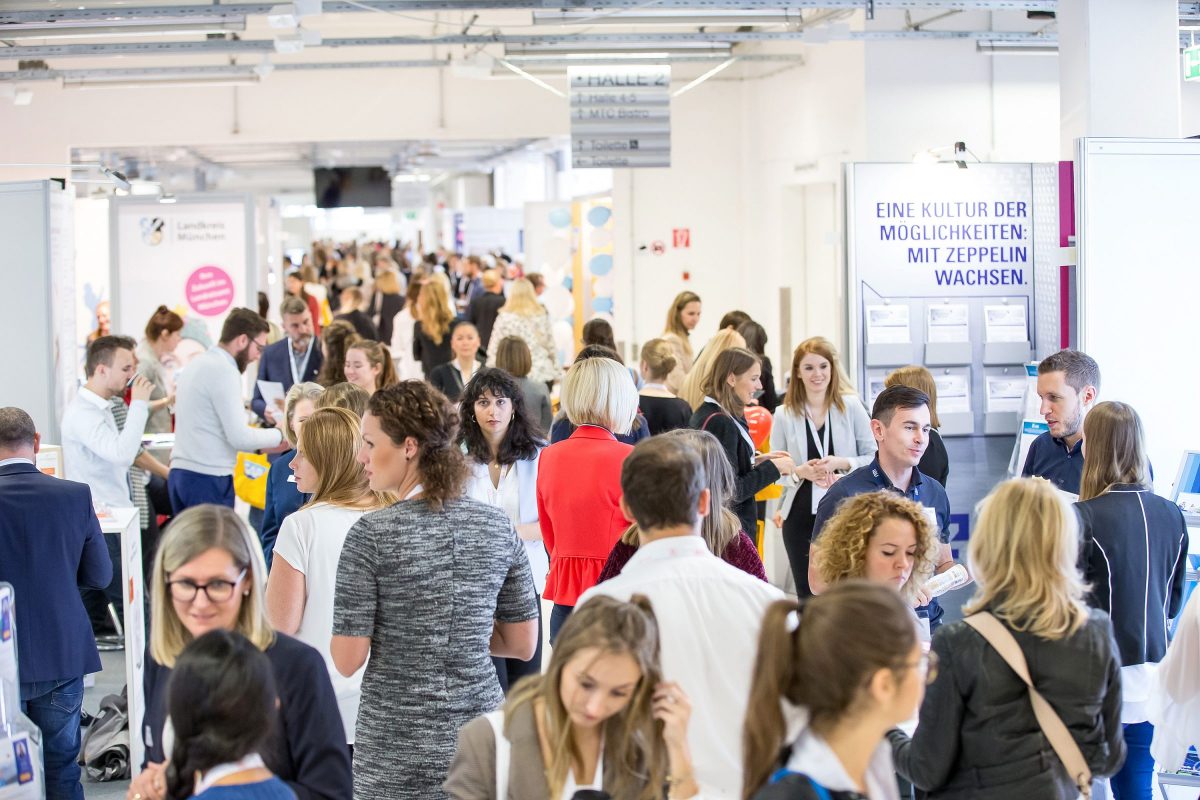
Natascha Hoffner: This can vary greatly depending on the purpose of the trade fair visit. A trade fair should present offers and information that support visitors in their respective career phase, so that they can get closer to their ideas and expectations - be it a new job, a suitable further training offer, partners for starting a business or a boost for their own company. The trade fair also addresses the topics of work-life balance, money matters, finances or investments. A special feature of HerCareer is the many formats for further expanding professional and personal networks - across hierarchies. The exhibiting companies and partners enable this not so much in traditional lecture formats, but in over 350 meetups and talks in small groups. Here, role models have the opportunity to speak and sparring partners share their knowledge, experiences and learning curves. The idea behind it is that we don't just want to encourage visitors to pursue new career paths. We want to prevent women and men from repeating the same "mistakes" and bad career experiences. HerCareer offers suggested solutions or, better yet, first-hand experience, with personal tips – along the lines of “this is how I solved it.”
“Unconscious prejudices against women play a major role in this”
Munich Startup: "Female founder" is a common buzzword in the startup scene – but according to Dealroom, only 10.9 percent of Munich startups have one or more women on their founding team. Do you feel that anything has changed in the startup scene in this regard in recent years?
Natascha HoffnerNot really – the situation isn't much better nationwide. The current Female Founders Monitor (FFM) 2020, a joint study by the German Startup Association and Google for Startups, shows that the proportion of female founders is stagnating at just 15 percent. Only one in ten young companies in Germany is built by all-female teams, and only 20 percent of the management is mixed. The remaining bosses are men – and they receive the most capital. While a founder-led startup in Germany can raise an average of €10.6 million, according to the Boston Consulting Group (BCG), female founders receive just under a third, with an average of €3.5 million. Unconscious prejudices against women play a major role in this.
The proportion of female founders remains far too low. However, I also observe that starting a business is an option for women, and that there is increasing public discussion about female founders and the question of how we can make them visible as role models. However, access to capital remains more difficult for women. It is often family and friends who provide the money for a startup. The investor landscape is heavily male-dominated. The proportion of female partners in German venture capital firms (VC) is only four percent, according to BCG.
Many women have a strong will to succeed and thus the perseverance necessary to start a business. They often struggle through with little or no outside capital than men. It's often said, "If these women want something, they'll achieve it." But they also have to sacrifice a lot, forgo time for their personal lives, and put in extra effort – this is discussed far too little. Above all, however, is the fact that women and men don't have the same opportunities when starting a business.
Munich Startup: Do you think it is important that more women start businesses in Germany?
Natascha Hoffner,: Of course, startups are the future of our economy – and women should be able to help shape them. Women often have a different focus than men when it comes to new products and solutions – not least because they themselves may be part of the primary target group. Furthermore, I personally often notice that women think from the perspective of the problem and ask themselves which technology can be used to achieve this. In this regard, they build a network that helps them achieve their goals. A great example of this is Judith Gampe, who earring created a device that integrates a headset. Or Julia Römer, founder of Coolar, a refrigerator that uses heat instead of electricity to cool, thus reducing CO2 emissions by more than 60 percent and operating costs by more than 75 percent. Coolar can also help keep medications or food cool in hot, powerless regions.
Men and women should be equally involved in innovations so that they do not only serve a part of humanity.
I do wonder why so little is changing. It is well known that women not only have a harder time accessing outside capital, but are also rated lower when submitting exactly the same pitch decks – keyword unconscious bias. Investors ask founders different questions depending on their gender. Researchers at Harvard Business School and the London School of Economics have found that men are more likely to be asked to provide information about their company's potential profits, while women are asked to provide information about their company's potential losses – and that this significantly reduces the amount of funding granted to female founders. According to a 2019 BCG study, all-female startups across all phases of seed funding have a 40 percent lower chance than men of receiving growth capital in the important second round. In the third round, women are even 90 percent less likely to receive fresh funding.
Munich Startup: Should women adapt to the working world created by and for men – or does the system need to change?
Natascha Hoffner: The question is rhetorical, isn't it? Of course, we need to question the system behind this discrimination. I remember many panels or female (founders) tracks on this topic at various events. They are usually staffed by high-profile women and the content is also very well-developed – but they only address women. Because women are interested in becoming leaders or founding a company. But what happens is that the discussion and the "solution" are mostly left to women. It doesn't work that way. The beneficiaries of the existing system are still primarily men. And when it comes to giving up power, the majority of them will not shout "yes" loudly and make way.
The reality is: we've never had such well-educated women as we do today. I consider it negligent not to want to utilize this talent in the face of the challenges of our time. Women are doing a lot to gain visibility and catch up with men: they are founding companies, creating family-friendly structures, becoming investors themselves – but there's more to be done. On the one hand, this certainly requires new regulations from politicians and funding bodies. Quotas can also be helpful as a transitional instrument for systemic change; this also involves new framework conditions for capital decisions. Dorothee Bär has therefore proposed a (women's) quota for state venture capital, and the Advisory Council for Young Business, commissioned by the BMWi, is also examining this approach.
Munich Startup: In your opinion, what needs to be done, regardless of legal changes, to encourage more women to take the step into self-employment?
Natascha Hoffner: This starts with a new attitude from financiers, which is why we cannot emphasize the existing inequalities and unconscious biases often enough. Furthermore, while many women can imagine starting a business, the fear of failure is understandably particularly high under such conditions. We need more opportunities for low-threshold startups. With HerCareer, we are providing a platform for discussions on the topic of founding a company. Women cannot solve the problem on an individual level – they need networks and role models to encourage them. We also provide support through our founder pitch: Male founders/teams have the opportunity at the fair free of charge (as long as slots are available) to pitch a female co-founder or colleague for a C-level position. Diverse teams are possible when we organize such encounters and step out of one's own comfort zone.
“It’s fantastic that there are more and more women’s networks.”
Munich Startup: And finally: How important are networks? Should women simply copy men's networks, or can they do it more intelligently and, above all, more inclusively?
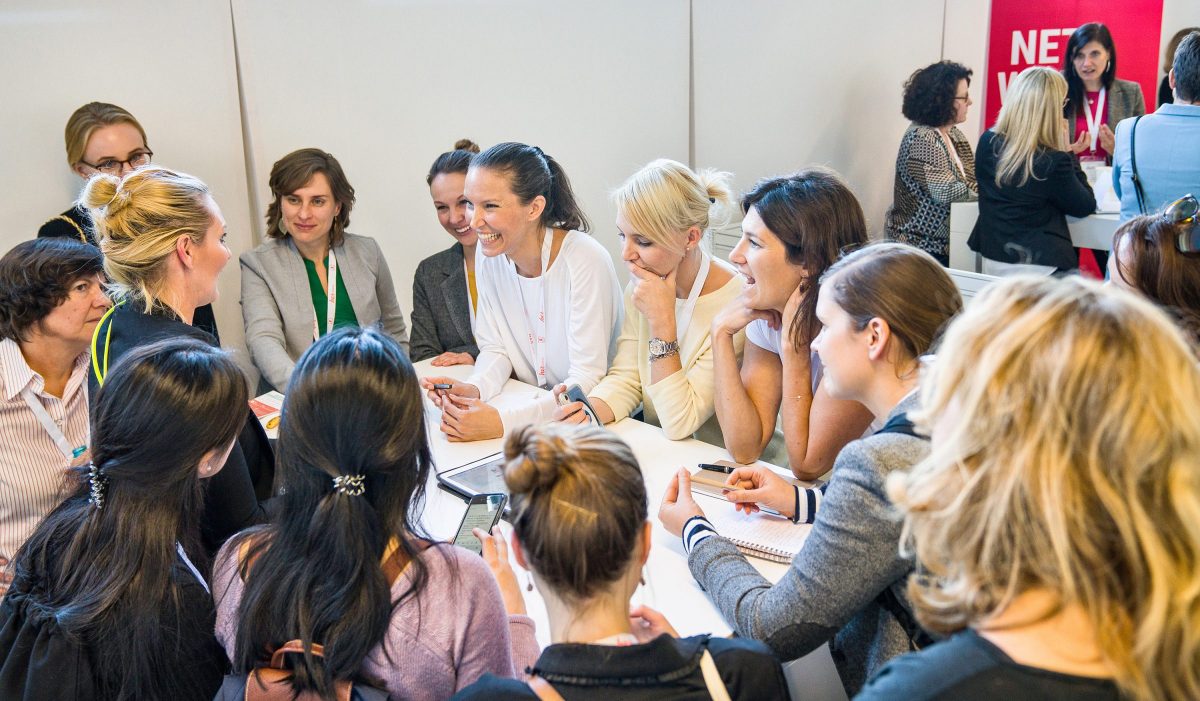
Natascha Hoffner: Networks are always beneficial for careers – regardless of whether they are internal or cross-company networks. The fact that there are increasing numbers of women's networks is fantastic. Women find a "safe" space in them to talk openly about their challenges and seek advice. And yet, men are still predominantly in control of the economy, which means that women should also rely on mixed networks within their industries and for their topics. But once again, it is true here: it cannot be just the task of women to make networks more inclusive. We need promoters, sponsors and supporters, men and women, who are willing to bring other women to the table, open doors and, if necessary, stand behind women. A network like this is worth its weight in gold.