Munich Startup: Please introduce yourselves briefly!
Svenja Lassen: The Female Investors Network (FIN) is an open Contact point for women interested in investingwho want to expand their knowledge, exchange ideas, and learn from each other. This includes both active business angels who have already invested and women who are approaching this topic for the first time and want to become investors in the future. Our shared goal is to increase the overall proportion of women in the startup ecosystem—both among investors and founders. We offer services for both sides and want to connect them because women are keen to invest in and support female founders.
The offers for investors include monthly 'Lunch&Learn'-Events where we impart knowledge on various investment processes through expert presentations and discuss experiences. We network our members, share relevant content, and communicate positions, jury, and panel requests. We also showcase the women's expertise and create visibility as role models through media channels.
In addition to reviewing their business idea and potential financing, we also offer female founders the opportunity to pitch their idea to investors—a target group that is otherwise particularly difficult to reach, as there are still too few of them. We also support female founders with mentoring, pitch training, and introductions to our partners and their programs and services.
More female investors = more capital for female founders
Munich Startup: What motivated you to found FIN?
Svenja Lassen: The fact that I met far too few women at venture capital events or among investors, and we also had too few in the Primecrowd network. I was aware that the number of female founders has hovered at just under 16 percent for years – but that female investors are even rarer at around 8 percent, I wanted to change. Because I believe that both figures are mutually dependent, and with more female investors, more capital would be available for female founders.
Munich Startup: Did you have role models?
Svenja Lassen: Actually, not, and that's exactly why I wanted to create something new. Of course, women could invest before. But no VC, investor, or network in Germany approached them specifically, independently, and according to their needs. Through our study, we discovered that women lack precisely this, and so we founded the network to close this gap and offer services that many would like.
Munich Startup: How is FIN linked to Primecrowd?
Svenja Lassen: FIN is a sub-network of Primecrowd, but open to all interested women. Through Primecrowd, we offer startup screening, selection, review, and due diligence services, as well as pooling our investors for financing campaigns. FIN also offers expanded opportunities for knowledge transfer and exchange in a protected and trustworthy environment – including for very specific questions from current and prospective female investors. With us, you will receive transparency and background information on the investment process and can then invest in our startups, but of course also become active independently.
Exchange at eye level
Munich Startup: Why does the startup scene need you?
Svenja Lassen: Because there hadn't been a network of this kind before, where like-minded people could meet on equal terms and exchange ideas openly. While there are female investor groups, they're mostly made up of women who already have investment experience. My goal is to educate people about startup investing in general, to get more women excited about this topic, and to lower the barriers to entry. And for that, we need a contact point where every question is welcome and where people encourage each other. Or as one of our investors once said: "Starting up startup investments is like learning a new language. You need a little vocabulary and then an environment where you feel comfortable speaking to each other." That’s exactly what we offer.
The network has a lasting impact
Munich Startup: FIN was founded in spring 2020. How have you dealt with the challenges since the network's founding? How has FIN developed?
Svenja Lassen: The plan was to present the results of our 2020 study on female business angels at numerous events and panel discussions. However, all appointments and invitations fell through due to the pandemic. This was, of course, unfortunate, because otherwise we would have quickly reached a large audience. The challenge was to build the network digitally and remotely. But we were able to hold at least three hybrid events in the summer, where some of the women could meet in person. This was extremely enriching. Participation at the monthly digital events is also high.
The network is growing steadily; we now have 65 registered members. And I'm talking to new interested parties every week. We're also currently building a feature-rich digital platform to automate various processes as we grow. A major success was that FIN members invested more than twice as much capital in our 2020 startup campaigns as women invested in all campaigns of the previous five years—a clear sign that women are increasingly seeking to exert influence and promote innovation, and that the network is having a lasting impact.
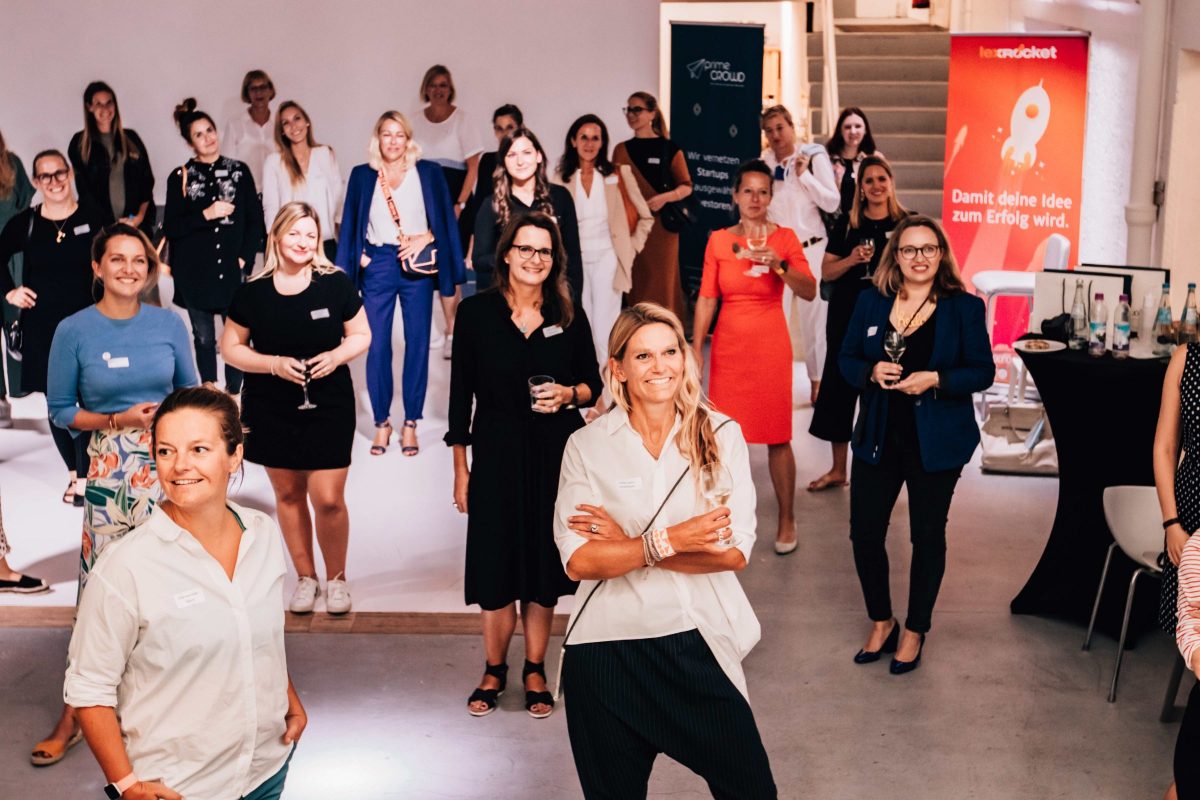
The kick-off event for FIN at Werk1… 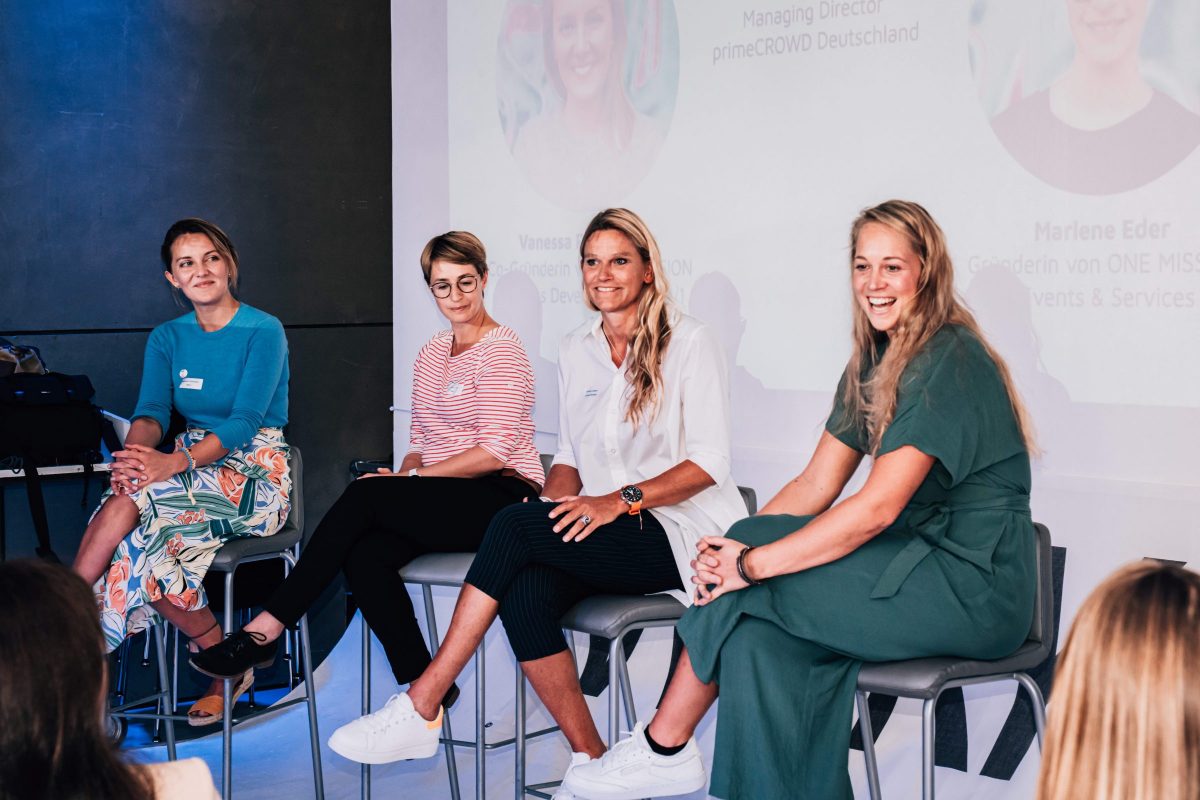
… was a complete success (Photos: Frame by Frame)
Svenja Lassen: “Impact is more important to them than pure returns”
Munich Startup: Do female investors differ from male investors? If so, how?
Svenja Lassen: Women want to do good with their money; impact is more important to them than pure returns. While that certainly counts, it came in third in percentage terms – after the desire to exert influence and support female founders. This shows that more female investors would also make a positive difference in society: with them, there would be more money for impact investments and female founders.
I also noticed a very empathetic atmosphere in the meetups between female investors and founders: They even asked about their family backgrounds and personal challenges. This was a pleasant surprise for the founders, as they weren't used to such questions from male investors.
Munich Startup: What is the biggest mistake an investor can make?
Svenja Lassen: That's a difficult answer because everyone is different and has different standards. Fundamentally, I believe that, in addition to examining all the relevant facts and figures, everyone should also trust their gut feeling when it comes to the founders. Because no matter how high-tech a solution or product may be, there are always people behind it. You should trust them to successfully implement their vision.
Reflect on your own strengths
Munich Startup: And what do you think startups with female founders are doing right? What could they do better?
Svenja Lassen: Reflecting on your own strengths and clearly demonstrating them is always right and convincing. I would like to see female founders develop even more confidence, act self-assuredly, and not allow themselves to be discouraged. They have great ideas and are very open to exchange and input from mentors and investors. I would like them to be able to present themselves authentically and not have to focus on a solely male target group and perhaps pretend to be someone else.
Munich Startup: What will diversity in the startup scene look like in 5 years? What will it be like in 10 years?
Svenja Lassen: My biggest wish, of course, is to have 25 percent of startup investors made up of women by 2025—and to no longer have to talk about gender representation in ten years. Our goal at Primecrowd and with FIN is diversity, because it leads to greater success. Mixed teams always perform better. This applies to startups as well as investors. Ultimately, we can all only benefit from diverse perspectives.
Looking for more information? In an earlier interview with Maike Wursthorn from Werk1 to One Mission Svenja Lassen had already Tips for female startup founders.