Munich Startup: Please briefly introduce Falkensteiner Ventures.
Beat Blaser, Falkensteiner Ventures: We are a Boutique venture capital acceleratorWe coined this term for ourselves. We focus exclusively on travel, hospitality, leisure—the leisure industry—and elderly care. Why do we focus on travel and hospitality? My partner owns a hotel chain, Falkensteiner Hotels, and I myself have worked in the travel industry throughout Europe my entire working life. That's why we decided, as smart money investors, not to simply invest money, but also to support hands-on projects where it makes sense.
Munich Startup: What do you prefer to invest in?
Beat Blaser, Falkensteiner Ventures: We are particularly interested in everything that has to do with Travel Another focus cluster is vacation rentals, meaning homes and holiday apartments. Here, we're focusing on technology-supported, modern rentals because we believe this can make a real contribution, especially in vacation regions, by attracting new international guests. We believe there's still tremendous potential in the vacation rental sector, significantly more than in cities, where the segment is highly regulated.
Another of our focuses is everything that has to do with Software-as-a-Service for Hospitality This is where our hotelier's insider knowledge plays a major role. Especially in small hotels, there are still countless areas that can be automated and efficiency gains achieved. We currently have five investments in this area and are actively seeking more.
“We are looking for topics at the interface between the old and new economy”
And the fourth focus segment is camping and outdoor. Generally speaking, we are looking for topics that are Interface between old and new economy And especially in the camping sector, we see that hospitality is often still under-digitalized. Of course, I'm not talking about the well-organized chains, but rather the individual hotels. And in many cases, the camping, glamping, and outdoor segment is still five, six, or seven years behind. We see good potential there and are close to completing three additional investments in this area.
Munich Startup: Do you focus on startups in certain phases?
Beat Blaser, Falkensteiner Ventures: We like everything that is early, at the PowerPoint level, pre-seed, or seed stage. We have a relatively high level of knowledge of the topics, we know the market very well, and can also provide young people with the greatest added value in the early stages through our networks, experience, and mentoring. I sometimes have to laugh myself when someone needs something, for example, in Finland or the Czech Republic, and we can help them. At the beginning, we weren't really aware that we have an excellent network and can help people almost across Europe. This also leads to us doing things almost exclusively in the early-stage area.
Munich Startup: What kind of startup would you never invest in?
Beat Blaser, Falkensteiner Ventures: Of course, it should be as digital as possible, but at the interface with Brick&Mortar (stationary business or sales rooms, Editor's note:). The old adage "Team, team, team" has always been important to us, because a good team can work even with a mediocre idea, but a mediocre idea can't work with a weak team. We also want to promote female founders more in the future.
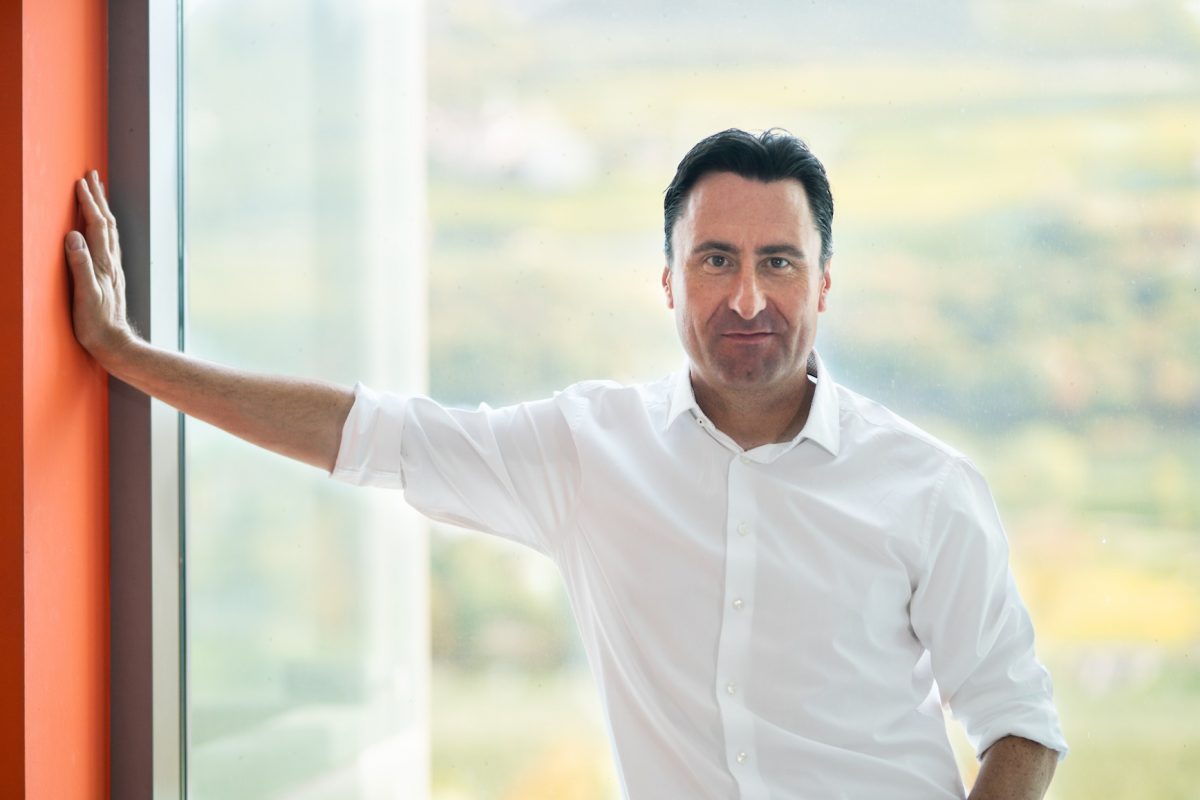
“We remove obstacles and open doors”
Munich Startup: Do startups have to be afraid that you will interfere too much?
Beat Blaser, Falkensteiner Ventures: Our philosophy is: We remove obstacles from the founders' path and open doors. We don't want to make their lives any more difficult, for goodness' sake. This naturally correlates with the team and the respective business idea. Some teams need more support than others. Especially in the early stages, we also actively support our startup investments at the operational level. The ideal situation, however, is actually that the founders push back and say, "We've got this under control," that they know what they're doing and only come when they really need support. If we're too heavily involved operationally, then there's usually something wrong with the team.
Munich Startup: How long does it take from the first contact to the conclusion of the contract?
Beat Blaser, Falkensteiner Ventures: On average, it's six months, but if things move quickly, it can take three. And maybe with a bit of ping-pong and back and forth, it can take nine. But the average is probably six months until the money is in your account.
Munich Startup: To be successful, a startup must…
Beat Blaser, Falkensteiner Ventures: …be a strong, resilient team with a strong idea that brings customer benefits in key areas and solves problems.
Munich Startup: How do you get to know startups?
Beat Blaser, Falkensteiner Ventures: We don't have batches or deadlines; we like it when people approach us when the time is right for them. We've been in the market for two years, and we find our startups through all channels, including network referrals, LinkedIn, and, of course, the occasional pitching event. But what we appreciate most is when people or contacts approach us, and we always try to provide qualified feedback within two to three weeks.
For Falkensteiner Ventures, the team performance is decisive
Munich Startup: Is there a knockout criterion for the pitch?
Beat Blaser, Falkensteiner Ventures: I don't think there's a knockout criterion. If there is, it's probably the lack of team performance or chemistry, meaning if we feel like it's not a good fit. Or we think the team can't handle the challenge. Sometimes it's also the constellation with other investors, where we say it would click well with the founding team but not with the existing investor or the lead investor.
Munich Startup: What have you ever miscalculated?
Beat Blaser, Falkensteiner Ventures: I can say – and this includes the COVID phase – that so far, according to our traffic light system, all startups are green, and one is yellow. And we believe that, together with everyone involved, we can get that one back to green status. So far, we've been lucky and perhaps even made the right choice, but none of them have crashed yet.
“People are traveling more carefully”
Munich Startup: The trend of the year is…!
Beat Blaser, Falkensteiner Ventures: There are several. First, there are the COVID effects: We're noticing that there's a lot of local travel, that bookings are being made at much shorter notice, and certainly also that people are traveling more thoughtfully, meaning they're asking more about the purpose of their trip rather than flying to New York and back on the weekend. And what we're also seeing is that large, traditional companies in the travel sector, be they tour operators or airlines, are naturally struggling. This is, of course, due to COVID, but also partly due to outdated business models, partly due to ballast and costs that they simply cannot reduce.
And what we see on the other hand, whether in our portfolio or with others, is that the young companies are simply so much more agile and naturally have a lower cost base. This allows them to focus more on their product and customers and less on internal problems and everything that goes with them. This simply gives them greater opportunities in the current situation. Now is the time for startups in travel!
What Germany can learn from Austria
Munich Startup: What is the Munich startup scene doing right from an investors' perspective? What could it do better?
Beat Blaser, Falkensteiner Ventures: When I look at our travel topics, Munich is simply an incredibly good location. Switzerland and Austria are nearby, and the south is not far away. But perhaps the ecosystem benefits can be emphasized even better and more clearly in the communication. Because every now and then I have the feeling that the important things, for example, when Obama Bits & Pretzels appears, almost incidentally.
Another topic on my mind is support from the city, federal government, and states. I believe that in this area, Germany as a whole, not just Munich, has the potential to communicate this better. Austria is doing incredibly well in this area, with clear communication and support for startups, and at a rapid pace, too. We've now been in the situation three times where we had to choose between Germany and Austria for company relocations, and both times the founding teams, together with us, decided on Austria. Regarding the efficiency and speed of funding, we could perhaps learn a thing or two from the Austrians.
Munich Startup: Last but not least: Who do startups approach when they want to talk to you?
Beat Blaser, Falkensteiner Ventures: For all of us. Whether that is me is, at Erich Falkensteiner, with our office and project manager Ingrid Silginer or via the Web form, Social Media or other channels – it doesn't matter to us. Startups shouldn't be shy or afraid of contact; they should just go ahead and contact us.