
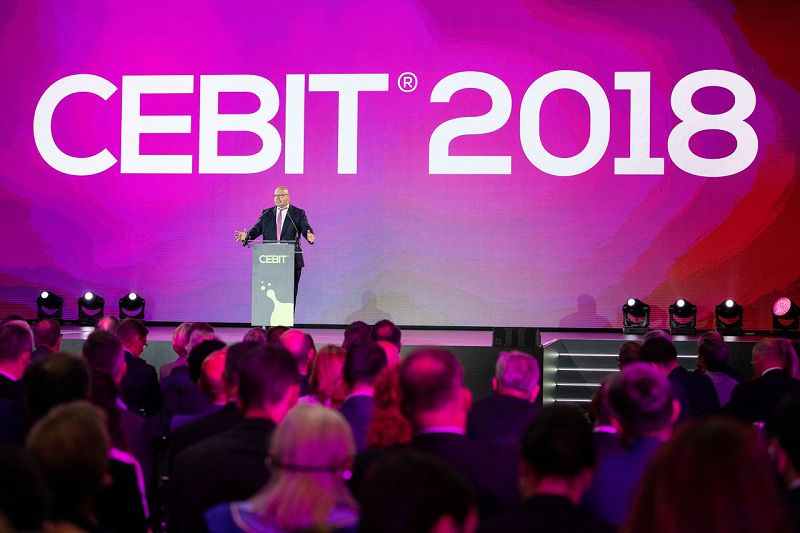
Jaron Lanier’s keynote speech on “Take-off Monday” at Cebit highlighted the potential downsides of new technologies. The official opening by Federal Minister of Economics Altmaier, however, was largely positive.
Germany must support more young companies so that they can find a permanent home here and not more startups are sold abroad, he said. Federal Minister for Economic Affairs AltmaierAnd we should encourage young people – to fail. The minister received much applause for his speech, as he skillfully bridged the gap between startups and established companies. His closing remarks were most inspiring: He spoke of his vision of aging, how he would sit in his living room with his smart service robot (made in Germany, of course) and send it for a beer. Altmaier's closing remarks, however, were intended to allay fears about artificial intelligence:
“Do not be afraid. […] Our Intelligence is the deciding factor.”
What companies and society will do with AI and robotics, smart data, and unmanned drones remains to be seen. What's already possible is impressively demonstrated at CeBIT.
Robots upon robots
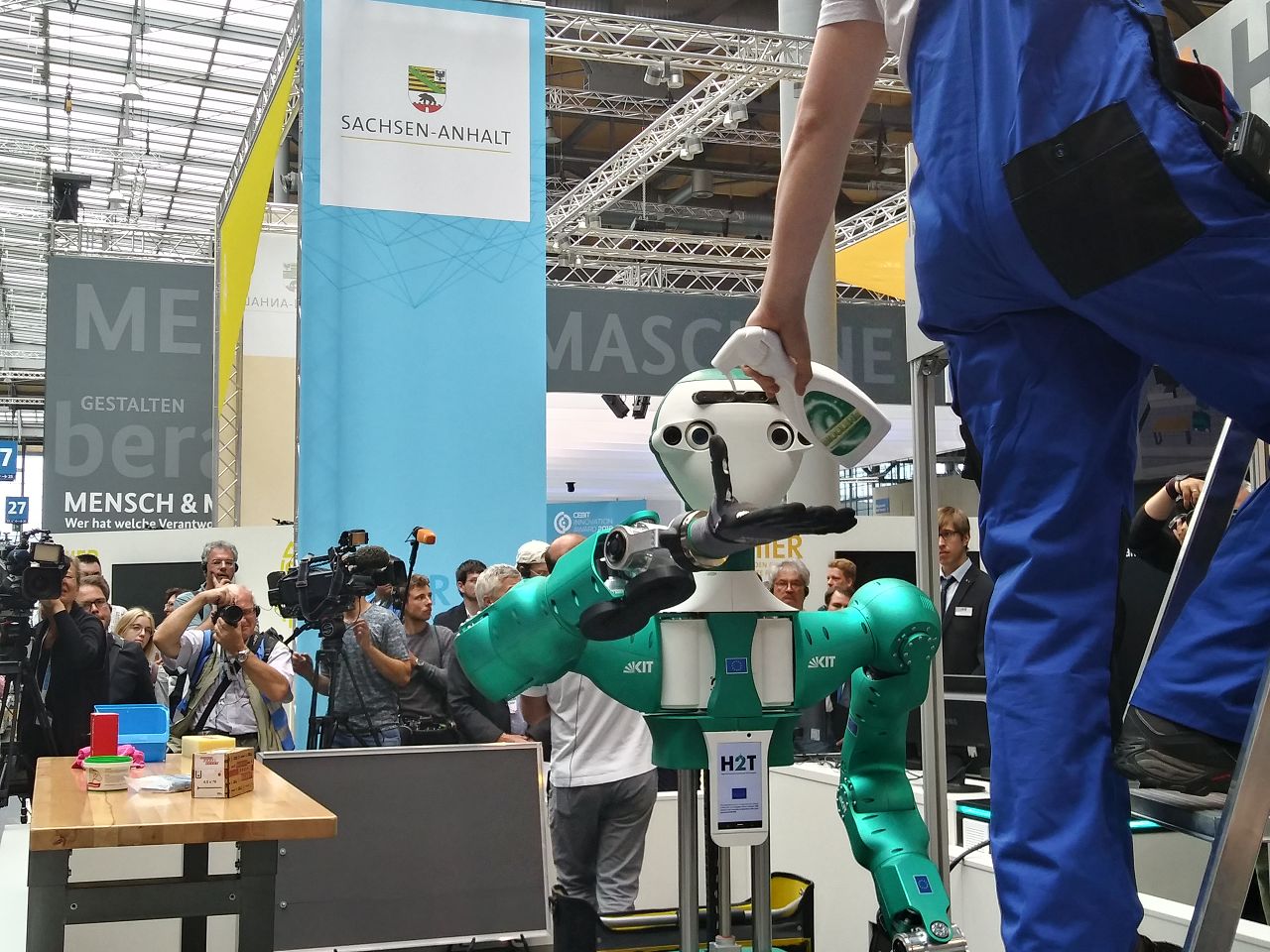 For example, there's the KIT project "Second Hands." This humanoid assistant robot, developed by the Karlsruhe Institute of Technology (KIT), among others, works hand in hand with humans in factory halls, recognizes when a worker needs help, listens to voice commands, and continuously learns through AI.
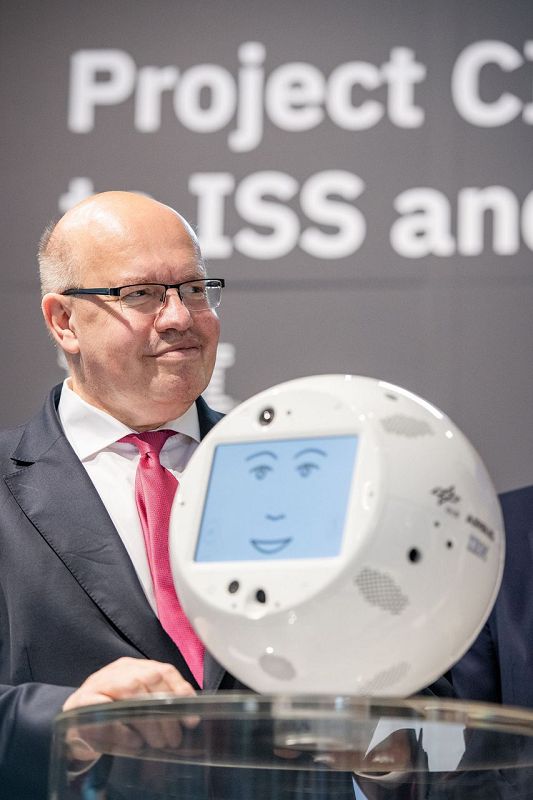
Also impressive is the AI-based interactive flight attendant developed for the International Space Station (ISS) by IBM and Airbus on behalf of the German Aerospace Center (DLR). This "natural" astronaut assistant, called Cimon (Crew Interactive Mobile Companion), can interpret moods and emotions and improves its responses using a combination of deep learning and machine learning.
And a visit to SoftBank Robotics demonstrates how easy it is to interact with humanoid robots like "Pepper." While the noise level of a trade fair sometimes makes communication difficult, causing the otherwise cheerful robot to turn red, many booths actually feature such service robots, as they allow a wide range of IoT and chatbot solutions to be vividly demonstrated. And Pepper is certainly a crowd-pleaser.
Future Mobility has its own hall
Away from robots, towards autonomous mobility. There are no autonomous buses yet to transport trade fair visitors from one end of the fair to the other. However, there are plenty of autonomous vehicles in the halls themselves. Take e.GO Mobile, which has set up a large test track for its small electric car. The larger model, the "people mover," can accommodate 15 people. It will still be some time before the car can drive autonomously on the road. Theoretically, the bus can already do this; after a short training period of three to four months, it has "learned" enough, according to Günther Schuh, the company's CEO. However, it will probably be a few years before the public learns and accepts that autonomous driving is safer than driving with a human driver.
The startups — secret stars of the trade fair?
And what are the approximately 350 startup exhibitors doing at the fair? Depending on their stage, they are housed in the Scale11 hall. Many are accommodated with table corners at the official stands of the ministries or federal states, such as the Munich startups. accu:rate and Qolware. In other halls, there are associations that co-present startups. All of these are opportunities to open up to an international audience at low cost. What do the companies gain from this? We asked Fabio Marti, Director Business Development at the Munich startup Babbler:
What do you expect from Cebit?
Essentially, we want to expose our product and get feedback. We want to see how customers react to [the messenger, ed.] ginlo responded. It's the first time we've exhibited publicly. This is a smoke test for us. Of course, we also want to take home some customer contacts.
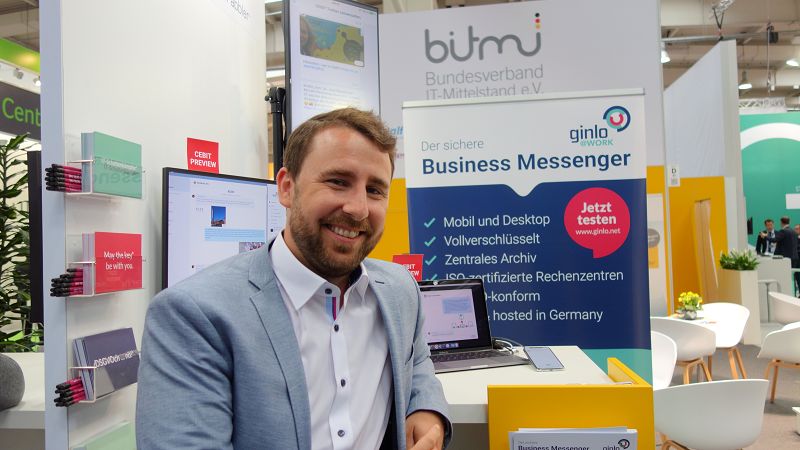
Do you think you'll do business here?
I don't think it's a deal. This is the first step, as is the case in B2B business. It's about making initial contact. We're focused on the German-speaking market, but we've been bilingual—German and English—since the start. In that sense, this is also an opportunity for us to see what kind of response we get from the international market.
Are large trade fairs a good place for startups?
Of course, it's difficult if you want to schedule a lot of appointments in advance. This requires a certain amount of awareness beforehand. What's interesting is the walk-in customers. That provides direct feedback. This is definitely the right venue for that.
Thank you very much, Fabio!
The Cebit Innovation Award and ministerial visit to the stand
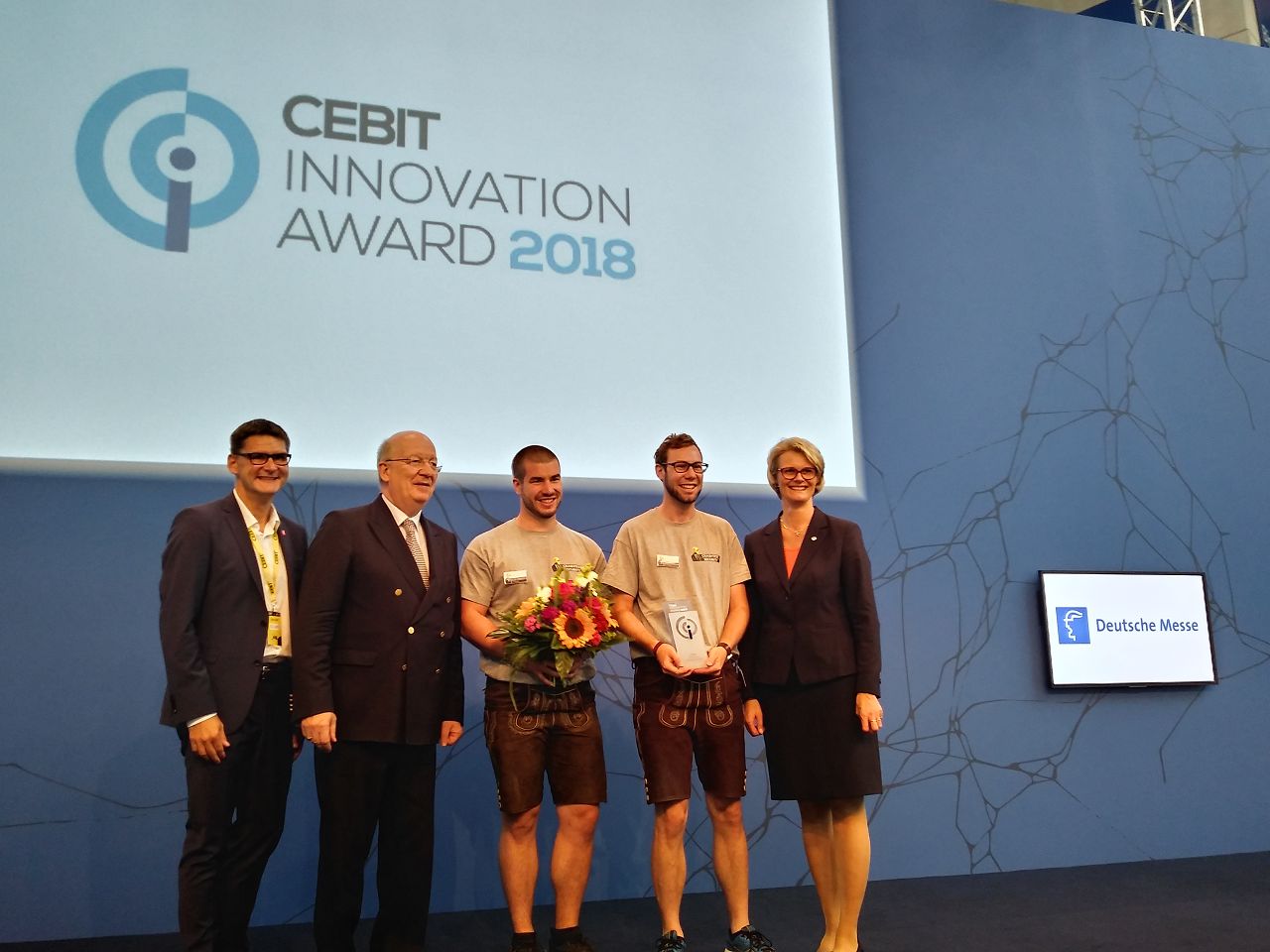
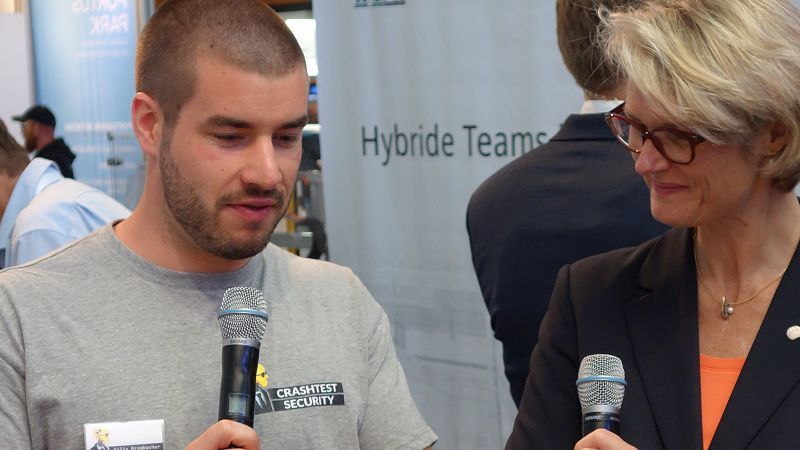
Another way to get a lot of attention is to have a high number of visitors at the stand. The Munich startup Crashtest Security benefit. Federal Research Minister Karliczek The young company was awarded the Cebit Innovation Award and then had the product explained to him at the booth. How did this resonate with the startup? The leather-clad founders hope this will generate publicity and attract more interested parties to the startup in the coming days.
Janosch Meier, Co-Founder at Crashtest Security in addition:
Do you already know what you will do with the cash prize?
We took second place, which was worth €30,000. We'll use this to further develop our company. For example, we're currently looking for someone in sales. We can certainly put the money to good use.
And how was it for you to explain your product to the minister?
It's a completely normal trade fair situation. I'm trying to explain it in a way that even non-technical people can understand.
Today is the first day of Cebit, how is it going?
I've already had two good customer conversations. Our goal is 15 such conversations per person per day. So there's still some room for improvement. But let's see what the next few hours and days bring.
Thank you very much and continued success, Janosch!
Overall, a walk through the startup hall reveals that the trade fair starts off quietly, but steadily fills up around midday. Many of the exhibiting founders are optimistic that they will make good business contacts and gain visibility through their presence at Cebit. Founders often use not only their booth but also forums with greater exposure, such as expert presentations or panel discussions, to put their company in the spotlight. Other startups are a bit more reserved and want to wait and see whether Cebit's new concept will work for them.
Learning, trust, collaboration
Thus, Cebit fluctuates between euphoria and restraint. Groundbreaking innovations are celebrated. At every booth, on every stage, the same buzzwords are heard: how important learning and skills are—for machines and people alike. That only trust in technology can create public acceptance—and how companies and politicians must work toward this. And the most popular buzzword: collaboration. Across borders, across industries, beyond established structures. Because Cebit is and remains—concerts and shows notwithstanding—a trade fair where business is meant to be done.

