Munich Startup: What problem do you offer a solution for?
Oliver Diekmann, Co-Founder and CEO: Around 70 percent of the relevant knowledge in companies is undocumented – it resides in the minds of the people who work there. When these people retire, leave, or a company is handed over, this knowledge is irretrievably lost. We call this corporate dementia. By 2030, 6.5 million baby boomers will leave the German labor market, and according to [source missing], around 545,000 companies will be affected. KfW Research up to 2029 before the handover. Wingmaite secures this implicit experiential knowledge and makes it usable for employees and AI before it is lost.
Munich Startup: What can you do as of today?
Oliver Diekmann: We're not building the next document management tool, but rather the contextual layer of a company. This means we're specifically capturing the knowledge that isn't written down anywhere – experience, routines, customer relationships, and the reasoning behind decisions. Thanks to AI and voice-to-voice technology, this happens easily and almost incidentally in everyday work. Previous knowledge management systems have often failed because they were built without considering people and were far too complicated to maintain. We're turning that on its head: We're adapting to how people work, not the other way around.
Experiences from company transfers were incorporated into the founding.
Munich Startup: What triggered the founding?
Oliver Diekmann: I've built, sold, and rebuilt companies. With each transition, I've witnessed the sudden loss of knowledge when the people who possessed it leave. This wasn't primarily technical expertise, but rather context. Why decisions were made the way they were, which customer relationships truly sustained operations, the nuances that matter in day-to-day operations. When I then saw, as an investor, how often acquisitions fail precisely at this point, it became clear: a solution was needed. The breakthrough in AI then determined the timing. For the first time, we can truly solve what was previously not scalable.
Munich Startup: Was there ever a moment when you thought about giving up?
Oliver Diekmann: No. On the contrary, the feedback from many medium-sized companies reinforces our belief that our solution is needed, and we see great potential. A little humility doesn't hurt, though. Success doesn't happen overnight, but only through the consistent hard work of a good team. And it certainly helps that Wingmaite isn't my first startup. That makes you a bit more resilient and calmer.
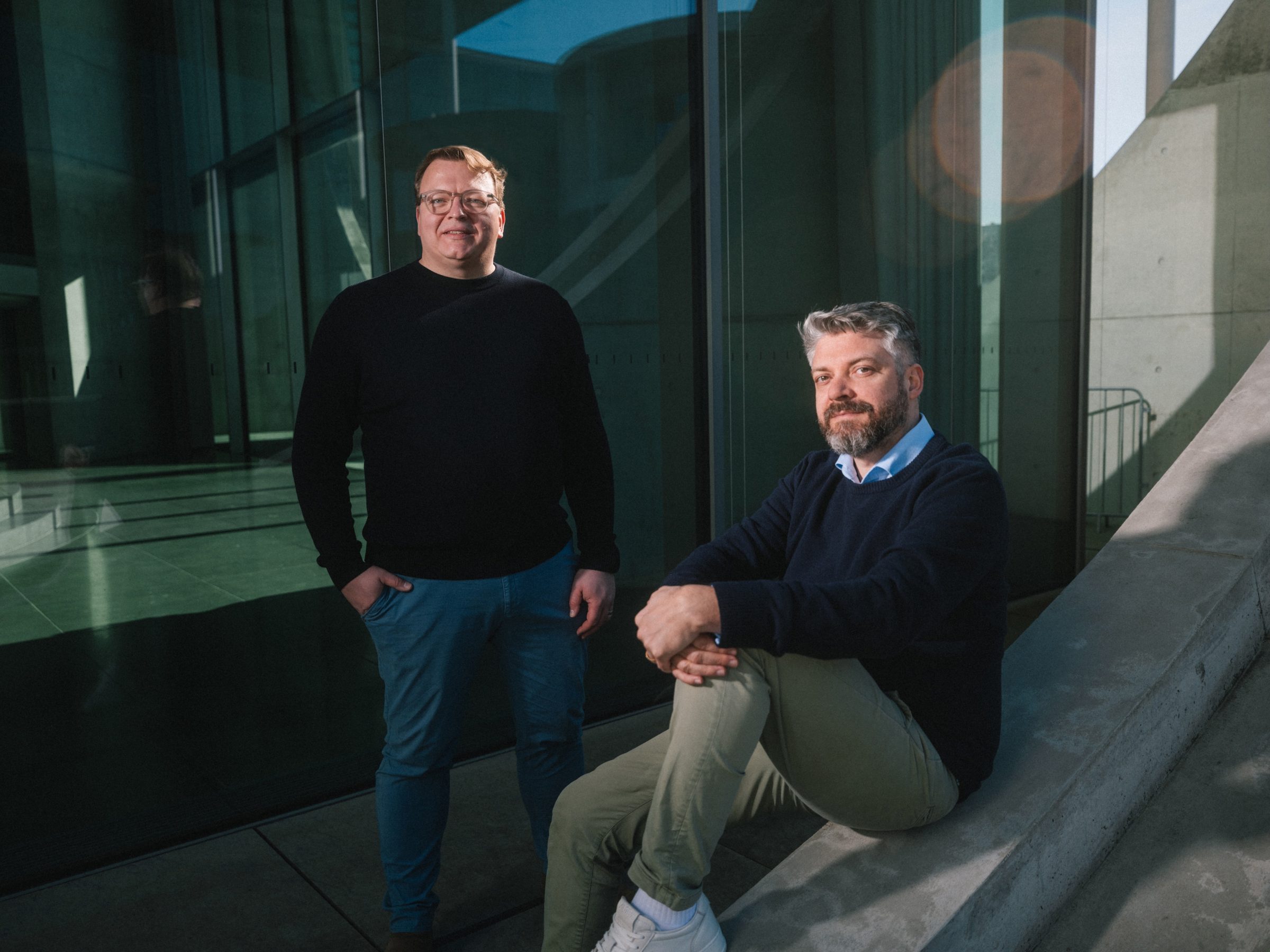
Wingmaite Wingmaite was founded in 2025 and develops an AI-based solution to secure and utilize implicit experiential knowledge within companies. Wingmaite is backed by... Oliver Diekmann, Co-Founder and CEO, as well as Christian Zacharias, Co-Founder and CTO. Diekmann is a serial entrepreneur and angel investor with over 15 years of experience in the SME and private equity sectors.
Munich Startup: How would you know in a year that you're on the right track?
Oliver Diekmann: The fact that companies working with us say after six months, "We should have done this three years ago." Specifically, this means that over 50 percent of our users say they can no longer do without Wingmaite. Customers who onboard measurably faster, manage succession more smoothly, and build AI agents based on their established knowledge that deliver real added value. And: The issue of corporate dementia has entered the public debate and is being taken seriously.
"Munich is our anchor, but not our border"
Munich Startup: Would you start a business in Munich again, and why?
Oliver Diekmann: Again in a heartbeat. Munich has a strong tech ecosystem and, at the same time, proximity to the industrial SMEs of southern Germany—the very companies for whom we build. The city attracts top talent, has a vibrant startup scene, and lends credibility as a location when you talk to SMEs and investors. At the same time, we work entirely remotely with a team spread across Germany and Portugal. Munich is our anchor, but by no means our limit.
Munich Startup: Bootstrapping or venture capital.
Oliver Diekmann: We are essentially bootstrapped and partly funded by business angels, but we will also be closing a funding round this year. Building knowledge infrastructure for SMEs requires speed and investment. At the same time, we ensure that our business model is based on genuine customer value from the outset. Finding the right balance between a bootstrapping mentality and the speed provided by external capital is key for us.