Munich Startup: What motivated you to start your own business?
Fabiola Munguia: My own experience with inefficient and highly manual compliance processes was my primary motivation. It was obvious that companies were investing a lot of time and resources in tasks that could be automated and structured much more effectively. Such a Solution At that time, there was no such thing in Germany or Europe. This led to the ambition to build a solution that makes compliance simpler, more efficient, and scalable.
Munich Startup: What would you have liked to know before starting your first business?
Fabiola Munguia: How long does it really take to build a sustainable company? Many things can't be rushed, neither product development nor market trust. I've also learned that you shouldn't be too cautious with capital, but rather invest strategically in strong talent to enable growth.
Munich Startup: How is your company currently financed?
Fabiola Munguia: Secfix is funded by venture capital and has raised a total of $17 million, most recently in a Series A funding round of over $12 million led by Alstin Capital, with participation from Bayern Kapital and Neosfer, the early-stage investor of the Commerzbank Group.
Conversations as a source of inspiration
Munich Startup: When and where do you get your best ideas?
Fabiola Munguia: The best ideas almost always arise from discussions with our customers and my team. Specific problems and recurring patterns from conversations provide significantly better approaches than isolated brainstorming.
Munich Startup: What are your 3 favorite work tools?
Fabiola Munguia: Slack for fast internal communication, Gather for virtual office, and Notion to centrally organize information and processes.
Munich Startup: Your top tip on pitching?
Fabiola Munguia: Focus on the problem, not the product. If the problem is clear, relevant, and urgent, the rest almost takes care of itself.
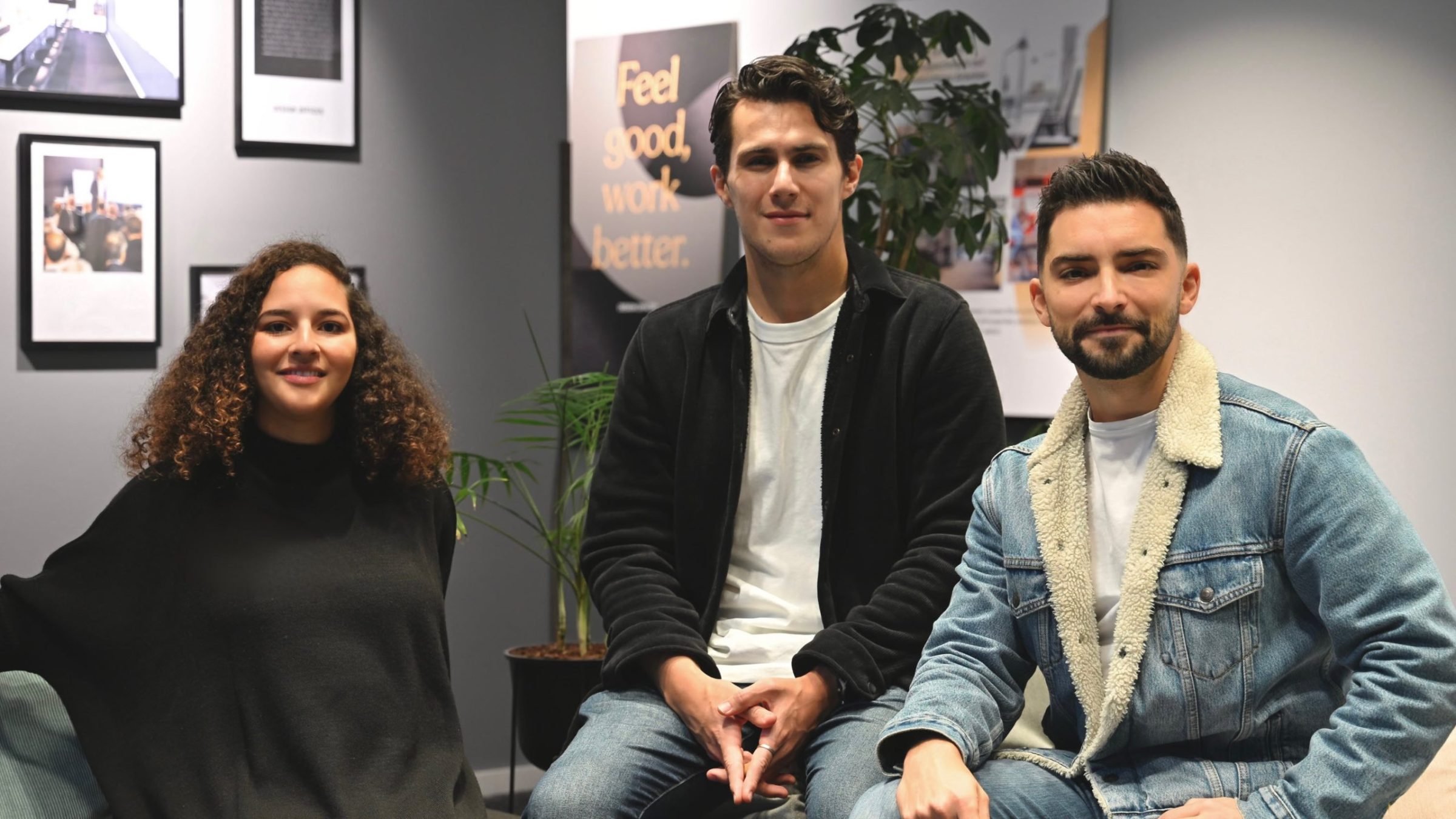
Secfix was founded in 2021 by Fabiola Munguia, Grigory Emelianov and Branko Džakula.
The company started as a GRC automation tool, helping companies achieve certifications like ISO 27001 more efficiently. Today, Secfix is an AI-native, end-to-end platform for security compliance with customers in 15 European countries.
Munich Startup: Does this seem like a good time to start a business? Why?
Fabiola Munguia: I think there's never a perfect time to start a business. At the same time, 2025 was a record year for new startups in Germany, even surpassing the previous record year of 2021. Markets are changing faster than ever before due to new technologies and increasing regulatory requirements. This creates real problems and, consequently, real opportunities for new solutions.
Munich Startup: Which technology or industry would you focus on for your next startup?
Fabiola Munguia: It's hard to say, but probably in the climate tech sector. Many processes there are still manual, while the need for software, efficiency, and scalability is extremely high. And of course, the solution would be from the outset. ISO-27001-compliant.
Munich's potential has not yet been fully exploited.
Munich Startup: From your perspective, what could be improved about Munich as a startup location?
Fabiola Munguia: Munich offers a strong network and close ties to industry, but compared to Berlin, it is often less visible and somewhat more reserved in its startup culture. Greater openness to risk, faster decision-making processes, and an even more interconnected startup ecosystem would help to better realize its full potential.
Munich Startup: Which founder would you like to meet in person? And what would you ask them?
Fabiola Munguia: Melanie Perkis, the founder of Canva. I would ask her what the three most important lessons were that helped her take Canva from Series A to Series B.