Who likes lugging around diapers and baby food? With a successful combination of low-margin and more profitable baby products, the Munich-based e-commerce company windeln.de Long past the startup stage. Munich Startup visits a success story.
Almost 180 million euros in annual sales, almost one million active customers, Over 400 employees, online shops in ten European countries, and direct shipping from Germany to China. The company's bare figures speak volumes: windeln.de has established itself as a major e-commerce player since its founding in 2010.
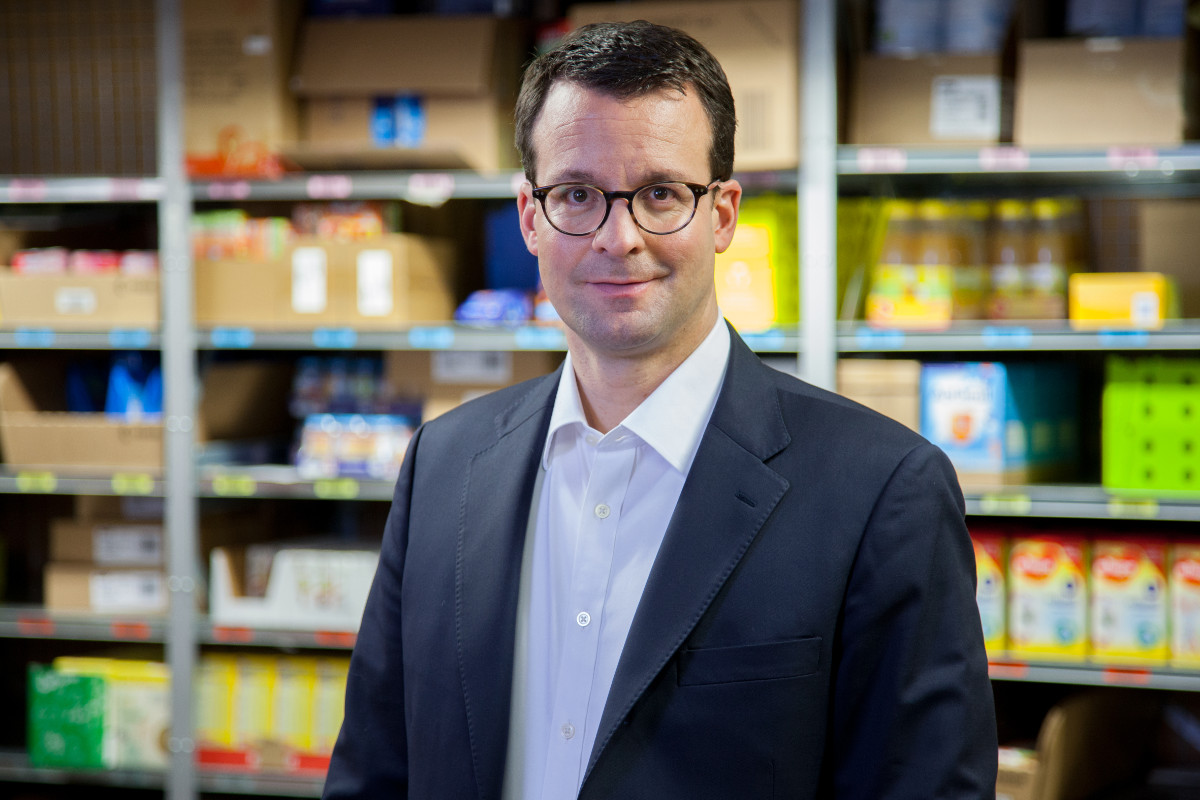
Co-founder Alexander Brand tells us the company's story in a matter-of-fact and calm manner. Founding a company was nothing new to him, having already launched his first one in 1999. He and co-founder Konstantin Urban had experience with venture capital and were well-connected in Munich. What have been the biggest challenges in recent years?
"Actually, every year is very challenging. It's like football. The next game is always the hardest. As a founder, I believe you need a certain paranoia. Every three months I think to myself that this is it.”
Brand describes himself as an analyst, and it's easy to believe him. Konstantin Urban, on the other hand, is more of a gut-driven type: "We complement each other well."
Urban and Brand connected through a mutual friend. They both wanted to start a new business. The American mail-order company for children's supplies, diapers.com, quickly found the model and business model: Baby consumables like diapers and formula build customer loyalty. Additional consumer goods like strollers, car seats, and toys boost margins. A niche market, according to Brand, because:
“This combination didn’t exist until we launched in Germany.”
Not necessarily sexy, but successful, one might think.
dummy Made in Germany
After doubling sales in previous years, the company increased its sales by three-quarters in 2015. The company is targeting further growth of 50 percent for the coming year. One growth driver: direct shipping of German goods to China. The new business area emerged from an analysis of order data:
"We noticed that a lot of customers with Chinese names were ordering from us. Many of these orders went to the same 20 addresses in Germany. These were freight forwarders who forwarded goods from German online shops to Chinese customers. Today we were shipping directly to China."
The background: Many middle-class Chinese trust German products more than domestic products.
“Our Chinese customers are particularly fond of food and products that represent German quality, such as NUK pacifiers.”
In response to the surge in demand from the Far East, windeln.de translated its website into Chinese. A dedicated team in the Munich office manages the Chinese offering. Due to the time difference, a customer service department was established in Vietnam. Unlike in Europe, payment is also possible via the Chinese service AliPay.
Is it the startup genes?
Last year, the company also expanded into other European countries – partly through acquisitions, partly through self-established branches. How did the company know it was the right time for international expansion? Essentially, it's a lot about gut feeling, says Brand, adding:
“It is important that the existing business and processes are running so well that they no longer require full attention.”
Even though the company is certainly no longer a startup and doesn't want to be called one, the way decisions are made and opportunities are seized seems flexible, spontaneous, and unconstrained. The startup mentality seems to be ingrained in the company's DNA. This is also fitting that Brand remains active in the scene. He joined recently as investor and business angel at the second-hand metasearch engine Catchys a:
"I limit my investments to e-commerce. I own the relevant know-howBiotech, for example, would certainly not be for me; I don't know anything about it."
We remain curious and will keep an eye on the Munich online shop and its founders.