Munich Startup: When we last spoke, you wanted to install as many charging points as quickly as possible with Chargex. What is the current status of your efforts?
Michael Masnitza, Chargex: Very good! The interview was in early 2019, and the first small series rolled off the production line—that is, from our desks in the old office—in mid-2019. In December 2021, we launched the second generation of our charging system. Aqueduct and also launched its own app for operations. Here, users can prioritize charging. Operators have straightforward user management and billing, and can adapt charging current distribution to the needs of their business. In 2023, a dedicated billing tool for hotels was added – our Hotel Dashboard. We now also include the (ominous) calibration law in our portfolio. In total, we currently have more than 4,500 charging modules in the field at customers.
Munich Startup: What obstacles did you encounter along the way?
Michael Masnitza, Chargex: Firstly, of course, there was fundraising: For a long time, there was very little venture capital on the market for charging hardware. We therefore had to develop very capital-efficiently, which naturally placed considerable demands on our employees. Only with the validated hardware were we able to raise significant venture capital for growth. Added to this were the relatively complicated German regulations for billing charging electricity, which are different from those in the rest of the EU. Certification for the aforementioned calibration law took a lot of time and resources. This set us back somewhat in international comparison, as we wanted to have the right product on the market in our home market. At the same time, the shortage of skilled workers and competition for employees in Munich were a very big issue for us. But through our collaborations with the Technical University of Munich and the Munich University of Applied Sciences, we were able to recruit many great employees!
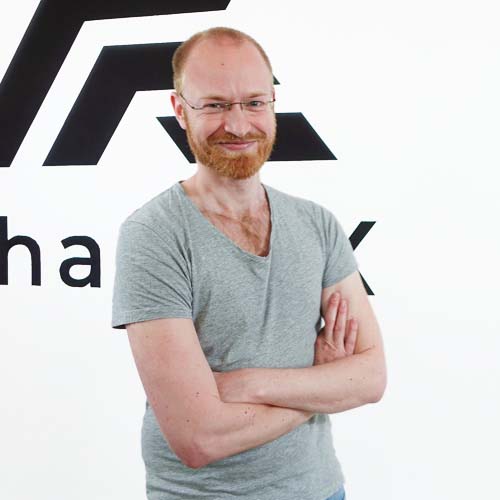
Consistent concept with new features
Munich Startup: How has your solution evolved?
Michael Masnitza, Chargex: The concept hasn't changed much, but the second version has added many more features: Load management is now phase-specific, the plug-in system is even easier to handle thanks to the new housing, and the plugs have been redesigned so that even a layperson can assemble the system using almost furniture store-like instructions.
You can also we With certification according to German calibration law, we can handle all billing processes in private, semi-public, and public spaces. For us, this particularly includes billing for charging power to employees at the workplace or billing guests in hotels. We can now also handle billing for greenhouse gas quotas.
We've also significantly expanded our digital footprint. We've developed a special management and billing solution for small and medium-sized businesses and integrated it into the "Drop Power Sharing" user app. We've also added the aforementioned Hotel Dashboard.
Munich Startup: And how are things looking financially for you?
Michael Masnitza, Chargex: Financially, there were, of course, ups and downs. The Corona period was also tough for Chargex. But with a successful crowd investment campaign, we were able to build a strong Series A financing and recently a very successful Series B growth financing Our sales are increasing rapidly, especially as our more than 600 existing customers are equipping more and more parking spaces with charging options.
Chargex: “The Munich ecosystem is naturally brilliant for a mobility startup”
Munich Startup: What role does the Munich ecosystem play in your journey so far?
Michael Masnitza, Chargex: The Munich ecosystem is naturally fantastic for a mobility startup. Our lead investor, for example, is from the local network: UnternehmerTUM Venture Capital from Munich. With DE:hub mobility and Citizen mobility, we test innovative product and service ideas, and with the Technical University of Munich, we are part of MCube, the largest applied research project for mobility. This, of course, helps us, especially in finding ambitious employees. Our success is based on our fantastic team, which almost doubles in size every 12 months.
Munich Startup: What milestones are you working towards next
Michael Masnitza, Chargex: A lot is happening with our digital product soon. We're enabling automatic direct debits from users and automatic forwarding to the operator, our customer. We'll also be launching a dashboard for fleet managers.
In addition, our Aqueduct NEO will be launched in April with even more simplified installation – it really doesn't get any more plug & play than this!
And something very high on our agenda: We're currently looking for pilot customers in the housing industry, because Aqueduct is also perfect for commercial landlords. However, there's almost no charging infrastructure in this area yet. If any reader happens to own or operate a few dozen rental residential or commercial units, we're ready to launch the first pilots!