
Munich Startup: What exactly does Philoneos do?
Maximilian Lude, Philoneos: Philoneos is a Bureau for Future AffairsWe support medium-sized family businesses in all kinds of innovation processes.
Our consulting approach can be divided into three content areas: First, there's Advisory, with which we co-creatively implement a wide variety of projects in the areas of innovation, transformation, and employer attractiveness. The second area is our Science Services. At Philoneos, we always strive to bridge the gap between current scientific findings and our own collected data and practice. The third area is our Innovation Campus, a training platform we developed ourselves, which we use as an e-learning platform and make available to our clients' employees for further training.
Shortly after our founding in 2018, we were able to launch some exciting Family business as clients whom we have now been supporting for the long term. For example, Pfeifer, one of the leading companies in the European wood industry. At the beginning of our collaboration, we introduced a hybrid innovation team for them. Last year, this process reached its climax when my co-founder Sebastian Bartling, with the support of our team, designed, built, and temporarily managed an external innovation hub for Pfeifer. This new location for the company in the heart of Innsbruck explores new technologies and startups, identifies new trends and potential, and implements them. This was something very special for us and perfectly describes what we stand for as a consultancy and bureau.
The real question is what we don't do! Succession consulting, for example, isn't on the list. However, we do have an exciting partner organization in our network for that, Haus Next: a platform for the next generation of family businesses. So we actually have a solution for everything.
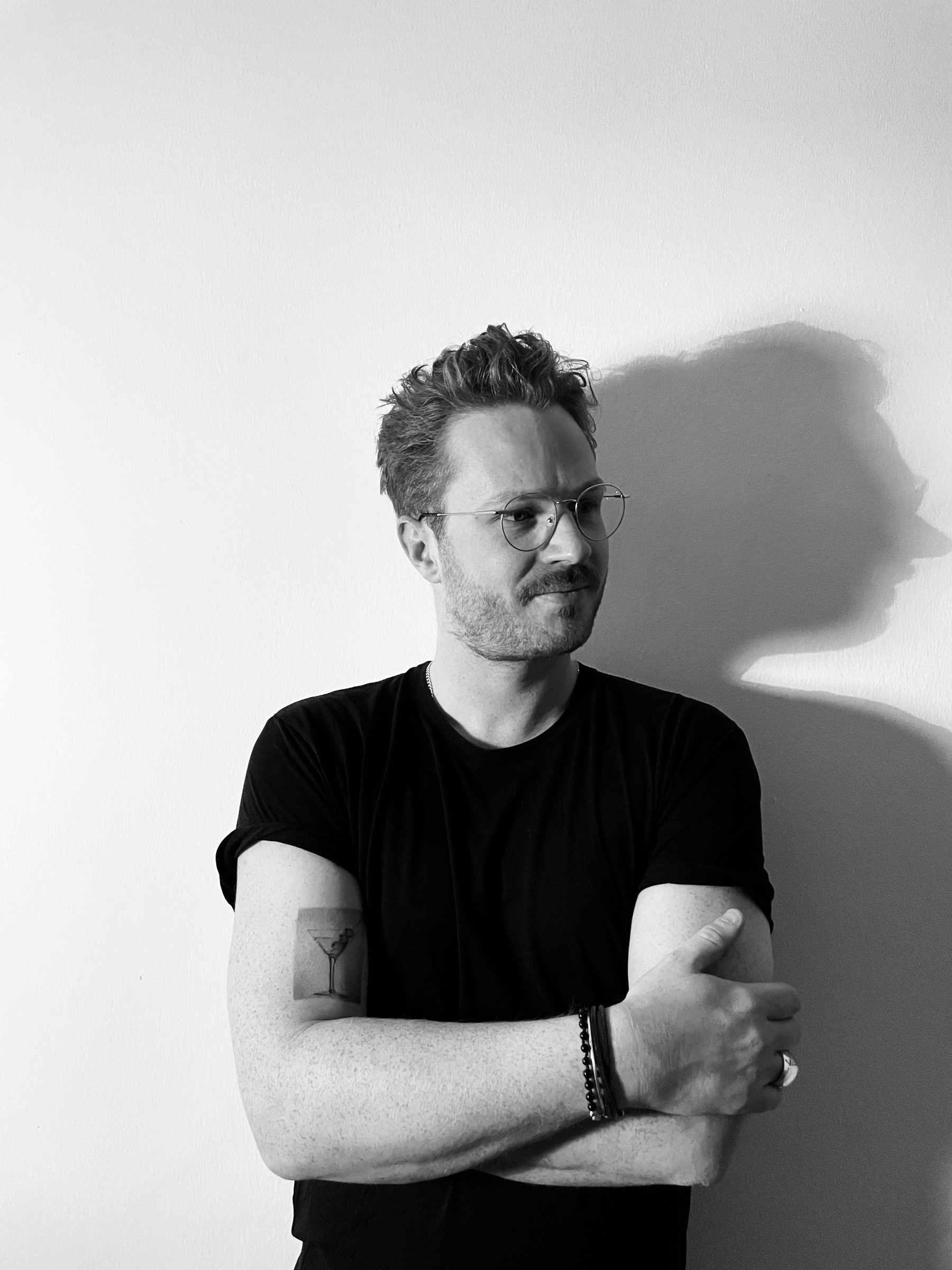
“For a very long time we were reluctant to call ourselves a consultancy”
Munich Startup: There are many management consultancies. What sets you apart?
Maximilian Lude: For a long time, we were reluctant to even call ourselves a consultancy. None of our employees are the classic consultants in the book, and that's not because of their skills, but because of their attitude. We work closely with our clients, aiming to develop customized solutions together and implement them over the long term, as well as provide concrete measures that every company can implement for itself.
One of our special features is the integration of science and practice: A large part of the Philoneos family is actively involved in science! For the past three years, I myself have been privileged to hold the Chair of Innovation at the Technical University of Munich I am a professor, regularly lecture at the Politecnico University in Milan, and a senior researcher at the Friedrichshafen Institute for Family Businesses at Zeppelin University, where I also earned my doctorate on family businesses. Therefore, we always use scientific methods and current research findings to analyze our clients' status quo.
Munich Startup: What exactly does this interlinking of science and practice look like?
Maximilian Lude: The scientific part can range from quantitative surveys to qualitative studies, which we conduct together with clients to better understand their starting point. These can be employee surveys or even experimental studies in which we test very specific situations, jointly defining and evaluating the relevant Variaables.
Philoneos prepares scientific results for entrepreneurs
We also work closely with current scientific publications, whose findings we translate into our consulting approach. It's not easy to gain access to this complex parallel world from the outside, and poring over lengthy scientific papers isn't necessarily part of a manager's day-to-day work – family business or not. Yet, you can learn so much from them for practical application! Because this has always frustrated me, I and my team have set ourselves the task of building this bridge between science and practice for companies. For this purpose, for example, we have our print magazine “Whiplash” which offers "research to go." Scientific publications on innovation topics, with all the core findings summarized on a single page, are published in the morning. You can then simply read it on your way to the office and still learn the most important things and use them for your own benefit.
Munich Startup: What is your founding story?
Maximilian Lude: It all began at Zeppelin University on Lake Constance. I earned my doctorate there at the Institute for Family Businesses (FIF) on the topic of family businesses (FU). In my research and discussions with the FU, it quickly became clear to me and my doctoral supervisor, Prof. Dr. Reinhard Prügl, that in many family businesses, SMEs There was a certain need for support in future-oriented topics. A solution was needed!
Reinhard Prügl headed the FIF, at the time still jointly with Dr. Ursula Koners, who now serves as Managing Director of the Festspielhaus Baden-Baden. We were quickly able to win her over as a shareholder for our project. Since we knew I couldn't possibly handle the operational business alone, I called my longtime friend and former classmate Sebastian Bartling, who was working at Google in Dublin at the time. Luckily, he was just as excited about the idea of proactively shaping the future of family businesses. So the four of us joined forces and founded Philoneos.
“We quickly realized that the living room was no longer enough.”
Sebastian and I started out of his living room in Munich, but quickly realized that this wasn't enough. Coworking spaces were too expensive for us at the time, so we looked for our own office with enough space for our student workers. We found an office space right next to the English Garden, but it's since become too small for us, as we've been growing steadily every year and now employ eight people. We now have a large, open-plan office on Klenzestraße at Gärtnerplatz, and we're very happy there.
But we couldn't let go of the retail space in Lehel so easily, so we turned it into a wine kiosk called Sir Thompson, in which almost all Philoneos team members are involved, and we're experimenting with the concept of holocracy together. So, it remains exciting!
What exactly is innovation?
Munich Startup: What does it actually mean for a medium-sized company to want to become more innovative?
Maximilian Lude: First of all, I want to state that, in my opinion, the image that small and medium-sized businesses are not innovative is incorrect. After all, most family businesses survive for generations precisely because they have continually implemented new innovations and adapted to the constantly changing context. I call this phenomenon "tradition through innovation."
Nevertheless, the question is certainly legitimate. One must, however, consider that there is more than one definition of the word innovation. It can be something new for one's own company or its continuous development. Putting innovation into practice is a completely different topic. In academia, for example, this is referred to as the concept of ambidexterity. For a company, this means using one hand to exploit, i.e., continuously develop its core business. The other hand is dedicated to exploration, i.e., continually identifying new business opportunities.
The Champions League of SMEs is to pursue and balance both disciplines simultaneously. And a major challenge is to guide employees through this transition and continually inspire them to enjoy the change, even motivating them to become proactive participants and giving them the feeling that they can proactively shape the future.
The context will always change, and at an exponentially increasing pace. Innovation is therefore also a people business, and it's okay to hurt sometimes. Only then can long-term success be achieved.
“For me, the key message for the next few years is adaptability.”
Munich Startup: A medium-sized company must first recognize that it has an innovation problem before it can come to you. In your experience, where does this insight come from?
Maximilian Lude: These processes are about as heterogeneous as the family businesses themselves. We observe that generational change is often a driver of innovation. This has also been scientifically proven.
In recent years, however, the changing context has also been a key factor. Global pandemics, climate change, and advancing digitalization have changed our expectations of work, as well as our consumption and user behavior.
Two years ago, regular home office work would have been unimaginable in many medium-sized companies. Today, fortunately, it's common practice almost everywhere. The context is changing, that's for sure. For me, the core message for the coming years is adaptability. As a company, demonstrating resilience and adapting to ever-changing circumstances.
Munich Startup: How have you experienced the Munich startup industry in recent years? There's a lot of potential in collaboration between startups and SMEs.
Maximilian Lude: For me, Munich is a veritable melting pot for the startup industry! In addition to the many medium-sized companies and large industrial players in the mobility and IT sectors, there are now numerous startups that have emerged from the university landscape. The number and quality of these startups speak volumes about the potential of Munich's highly technologically oriented universities.
Philoneos: SMEs innovate through cooperation with startups
However, there is still a lot of potential to be tapped in the collaboration between startups and SMEs. I believe the future of innovation in SMEs lies in cooperation with startups. I often observe how two worlds, values, and cultures collide and have to engage with each other. The best ideas and business model innovations usually emerge in interdisciplinary teams with diverse backgrounds. For this purpose, at Philoneos, we develop so-called idea hackathons, in which students and startups collaborate with SMEs to develop innovations. You'd be surprised at the inspiring ideas that emerge! I believe this is precisely where enormous potential lies for both sides to learn from and with each other and to shape the future.
Munich Startup: Risk or security?
Maximilian Lude: Such a risk! However, I can only afford this attitude because I share the management position with Sebastian. We are very different, and our skills complement each other perfectly. We can also learn a lot from each other and act as a corrective for each other. He would probably answer safety, and I would always answer risk.

