
Stop-and-go traffic on the Mittlerer Ring, gridlock on Leopoldstraße, traffic jams at Luise-Kiesselbach-Platz – driving in Munich often requires patience. Like many other major cities, the state capital has a traffic problem. The Munich startup Parking pocket wants to help reduce the daily traffic congestion in cities.
When we drive around the city, we all want the same thing: to arrive quickly, avoid traffic jams if possible, and find a parking space close to our destination. To a certain extent, these three things are interrelated, as up to 40 percent of inner-city traffic is caused by drivers looking for parking. Apps like the one from Parking pocket, show drivers free parking spaces and at the same time aim to reduce the traffic looking for parking spaces.
“I regularly see a Queue in front of the parking garages. Of course, this isn't good for the city either. However, by creating transparency before the upcoming parking search, parking seekers could be distributed much more effectively,"
Parkpocket co-founder Karoline Bader explains her concern. The founding team sees their own product as the solution to this problem.
Using the Parkpocket app is incredibly simple: Before starting their journey, the user enters their destination and the planned parking duration. A map shows parking options and, if possible, how many spaces are available. The user also sees the applicable fees and individual services offered by the parking garage, such as women's parking spaces, electric vehicle charging stations, and video surveillance. The app shows significant price differences of ten euros or more between different parking options. At the touch of a button, the app links to navigation apps such as Google or Apple Maps.
Lack of transparency in parking
Karoline Bader summarizes Parkpocket’s mission:
"We offer a service that creates transparency: On the one hand regarding free parking spaces and on the other hand in the Price structure of parking facilities.”
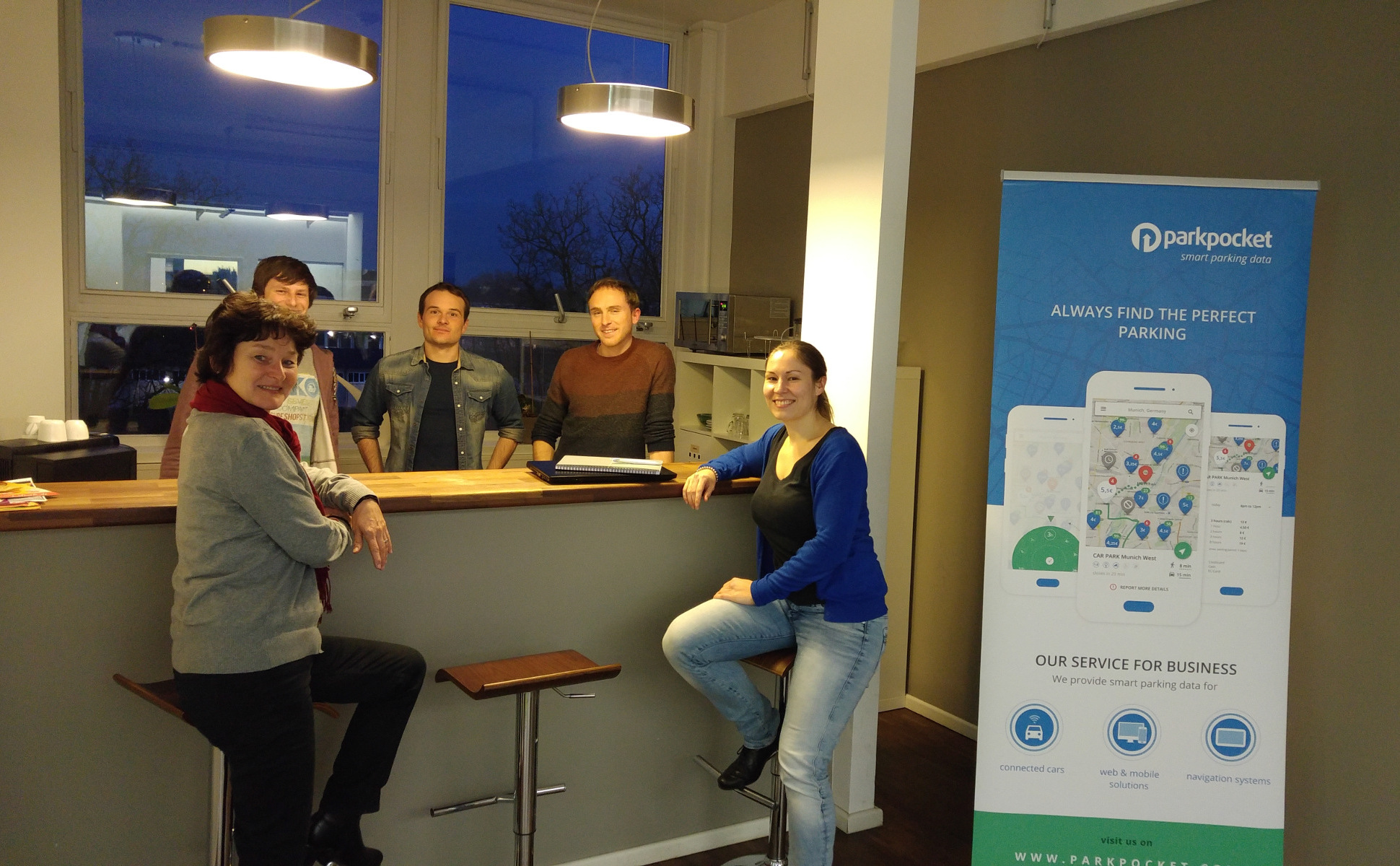
Parkpocket aims to provide more transparency, but relies exclusively on "off-street parking," as Karoline Bader calls it, meaning parking spaces behind barriers. Streetside parking spaces cannot be found in the app. The reason for this is simple: there is currently no data available on the availability of public parking spaces on the street. Several large companies are currently developing ways to equip public parking spaces with sensors. In Amsterdam, for example, there are already parking spaces that report whether they are occupied or free.
Since this is still the exception, Parkpocket is focusing on parking behind barriers. Through negotiations with parking garage operators, cities, and municipalities, the team is trying to gain access, among other things, to the number of available spaces in individual parking garages.
App as a free showcase
Parkpocket's service is intended to be integrated into the on-board systems of cars, navigation services, and intermodal mobility solutions of car-sharing providers, for example. The founders' vision is to make parking easier, more transparent, and less complicated. The app itself is ad-free and free of charge. Parkpocket aims to earn money by licensing its service:
"The app is our showcase. If our private customers from the automotive, navigation, and telecommunications sectors like our app, they often want to integrate our service into their services and connected car solutions."
According to the startup, it is already generating revenue with this business model and was recently able to convince GFT Technologies of a six-figure investment.
The company was founded in 2013 in Rottweil, Swabia. After Wayra brought Parkpocket into its acceleration program in October 2014, the startup moved to the state capital – and remained in Munich thereafter. Through its investor, Parkpocket operates a second office in Stuttgart, but the team is based in Munich:
"I don't know of any location in Germany that would be better suited for us than Munich. Munich is very technologically strong and attracts international talent."
The team is (almost) everything
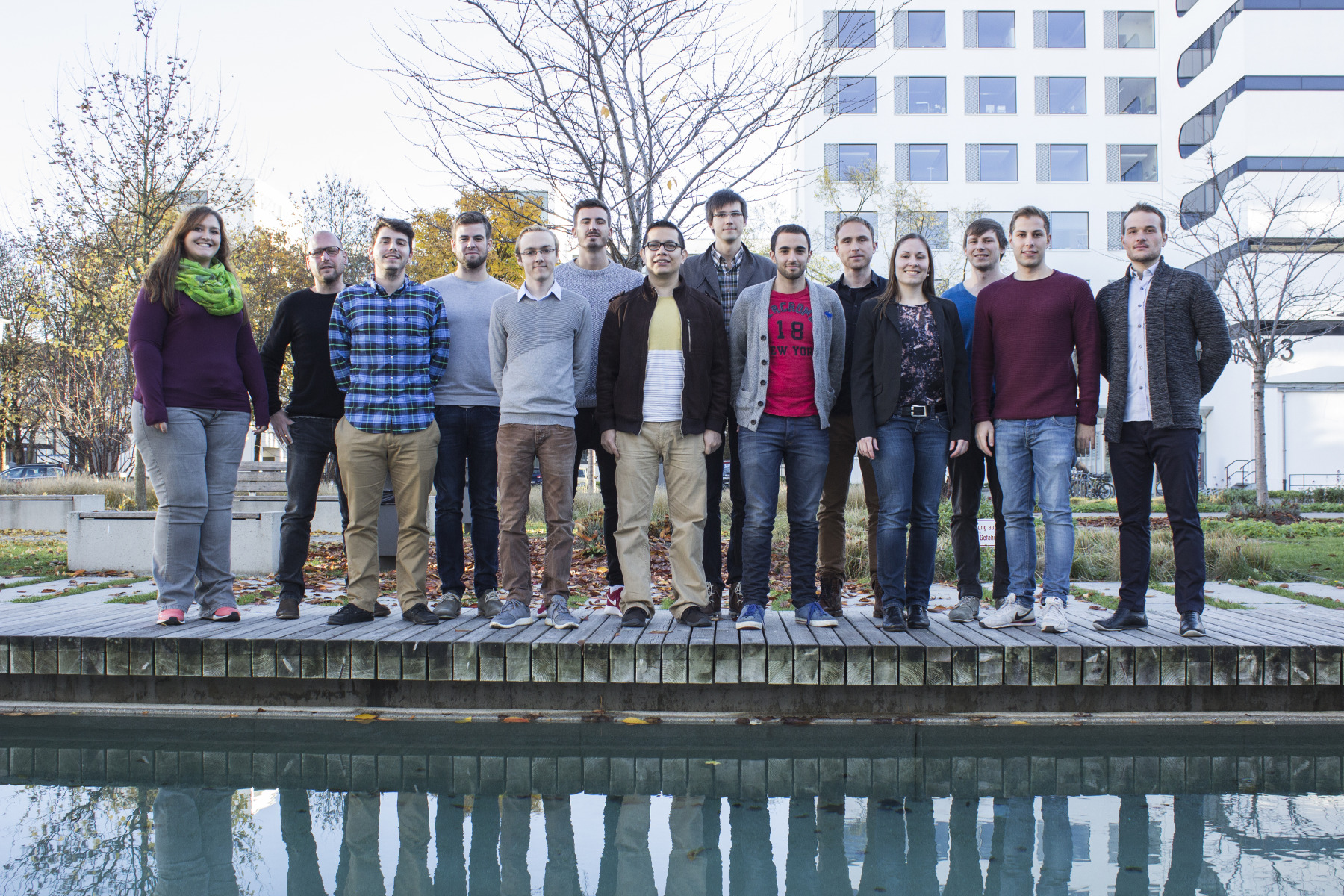
The Parkpocket team now numbers 16 members: the founders, permanent employees, and working students from LMU and TU Munich. Karoline Bader says:
“Our goal is to employ our student workers whenever possible as we grow.”
Future staff expansion is planned, particularly in the sales and technology departments. Parkpocket is also targeting markets outside of the German-speaking world. Karoline Bader, however, is reluctant to reveal which ones exactly.
Karoline Bader has two tips for aspiring founders:
"The team is especially in the early phase the A and O: Better a mediocre idea and a great team than a great idea and a mediocre team. However, you should only give reasons if you are Idea burns and is absolutely convinced of it.”
Budding entrepreneurs should not let the risk of failure deter them – Karoline Bader, in any case, has no fears about the future:
“If you are well-educated, have the necessary contacts, and know what you want, you are well positioned even if your startup doesn’t work out.”
Further information about Parkpocket can be found on the website of the company. The app stands for Android and iOS available for free download.

