Munich Startup: Please introduce yourselves briefly.
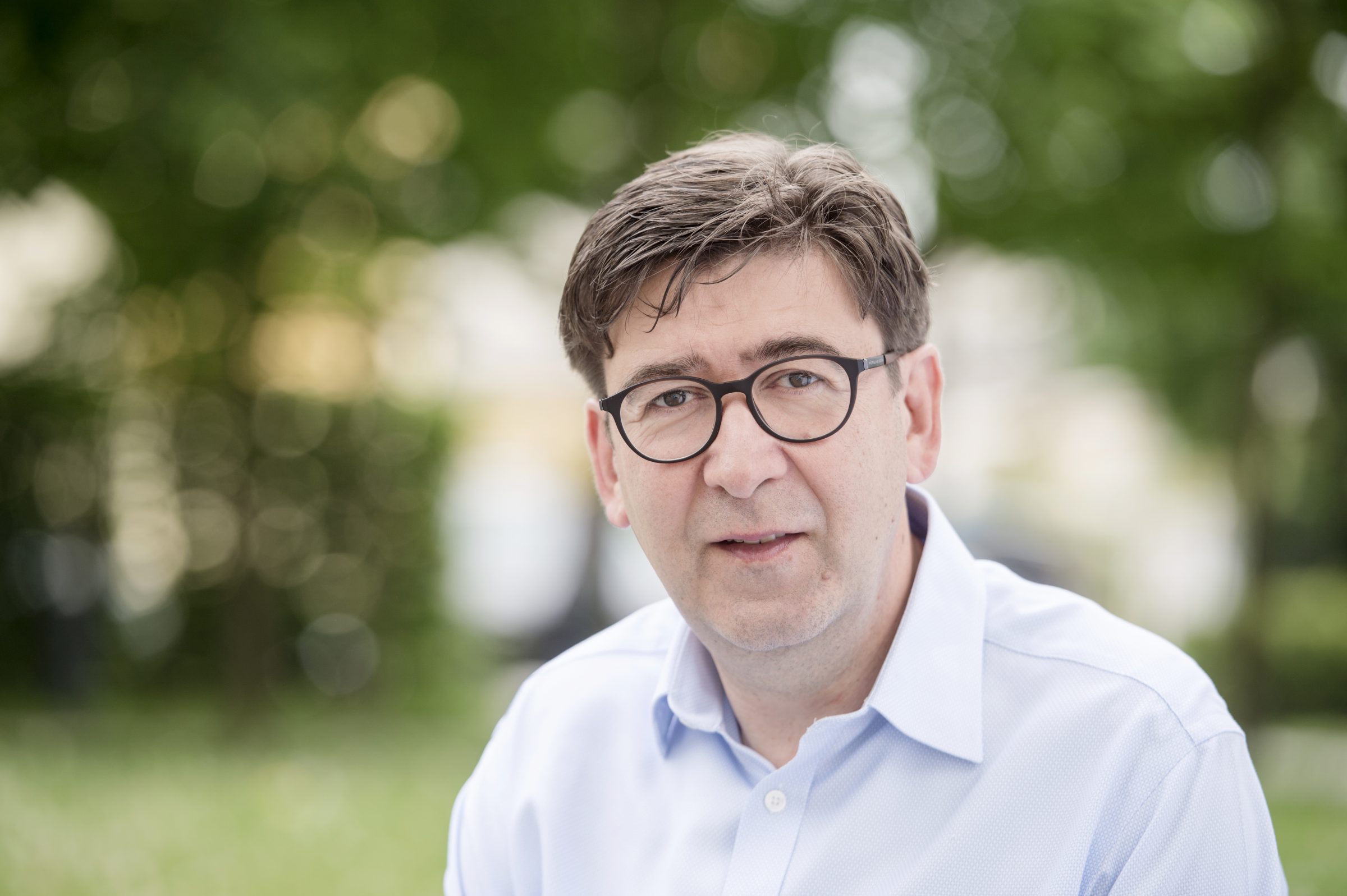
Michael Hochholzer: G+D Ventures is the Corporate venture capital arm of the Giesecke+Devrient Group. We launched in 2018 with two experienced venture capital investors. My partner, Assaf Shamia, is originally from Israel and learned his trade there at Carmel Venture, now Viola Group. We met in 2015 at Siemens Venture Capital.
I have been working in the venture capital business since 2001, holding various positions at corporate and financial VC firms – as a partner at Infineon Ventures, then at Baytech Venture Capital, and before G+D as Managing Partner of the Industry Fund at Siemens Venture Capital (now called Next47).
Since May of last year, there are three of us – with Andreas Barthelmes joining. After completing two master's programs at the Technical University of Munich, he worked in the Chief Technology Office and Strategy department at G+D.
Munich Startup: What do you offer startups?
Michael Hochholzer: As investors, we provide funds for the further development of our investments and bring with us many years of expertise in venture capital. But we are much more than that. We see ourselves as sparring partners for our portfolio companies and accompany them in their further growth. Through our connection to the G+D Group, we have a unique network and specialist and market expertise in the field of security technology. The focus is on G+D's core business areas of payment, connectivity, identities and the security of digital infrastructures. Our goal is to support both the Startup To deliver strategic added value to both the G+D Group and the company. G+D Ventures acts as a business developer in both directions.
We are currently pursuing this path with five companies – IDnow and Build38 in Munich, Brighter AI and Verimi in Berlin, and our most recent investment, Metaco in Lausanne.
“G+D Ventures is Giesecke+Devrient’s connection to the startup world”
Munich Startup: What is G+D Ventures' role within Giesecke+Devrient?
Michael Hochholzer: A large portion of innovation today no longer takes place exclusively within companies. Many innovative technologies, products, and business models originate from the startup world. Furthermore, the solutions offered to customers are becoming more complex—networks and partnerships are needed.
G+D Ventures is Giesecke+Devrient's connection to the startup world: We track trends in the four core areas addressed by G+D, develop so-called "landscapes" for emerging topics, i.e., an overview of the startups we find in a market segment—for example, crypto custodians—and how they position themselves relative to each other and to established players. We identify what we consider the most promising startups. We approach these and then connect them with the company's divisions so that both sides can explore a potential partnership.
If young companies are seeking capital and we recognize a strategic benefit for the startup, but also for a division of G+D, and we see a good investment case, then we seek to invest in these startups. As a strategic investor, just like any financial VC, we naturally want our investment to bear fruit and generate a return commensurate with the risk.
Ultimately, we bring a completely different way of thinking and perspective on innovations, business models, and technology trends to the G+D Group. In doing so, I believe we are also making an important contribution to the corporate culture and initiating change.
Munich Startup: Which startups do you prefer to invest in?
Michael Hochholzer: We deliver the greatest benefit as investors when we invest in startups in the four core areas of G+D mentioned above and can also contribute the "strong arm" of the G+D Group. We refer to these as "Trust Technologies." Examples include the segments of Trusted Payments, Secure Identities, Cloud Security, IoT Security, Blockchain/Distributed Ledger Technologies, and the broad field of Artificial Intelligence and Deep Learning.
We exclusively seek highly scalable business models (e.g., software-as-a-service), primarily in the B2B space, with a focus on European startups, including Israel. However, we also selectively look into other regions. Our focus is on financing in earlier stages such as seed, pre-series A, and series A. A typical investment ranges from €250,000 to €2 million. However, we have also invested significantly more in a single round.
Munich Startup: Which companies would you never invest in?
Michael Hochholzer: As mentioned, we are clearly focusing on technologies and market segments related to G+D's core areas that we know well – the aforementioned Trust Technologies. We do not invest in companies that operate in areas to which we have no access or expertise. This includes areas such as biotech, pharmaceuticals, or consumer marketing.
Munich Startup: How do you become aware of potential investments?
Michael Hochholzer: To do this, we prioritize topics and develop the landscapes mentioned for these areas. This allows us to target startups and form an investment hypothesis.
Of course, we are also in close contact with our network of founders, companies and investors, getting to know other interesting new startups or looking at new investment opportunities together.
Finally, some startups approach the G+D divisions directly. Our operational colleagues from the group then include us in the discussion, as most of the young companies are also interested in financing.
Winners and losers of the crisis
Munich Startup: How has the Corona crisis affected your work so far?
Michael Hochholzer: As we know from discussions, we were like most of our venture capital colleagues: First, we worked together with our portfolio companies to question the plans and budgets for the crisis year 2020, adjust them where necessary, and ensure the longest possible cash reach.
There are some crisis winners in our portfolio, meaning their business either didn't suffer at all from the crisis or their solutions even saw increased demand. And unfortunately, there are also portfolio companies that have felt the impact of significantly slower cycles and the reluctance to buy among corporate customers.
And when it comes to closing deals, it's very difficult for us without meeting a team physically. We recently closed a new investment in Switzerland. We had already met with the team several times before the COVID lockdown. That was helpful. Now, at least in Germany and the surrounding countries, the situation is returning to normal, meaning we can meet with startups in person again – provided the appropriate precautions are in place.
Munich Startup: Do startups have to be afraid that you will interfere too much?
Michael Hochholzer: I think this is an "old fear" of corporate investors. In the early days of venture capital, some of them tried to negotiate snags and loopholes into their investments—which always backfired.
The two "seniors" of the G+D Ventures team have worked in pure-play financial VC firms. We strictly separate the investment side from the partnership side to avoid any conflict of interest. Ultimately, we strongly believe in the investor syndicate: a good and, if possible, harmonious syndicate advances the portfolio companies through their complementary networks.
“There is no recipe for success”
Munich Startup: How long does it take from the first contact to the conclusion of the contract?
Michael Hochholzer: We are in line with the industry standard: our investment committee is very small and very easy to reach – so we have no excuse if we are slower than other VCs.
In our experience, due diligence and syndication take the longest. For a Series A deal with two or three investors, I realistically expect three months. When we start fundraising with our portfolio companies, we typically expect the process to take six months. We've had some pleasant surprises, with fundraising being completed much more quickly, but sometimes it really does take six months.
Munich Startup: To be successful, a startup must…
Michael Hochholzer: Well, startups come in many shapes and forms. There's no single recipe for success. But we've observed over time that successful startups tend to meet these criteria in their early stages:
They target markets predicted to experience strong future growth, driven by a trend such as new regulation or a new technology. Their product or service is clear and easy to explain. In their early stages, they focus on finding out who their customers really are and what specific business problem they are solving. The answer usually turns out to be very different from what they imagined when they first conceived the idea. And they know how to raise enough money to eliminate the biggest risks for the start-up of the venture, but at the same time not too much capital to avoid growing too early, or too little to get stuck halfway through.
Munich Startup: The trend of the year is…
Michael Hochholzer: Our credo is thematic investing. We devote a significant amount of our time to identifying and researching investment themes to gain a deeper understanding of the underlying drivers and impacts. This allows us to better select the winners in each of these segments.
These topics take time to find the right fit for the market and typically develop over several years. We prefer to focus on them rather than the "flavor of the month," which might be hot today but irrelevant tomorrow.
Examples of topics we have recently explored include asset tokenization, decentralized identities, and advanced data protection technologies for cloud environments.
“What is still missing are investors with very large funds”
Munich Startup: What do you think the Munich startup scene is doing right? What could be done better?
Michael Hochholzer: For a significant startup scene to emerge, Munich needs a corresponding "critical mass." It's well on its way: there are top universities as sources of talent, large companies that can be initial customers and market channels, and a steadily growing angel and investor network. The "repeat entrepreneurs" we investors love, who have already built one, two, or even several startups, are on the rise. We have fantastic and well-received events, like Bits & Pretzels, which pulled off the coup of bringing President Obama to Munich as a keynote speaker in 2019.
What's still missing are investors with very large funds – we still need UK and US funds for large growth financings. And as an investor, you'd like to see a more active M&A scene. It hurts us as investors that the top German startups are largely being acquired by more risk-averse US giants, and the technology then migrates to the US.
Munich Startup: Thank you for the interview!