The fittech startup Freeletics is one of the world's fastest-growing digital fitness companies. Founded in 2013, the Munich-based company is not only unaware of this fact among its 39 million users worldwide, but also largely unknown in the startup scene.
The founders Andrej Matijczak, Mehmet Yilmaz and Joshua Cornelius registered the headquarters of the original UG at Heßstraße 89 at the SCE in higher education Almost six months later, Daniel Sobhani joined the team as CEO, having previously worked at the Boston Consulting Group. Daniel was born and raised in Munich and knew the three founders from university – he had studied Business Administration, Mechanical Engineering, Finance, and Technology Management in Munich and Sydney, among other subjects.
Worldwide Workouts
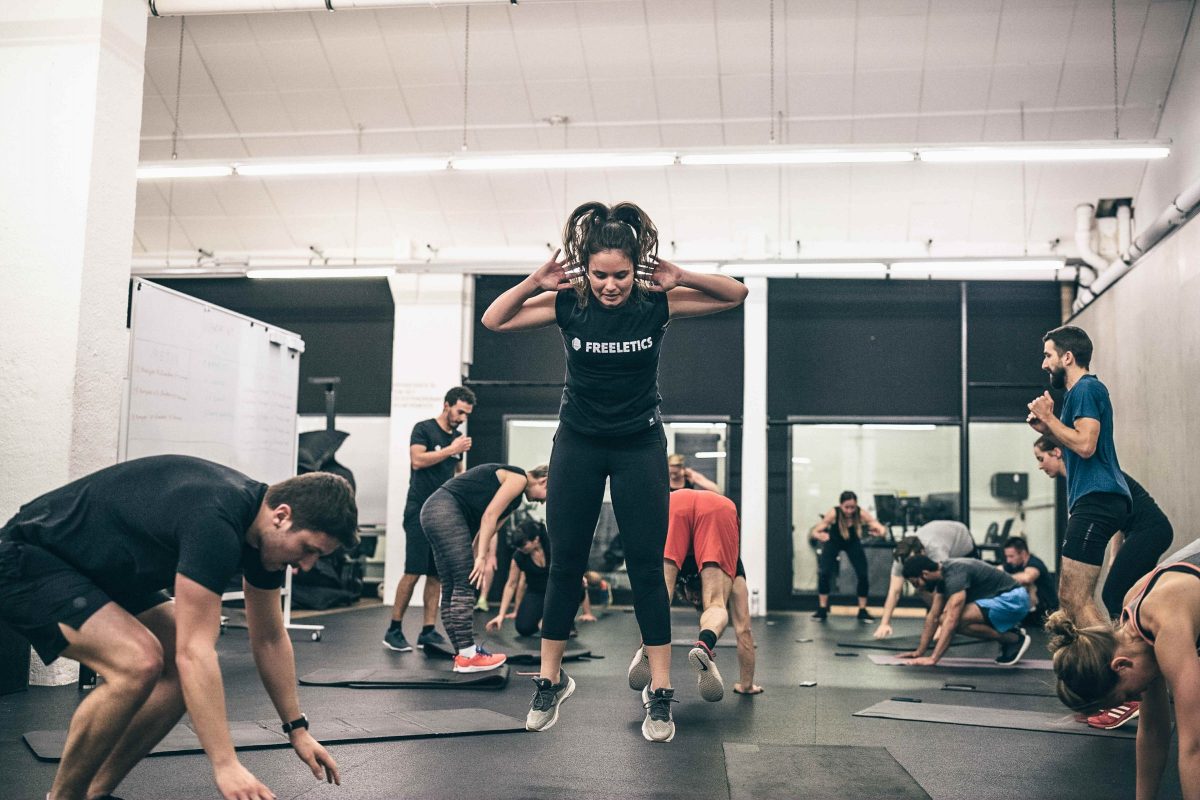
Since its founding, Freeletics has revolutionized the fitness industry, which for years was dominated by brick-and-mortar gyms and exclusive personal trainers, with AI-based, hyper-personalized digital fitness coaching. Users connect via the app to complete functional training and short, high-intensity workouts together to build strength, conditioning, and muscular endurance. This can be done anywhere, often using only their own body weight. The Munich-based startup's vision is to help people worldwide reach their full potential, both physically and mentally, and thus become the strongest version of themselves.
How Freeletics went from bootstrapping to $45 million in funding
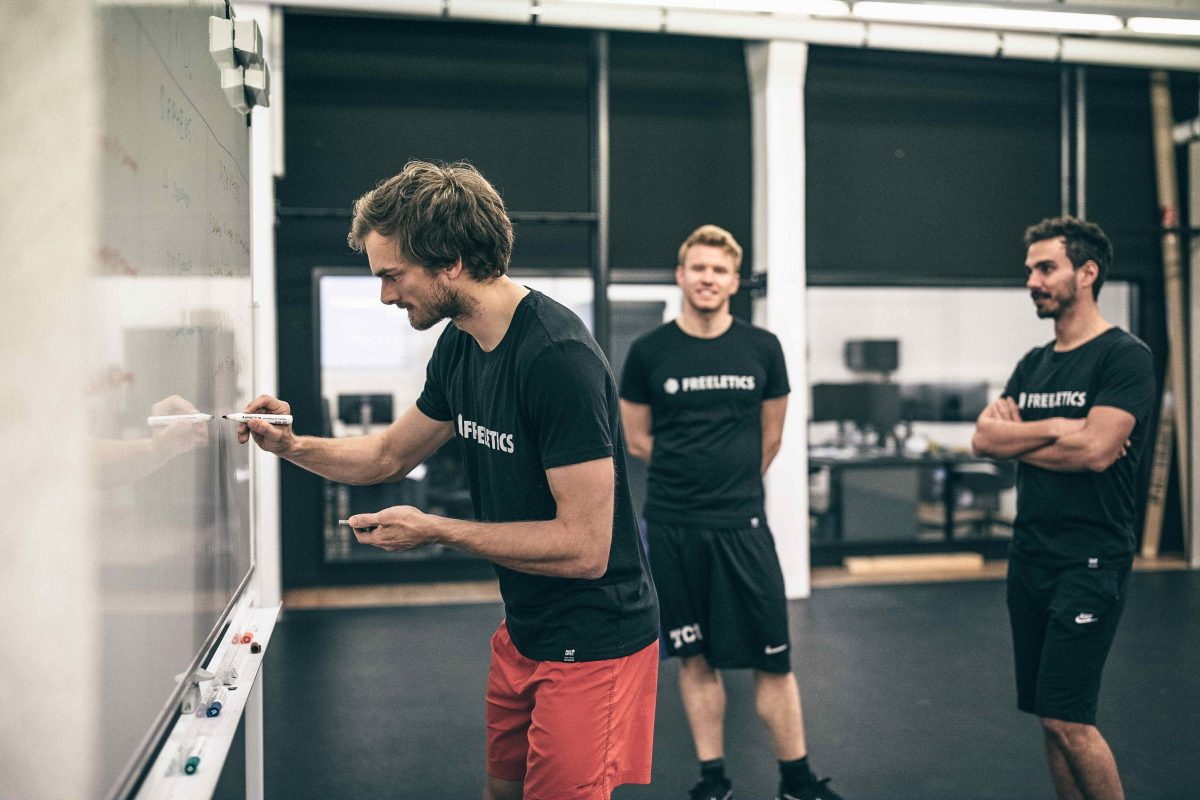
In 2014, Freeletics was still a small, young startup, but even then, it was experiencing rapid growth. In 2015, the young company moved around the corner from Munich University of Applied Sciences into a former factory building on Lothstrasse. More than 150 employees from almost 40 nations continue to work – and train – here.
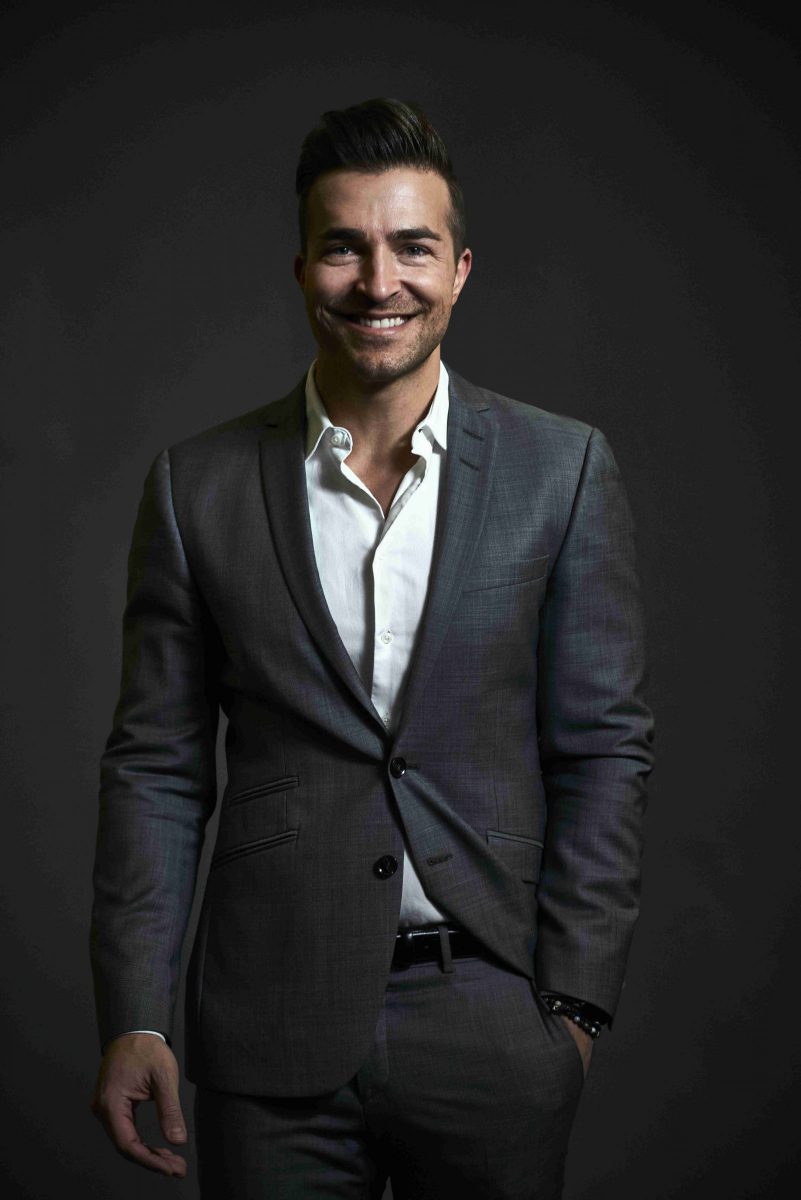
Daniel Sobhani played a key role in leading the team to international success in a short period of time – and that was as a bootstrapped company. Then, in the summer of 2018, the three founders left. Shortly thereafter, the most important milestone in the company's history came: a $45 million Series A round from American investors Fitlab, Causeway Media Partners, and Jazz Venture Partners. What has changed since then? We were curious and wanted to know more. So we interviewed Daniel Sobhani.
A look behind the scenes: Interview with Freeletics CEO Daniel Sobhani
Munich StartupDaniel, Freeletics was bootstrapped until mid-2018. When the three founders sold their shares in mid-2018, you stayed loyal to Freeletics. What prompted you to make this decision?
Daniel Sobhani: The three founders of Freeletics had already withdrawn from operational business in 2014. Even though I naturally continued to work closely with the founders, all three of whom were still on the board, until the exit last year, I have been serving as CEO since 2014. The company and our vision have always been very close to my heart.
In my opinion, Freeletics still has the vast majority of its success and vision ahead of it. Operationally, not much has changed, except that I've been consulting with our investors on the board since 2018. This is an exciting time that's taking not only Freeletics as a company, but also me, to the next level. With Freeletics, we have the ambitious goal of helping people become "the greatest version of themselves." Freeletics is designed to help people all over the world – holistically and long-term. I also pursue this goal personally.

Munich Startup: After the founders' exit, a $45 million Series A round was added in December 2018. How does it feel to receive a large financial injection after such a long period of bootstrapping?
Daniel: The Series A financing was obviously a good thing for us. We were able to broaden and strengthen our position on several levels. The additional capital allows us to plan for the longer term, gain even more expertise, experience, and resources, and continuously develop our AI-based coaches. It's exciting to see how the team, our products, and our vision continue to evolve, and how we grow globally and are successful in more and more countries.
"The investors aren't just giving money. They're now part of the company."
Munich Startup: Do you have any good advice for other CEOs regarding the initial phase after completing a financing round? What should they keep in mind?
Daniel: I think it's very important to explicitly engage with board and investor management. This includes investing sufficient time in building personal relationships, developing a shared direction for the company, and sharing a vision for the future. Investors aren't just providing money. They're now part of the company. Recognizing and leveraging this can be extremely helpful. It's also important to use capital wisely, though. This should always be kept in mind.
Munich Startup: What is the most challenging topic at Freeletics right now?
Daniel: Our ultimate goal is to help people with AI-powered digital fitness, revolutionize the market, and offer a viable product for the "holistic fitness lifestyle." This requires us to evolve, address broader target groups, and develop new training plans for specific user groups.
Munich Startup: What areas are you currently focusing on in your company’s development?
Daniel: For us, the future is clearly all about the aforementioned buzzword "Holistic Fitness Lifestyle." In recent years, the fitness industry has often focused on building as much muscle as quickly as possible or achieving the perfect "beach body." Such goals are short-sighted and quickly lead to disappointment.
We want to support long-term lifestyle change. Consistent training, healthy nutrition, recovery, sleep, and mindfulness—for us, all of these things are connected. And we're currently trying to implement this idea in all our business areas and implement it as successfully as possible. One example is the integration of running into our app. In the past, we always had a separate Freeletics Running app. Since August 2019, this has been integrated into the Freeletics app. Combining all of this in one app makes our offering even more versatile and integrative. And we will continue to push forward with this strategy.
Focus on global growth and a holistic approach
Munich Startup: Has the spirit of the company changed since the investors came on board? And how have you reorganized the company?
Daniel: Very little has changed operationally. I have been leading the company as CEO since 2014 and now align with our investors on the board. Our corporate values have remained the same and continue to be clearly communicated internally – all the more important when you are growing very quickly as a company and as a team. The team spirit, which has always been very strong, has not changed since the investment. However, we are of course currently concentrating more on global growth. The US market is particularly important to us. While we are growing very strongly everywhere, the US is the market with our strongest new customer growth, despite the competition. The contacts and experience of our US investors are of course helping us in this regard.
Munich Startup: How are you positioned internationally and what are your further plans for internationalization?
Daniel: I'd say we have one of the most international teams in Munich at Freeletics. Our approximately 150 employees from 37 nations are mostly gathered here at our headquarters and provide us with ideas and inspiration from their countries and cultures. Especially in marketing, we work very effectively to use diverse channels to reach different people from all over the world with diverse content. We focus on new markets where we are growing rapidly but still have great potential, such as the US and Asia.
Does Germany have to be careful not to squander its innovation and competitive potential?
Munich Startup: From the international back to the local: What is special about the Munich startup scene for you personally?
Daniel: I find the Munich startup scene to be very focused and efficient. There are few distractions, and at the same time, the exchange is very good. In general, I would say the Munich startup scene is "getting things done."
Munich Startup: And how do you feel about the entrepreneurial spirit in Germany?
Daniel: I find the mood rather subdued. The "hip" image that startups have unfortunately doesn't reflect the actual situation, with too little capital and a lack of willingness to take risks. The legal framework in Germany is also still far from ideal. This discourages potential founders and investors and hinders international competitiveness. While there are good reasons for this, we must be careful not to squander our innovation and competitive potential in the long term.
Munich Startup: Thank you for the exciting insights, Daniel!