Munich Airport is an international transport hub connected to over 260 destinations worldwide. This locational advantage will be used for a major future project: the LabCampus. We asked Dr. Michael Kerkloh, Chairman of the Management Board and Human Resources Director of Munich Airport, what exactly this project entails and how he envisions the airport of the future.
Munich Airport wants to break new ground: The LabCampus will create a cross-company and cross-industry ideas center on the airport campus. Why does an airport today need to be more than "just" an airfield and transport hub?
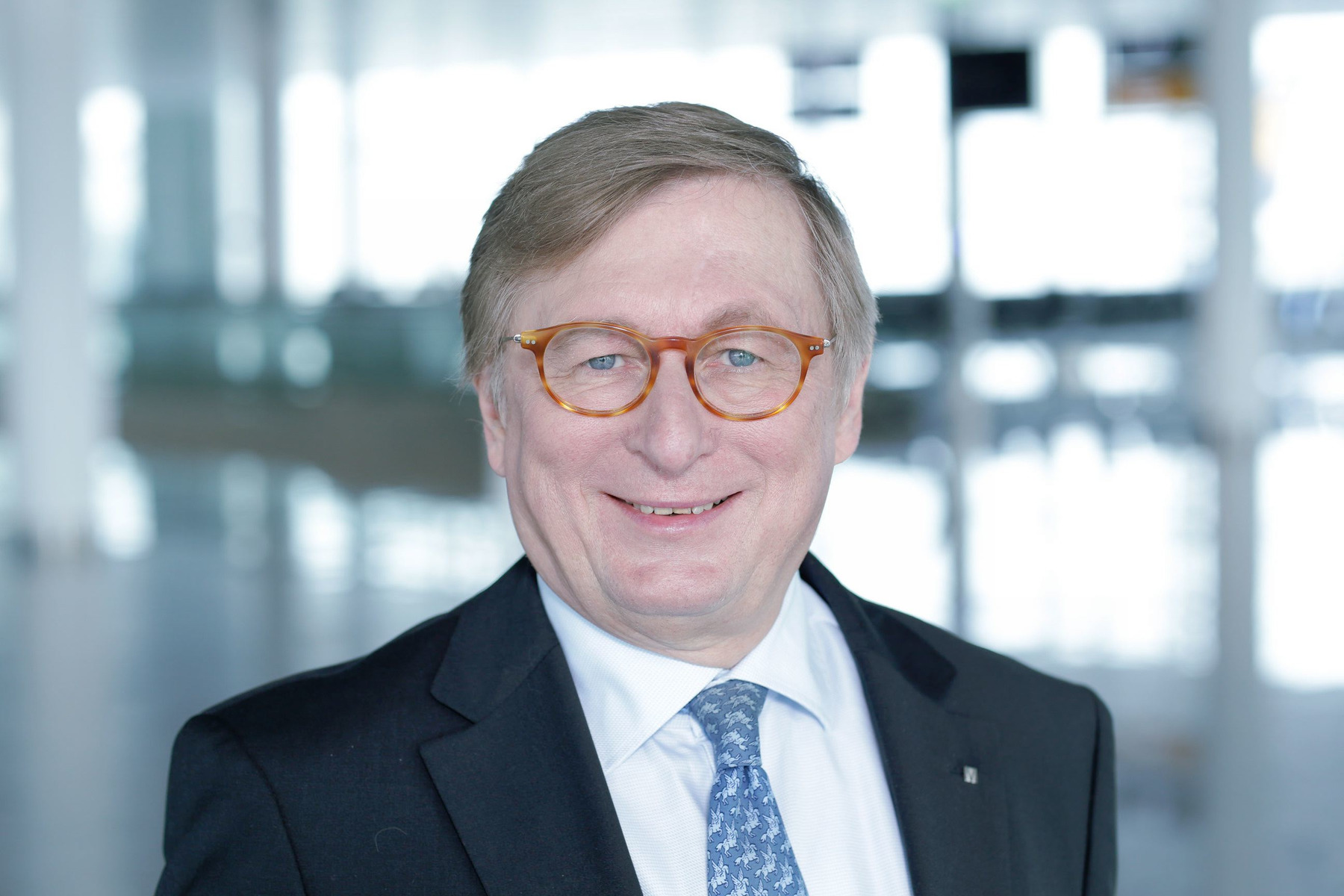
Airports have long since ceased to be mere transportation hubs; they have evolved into urban centers and meeting places. Business travelers, in particular, often expect appointments to be scheduled at the point of arrival, if possible, so that no unnecessary time is wasted. Conferences hosted by international experts at the airport are very successful, and people meet with business partners, examine new products, and exchange ideas with colleagues.
You can also explore the airport's shopping and entertainment worlds, relax, meet friends, or even negotiate contracts over a glass of beer. At Munich Airport, you can even receive medical treatment at our medical center.
Munich Airport has evolved into such an "Airport City," with everything that goes with it, from pharmacies to gas stations, from chapels to pubs. And well over 100,000 travelers visit this city every day. It's only logical that we create a new marketplace specifically for the exchange of innovative ideas and develop a location for cross-sector innovation. Munich Airport is the perfect location for this, offering ideal conditions for such a think tank.
What exactly is planned for the LabCampus? And which partners have you already secured for the project?
With the LabCampus, a unique ideas center is being created at our airport, where companies and knowledge holders, startups and global players, creatives and investors come together. We want to offer a new platform for high-tech companies and key industries from the aerospace, digitalization, energy and mobility sectors. With companies such as Siemens, Design Offices and SAP as well as research institutions such as the Fraunhofer Institute, the Friedrich Alexander University Erlangen-Nuremberg and the UnternehmerTUM The Technical University of Munich has already secured important partners as future users for the LabCampus. We want to provide a space for creativity and bring together innovative knowledge providers. As the airport, we are taking on the role of curator.
The entire airport will become a laboratory
Startups also play a role in the LabCampus planning. What role do you think startups play in the aviation industry? For which areas are they particularly important?
The aerospace industry has always been exceptionally innovative and progressive. Airports are both drivers and users of cutting-edge technologies. It's therefore not surprising that the ideas of creative minds are particularly sought after at airports. Because we aspire to always be at the forefront of technological development at Munich Airport, we also attach great importance to ensuring that our processes are state-of-the-art.
Startups could help develop particularly innovative solutions, which we would then immediately subject to practical testing. The entire airport would become a laboratory. After a successful test run, airport-specific applications could be brought to market maturity and deployed at other airports. I see a lot of potential in the area of digitalization and in optimizing the entire transport chain, from the front door to the aircraft seat—keyword: "Seamless Travel."
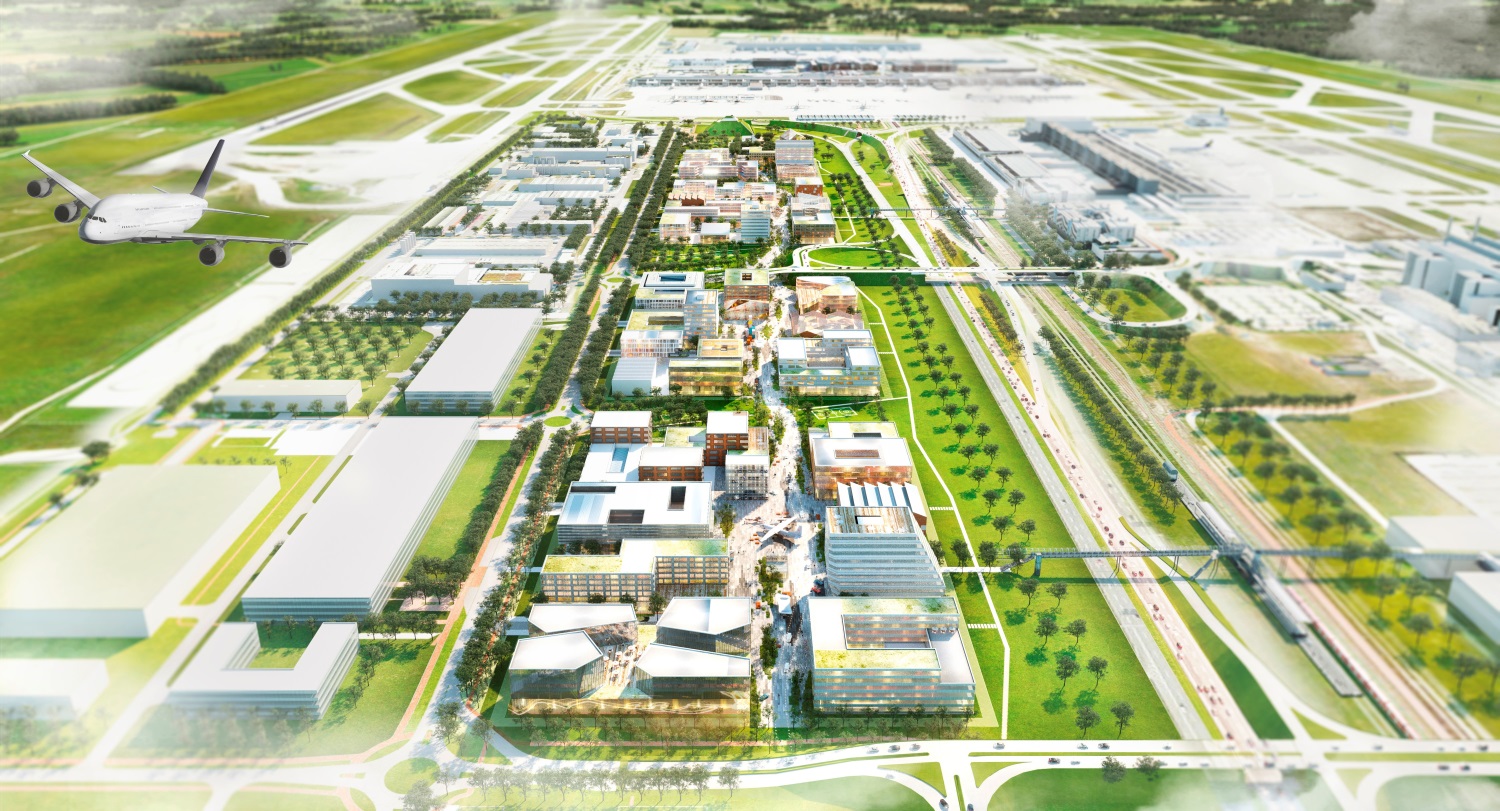
How do you intend to ensure that the more urban startup scene takes advantage of the LabCampus' offerings and accepts the distance from Munich's city limits?
With such an attractive world of innovation, especially the interaction between proven experts and distinguished scientists, the distance from Munich's urban area hardly matters. Munich Airport itself is an "Airport City." Take, for example, our recently launched "Information Security Hub," a first building block of the LabCampus, so to speak. We are working here with several renowned companies to further develop technologies to combat cybercrime and have recreated the airport's entire IT system "in miniature." This has created a highly appealing environment, with a realistic simulation of the system architecture of an entire airport, offering a wide range of options for simulating cyberattacks and their defense.
Important signal for a future-oriented project
LabCampus will certainly have to evolve, as we've only just given the green light for the first construction phase. Consider this an important signal for a pioneering project that will eventually become a highly attractive innovation center, a research location that combines living and working, and will also offer entertainment and leisure activities, shops, bars, and cafés. We're planning a future workshop, a vision that we're implementing here at Munich Airport—that's the perspective.
Collaboration with startups is nothing new for Munich Airport. The airport's innovation management is interested in innovative services and products that can be quickly tested on the market and improve the customer experience. Are there any collaborations between Munich Airport and startups that particularly stand out in your memory?
Our high quality standards oblige us to constantly review the procedures and processes at Munich Airport, rethinking and readjusting them, and seeking improvements and innovative solutions. In doing so, we always keep the needs of passengers and customers in mind. We are open to suggestions and criticism from our passengers. We also receive valuable advice and suggestions for improvement from our employees, which we incorporate and implement.
Internally, we have launched the successful ideas platform “InnovationPilot”, which is also being implemented in cooperation with a startup, namely innosabi, has been developed. We also participate in the German Aviation Innovation Award and, for example, awarded a prize to the startup "eWings," which developed a flight booking system from the user's perspective. Or think of the sleeping cabins "napcabs”, which, developed by young students, have long since taken a permanent place in Terminal 2. The most recent example is perhaps the Munich startup “styleGREEN", which attracted attention at Munich Airport on a 47-square-meter advertising wall featuring a reindeer moss installation. We liked the idea so much that we purchased entire carpets of reindeer moss to promote the "green airport" and our climate protection efforts.
The "Future of Mobility" is on everyone's lips: Which future visions of air travel do you find particularly exciting? What will the airport of the future look like?
The trend toward increasing digitalization will fundamentally change operations at airports in the foreseeable future. Sensors will not only monitor fully automated systems and provide real-time data on their operating status, but will also communicate with other networked control systems. Surveillance cameras with automatic facial recognition will simplify security checks. I find it particularly exciting that passengers will be guided via personalized devices, and we will provide them with all the important information on their way to the gate via their smartphones. They will also receive relevant suggestions about offers from shops or restaurants they pass.
Munich Airport to be climate-neutral by 2030
Passenger travel behavior will also change significantly. In addition to effective and reliable public transport, autonomous buses will be deployed, e-mobility will be expanded, and car sharing will become the norm. Modes of transport will be closely interconnected, and fares will be debited via smartphone. This will make processes smooth and smart.
In addition, airports are becoming increasingly greener. We've already set the course for Munich Airport to be climate-neutral by 2030. Advanced technologies, particularly lightweight yet dimensionally stable components, resource-efficient engines, and alternative fuels will ensure that flying becomes even more energy-efficient. Have you heard that researchers at the Netherlands Aerospace Center have now designed an airport with a single circular runway? Looking into the distant future, I'm certain we won't run out of ideas.
Thank you for the interview, Dr. Kerkloh!