What is today considered one of the most successful startup centers in Europe The story began rather inconspicuously 25 years ago: with flyers in front of the cafeteria at the Technical University of Munich. Helmut Schönenberger and his team wanted to inspire students to pursue entrepreneurship – and early on encountered talents who would later shape Munich's entrepreneurial ecosystem.
Pitch & People Episodes
PITCH & PEOPLE Episode 27: Helmut Schönenberger


Today, UnternehmerTUM is a key driver for deep tech startups in Europe. Two to three new companies emerge from this environment every week, collectively raising around two billion euros in venture capital annually.
Crucial to this success is a long-term approach: founders are not supported on a case-by-case basis, but rather accompanied over many years.
"This startup journey is incredibly long,"
says Schönenberger at Pitch & PeopleFrom initial interest during studies to a scaling company, often ten years or more pass.
Why some teams win – and others fail
For decades, Schönenberger has mentored hundreds of startup teams. His conclusion: It's not the idea that matters – it's the team.
Successful startups combine technological excellence, entrepreneurial understanding, and scalability. But what's crucial is whether a team functions well in the long term, continues to develop, and remains stable even during difficult times.
"Founding a unicorn is an insane effort,"
so Schönenberger.
Therefore, UnternehmerTUM places great emphasis on early validation: Teams develop prototypes while still studying, test markets, and acquire initial customers. Programs like the TUM Enterprise Masterclass They create space for this purpose. The result: Startups are built on substance and achieve a success rate of around 85 percent.
Germany's biggest disadvantage: bureaucracy and lack of speed
Despite functioning ecosystems, Schönenberger sees Germany at a structural disadvantage. Particularly critical are slow processes and high complexity. Business start-ups in Germany often take six to eight weeks – a clear competitive disadvantage compared to other countries.
“We are too slow, too impractical,”
says Schönenberger, Vice President for Entrepreneurship at the Technical University of Munich.
This poses a real problem for globally oriented startups. They are increasingly opting for locations where they can trade more quickly.
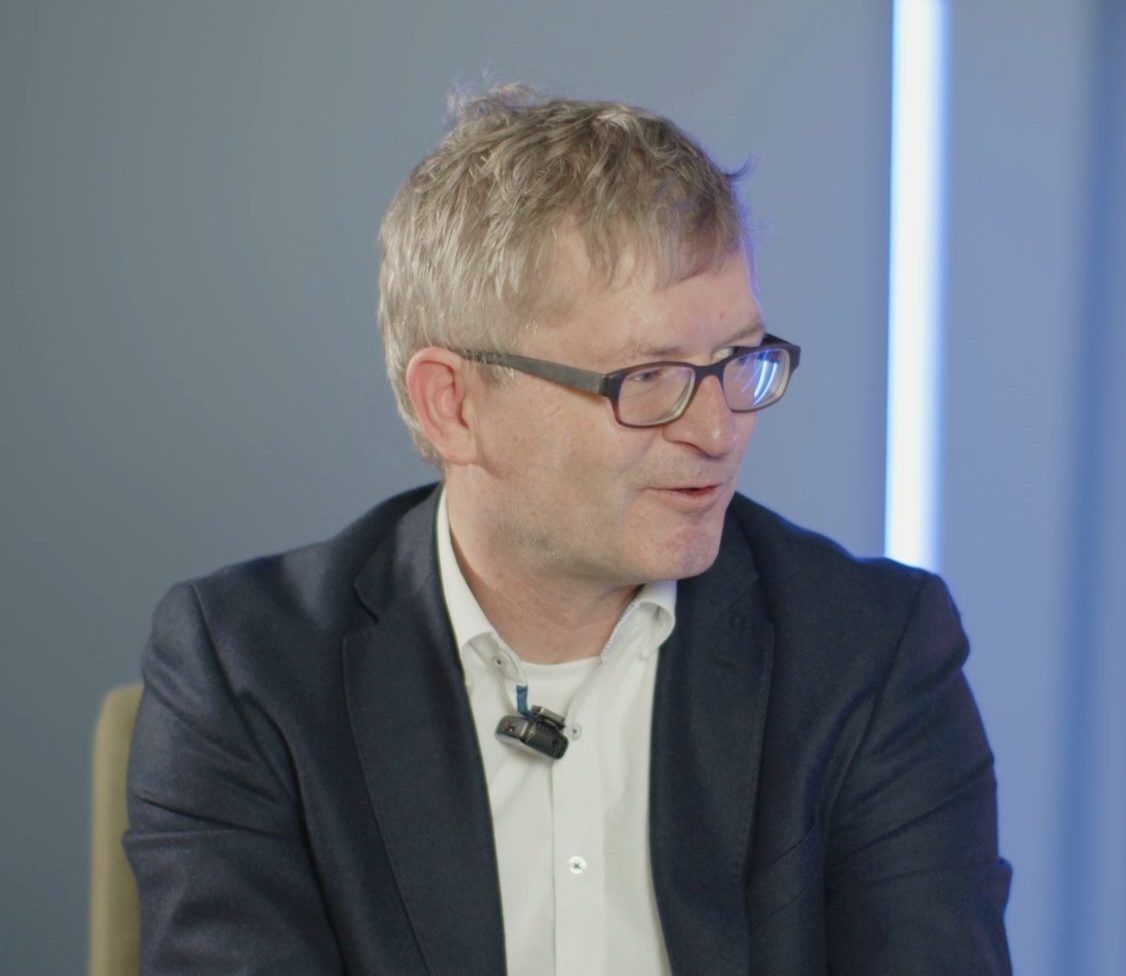
Helmut Schönenberger is CEO and co-founder of UnternehmerTUM and Vice President for Entrepreneurship at the Technical University of Munich (TUM). He is one of the key architects of Munich's startup ecosystem and has been driving the development of technology-driven spin-offs from academia for over 20 years. With UnternehmerTUM, he has built one of the largest startup centers in Europe and is also active as an investor and in the German Startup Association, advocating for better conditions for startups in Germany.
Five times less impact from research
Schönenberger sees a key structural problem in the commercialization of research results. While Germany invests heavily in universities and research institutions, the economic implementation lags behind the potential.
"The Americans turn one euro of research funding into five euros – we might turn one into one."
For him, one thing is clear: this discrepancy jeopardizes long-term competitiveness. The crucial factor, he believes, is to better integrate existing technologies and talent into marketable companies. He sees great potential, particularly in areas like deep tech and quantum research – provided, of course, that the entire value chain is considered and developed.
A global race for talent and innovation
Munich is now one of the world's leading deep-tech ecosystems, but this status is not guaranteed. Other regions are catching up quickly and investing strategically in their innovative capacity. Whether Germany and Munich remain successful in the long term depends on whether all stakeholders act together – quickly, pragmatically, and ambitiously.
Because one thing Schönenberger makes clear: if the framework conditions are not right, the best founders will choose other locations.