Munich Startup: What does your startup do? What problem do you solve?
Max Steger, Servail: Servail developed Robots for the maintenance of railway vehicles and railway tracksThe special feature of our robots is their very compact design and their ability to utilize the free space beneath trains and between the tracks. This makes them independent of ongoing railway operations. Simply put, the robots can move along the tracks, performing measurements and maintenance work while the trains continue to run above them.
In this way, we are solving one of the rail industry's biggest challenges: maximizing track availability. Freight and passenger rail traffic will increase significantly in the future. However, the track network is not growing proportionally, and we are already reaching capacity limits. In the future, there will be hardly any time windows for maintenance processes. Closing a track—for example, for inspections—will become even more costly. Our robots significantly reduce the number of necessary track closures.
Servail inspects entire route networks
Munich Startup: But that's been around for a long time!
Max Steger: The concept of a robot traveling under trains, independent of railway operations, is currently unavailable on the market. There are several startups dedicated to sensor technology in the railway environment, but our value proposition is unique. Unlike stationary sensor systems, we inspect entire track networks rather than individual points. Furthermore, our robot platform offers the possibility of integrating tools and performing maintenance work directly.
With our first product, we are developing a solution that is highly tailored to the requirements of the railway sector and solves an industry-specific problem. Our starting point was a real customer problem, not the adaptation of a new technology to a specific industry.
Munich Startup: What is your founding story?
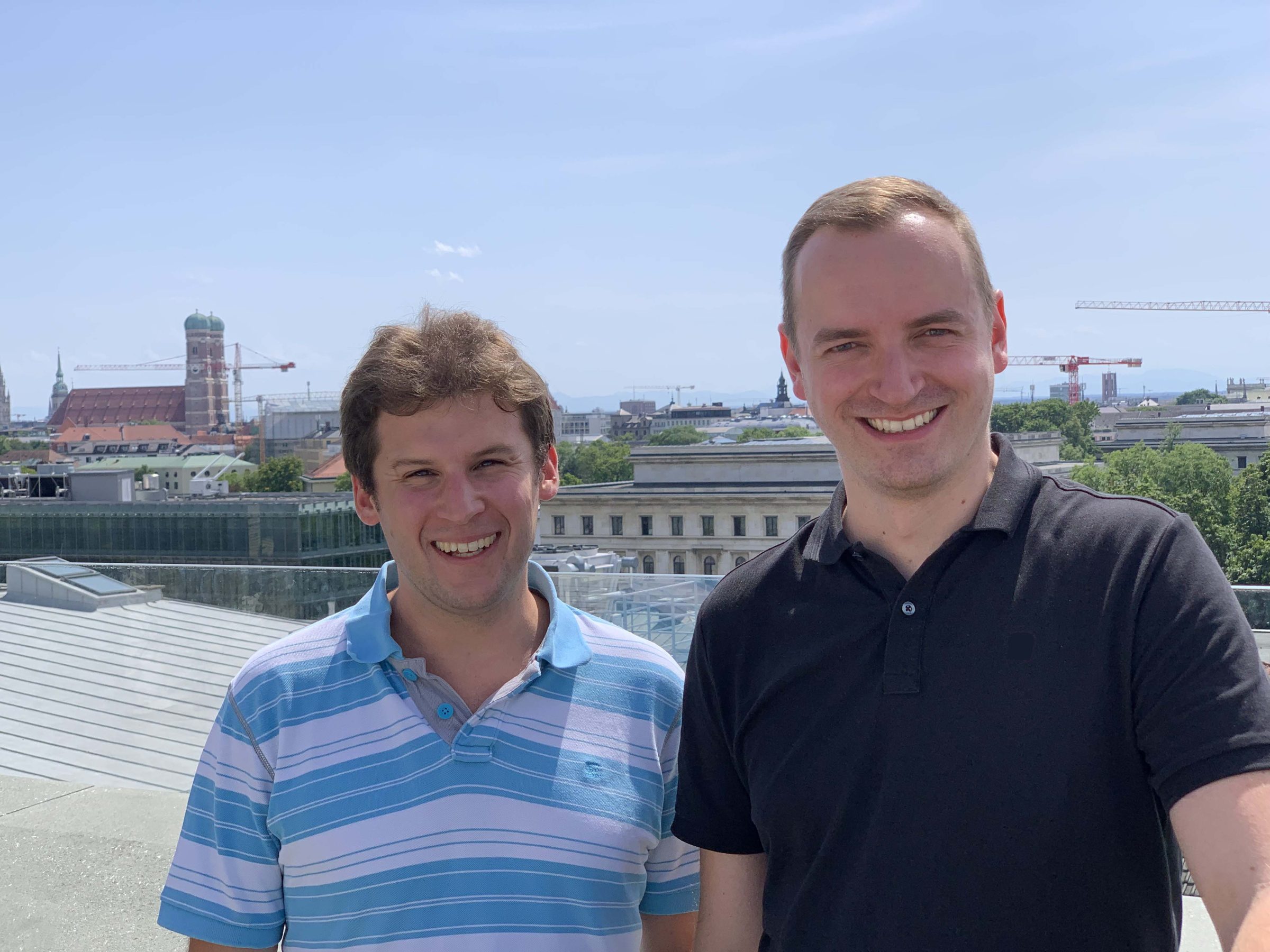
Max Steger: Christian [Ganghofer] and I [Max Steger] have known each other since school and have been friends ever since. We took different paths after school and studied in different cities. Christian is a mechanical engineer and has worked in various companies developing special machines. I bring industry knowledge to the table thanks to my doctorate in civil engineering and my work at a railway technology supplier. Last summer, we began to look into the major challenges facing the railway industry and how they could best be solved technically. There's no stopping robotics from finding its way into this sector. We want to drive this development as pioneers. Then we plucked up the courage and founded the company. From then on, everything happened quickly.
“The rail industry is very focused on safety and reliability”
Munich Startup: What have been your biggest challenges so far?
Max Steger: The rail market operates in a traditionally conservative environment. The rail industry is highly focused on safety and reliability, resulting in extensive regulation. While regulation is important for safety and reliability, innovation is sometimes hampered. The path to market availability is longer than in many other industries. We overcome this challenge by addressing a very acute customer problem and working closely with customers right from the development stage. This greatly simplifies the path to market availability.
Munich Startup: Where would you like to be in one year, where in five years?
Max Steger: In one year, we aim to offer customers added value through partial automation of maintenance processes. In five years, our robots will be an important component of our customers' maintenance strategies.
Munich Startup: How have you experienced Munich as a startup location so far?
Max Steger: Munich is certainly an ideal location for tech startups in many ways. It has a very well-developed ecosystem with a strong network to industry and science. Munich universities Many highly qualified graduates are entering the job market and helping startups, especially in their early stages. At the same time, however, it must be acknowledged that competition in the job market from large tech companies is fierce. An early-stage startup generally can't compete with the generally higher starting salaries in the industry. However, the question of salary is, of course, particularly important in a city like Munich, given the high cost of living.
Munich Startup: Hidden champion or shooting star?
Max Steger: For us personally, Servail's visibility isn't a crucial success factor. Nevertheless, we must admit that it's helpful in many ways.