When it comes to internationalization, founders in this country usually look westward. Unjustifiably, South Korea has a lot to offer them. With a gross domestic product of $1.65 trillion (2019), heard The country is currently one of the richest and most modern countries in the world. The approximately 50 million wealthy Koreans, and especially the companies themselves, are extremely open to new digital offerings; about one in ten already uses 5G, and 97 percent surf the internet with high-speed internet. Last but not least, the South Korean government aims to position itself as a global pioneer in digitalization and is therefore investing a good billion dollars in its startup scene and new online services by 2022.
Further venture capital is being provided by corporations such as Hyundai, LG, Samsung, and the Shinhan Financial Group. Young foreign companies can also benefit from this as soon as they establish themselves in the region around the capital Seoul, around Gwangju, or in port cities such as Incheon or Busan. Another advantage: Located between China and Japan, South Korea offers access not only to these two global markets, but also to other growth regions in Southeast Asia, especially with new digital offerings.
More customers, more open investors
Phong Dao, co-founder of the Frankfurt-based fintech Ive.One, is among those who want to secure these advantages. He hasn't been to South Korea yet, but he's currently in the process of expanding his startup there and establishing a subsidiary.
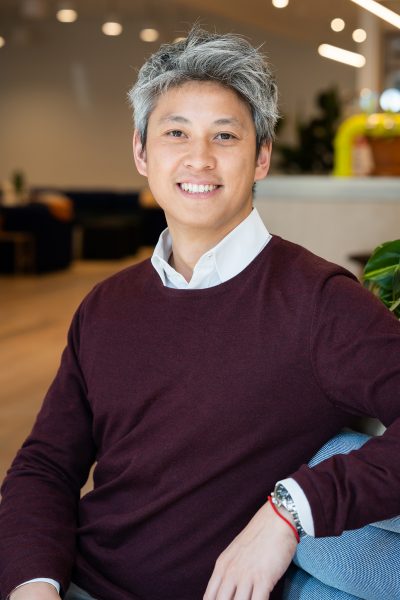
“The potential in South Korea and Asia is significantly greater for us than in German-speaking countries,”
justified Dao this step.
“There are more customers for us there, and investors are more open to our business model.”
With Ive.One, companies raise and manage capital digitally and seek investment opportunities online. To secure cash flows and share trading, the company, founded in 2017, Startup on blockchain and crypto technology.
"Germany is very far ahead in this regulatory field, while Asia is somewhat behind, but is much more aggressive in the use of such services. We can therefore argue there with proven technology, sustainability, and greater security, thus conquering a new market,"
Dao continues.
Get to know South Korea at German Accelerator
However, similar to European countries or the USA, South Korea also has traditions and customs that differ significantly from those in Germany. Founder Dao quickly noticed:
"As an outsider, it's difficult to break into the market. You also need someone with language skills."
That's why German Accelerator prepares young entrepreneurs for expansion into South Korea. In its workshops, they learn about South Korea, its people, and their traditions, as well as gain initial personal contacts and assess the demand for their products and services.
“We found a US-Korean mentor through the German Accelerator program, who helped us with our first steps into the market and even with pitches,”
reports Dao. He participated in the (digital) program of the BMWi-funded accelerator in September 2020 and immediately developed the idea of expanding to South Korea. Now, only a few legal documents and signatures are missing for the subsidiary and market launch.
Smart production and solving social problems with robots
Good information and communication networks throughout the country, broadband, and high-speed internet ensure that new digital services spread very quickly in South Korea—both among businesses and consumers. How Cocoa, mobile shopping, gaming, organizing—all of these have long been part of everyday life, even on the subway or in the countryside, as has cashless payments. Physical money is still used for only one in five transactions. Above all, however, the economy is embracing the advantages of digitalization and is already enriching various offerings with digital services. Therefore, South Korea has long been ranked high on more than just Bloomberg's Innovation Index. These four digital fields, in particular, are receiving special support from (location) policymakers:
• South of Seoul, the Pangyo Techno Valley has been established, where applications relating to artificial intelligence and machine learning Gwangju in southern South Korea plans to invest more than $300 million by 2025 to attract startups focused on smart systems and services, along with their employees.
• Around 320,000 robots support a wide variety of manufacturing and service processes in South Korea. This number is expected to double by 2023. The Intelligent Robot Development and Supply Promotion Act specifically promotes the development of smart machines, and workers are already being trained in the use of robots. The country sees robotics a solution to social problems, such as in care.
• In 2020, the equivalent of almost 26 billion dollars flowed into the Internet of Things and into the networked smart city: Sensor technology and IoT solutions made in Germany have a very good reputation in South Korea, are intended to help combat traffic jams and can immediately prove themselves in practice here.
• According to the International Federation of Robotics, South Korea is the most automated country in the world, with around 30,000 smart factories about a quarter of which have already been realized. Startups that develop technologies for intelligent manufacturing are very welcome and will receive appropriate financial support.
South Korea is fully committed to digitalization
Extremely open to new things and strongly committed to digitalization: South Korea spends 4.5 percent of its gross domestic product on research, development, and innovation, and companies also invest heavily in new offerings. The country has made a name for itself worldwide with creative (entertainment) electronics and innovative cosmetics. In addition, South Korea now supplies recognized automotive and mobility technology. Manufacturers are increasingly refining even tactile products such as creams or face masks with additional digital features. The state is fueling this innovative power with financial support, international partnerships, and above all with manageable start-up and Admission rules for companies and their employees from abroad:
“In some cases, it was more time-consuming to obtain the necessary documents here in Germany,”
reports Ive.One founder Dao.
"Once everything is in place, it will take us about two weeks to register and register our company, and I don't even have to be there in person."
Most applications can be submitted digitally; for certifications, the presence of a lawyer on site is sufficient. If necessary, organizations such as the German Message, the Korean-German Chamber of Commerce and Industry and its European counterparts can assist companies seeking to establish themselves in South Korea. Further contact and cooperation opportunities are available with organizations and research institutes such as the Max Planck Society and the Fraunhofer Society, which have also long been taking advantage of the positive innovation climate in South Korea and collaborating with local companies, science, and research institutions.
Personal contacts and trust are important
Despite their openness to new technologies and their willingness to embrace offers from abroad, people in South Korea think and act very traditionally in many ways. This influences the economy. Building a business here requires patience and time. Age and experience are highly valued here, so seniors wield considerable influence and dominate conversations. This is consistent with the fact that South Korea's economy is largely hierarchically structured. This applies to companies and their infrastructure: The economy is dominated by the Big Five: Hyundai, LG, Lotte, Samsung, and SK Group.
This “Chaebols” are, each individually, highly diversified into sub-companies that work and do business closely with one another. This is primarily a sign of mutual trust. Although small and medium-sized enterprises and startups have recently gained ground, a development massively supported by the state, the conglomerates survive because business relationships here are proven at all levels, and everyone knows everyone.
Personal meetings are considered safer and more reliable than digital communication. Even in South Korea, working from home is not yet widespread. And business relationships—including private consumption—are usually established through personal references. Acquaintances provide contacts and vouch for their quality. Founder Phon Dao has therefore appointed his mentor as the local contact in South Korea. This mentor knows the potential customers, funding sources, and investors. Chaebols contribute about half of South Korea's economic power, and they generally forge partnerships with local companies, which also makes market entry more difficult for outsiders. However, contacts with locals or even collaborations with small businesses or organizations accelerate success. Last but not least, they also provide the necessary language skills. Phong Dao recalls:
"During the first venture capital pitch, I was the only one presenting in English. It quickly became clear that we needed someone who spoke Korean."
Increase efficiency and streamline processes
On the other hand, both chaebols and medium-sized companies are paying attention to innovative services and products, especially if they increase efficiency and streamline or even accelerate processes. The startup scene is therefore strong and is intensively supported by the major players: 33,000 young companies are registered, including unicorns such as the search engine Naver, the online store Coupang, and the communications and information service Kakao. This is where the necessary digital specialists and experts are nurtured. Digital technologies are also being intensively researched and developed at universities and in companies. Chaebols and medium-sized companies are increasingly training their employees in the use of intelligent systems, automation, robots, and big data. This allows them to quickly build effective teams locally.
Phong Dao is currently expanding the founding team. He is confident that he can establish Ive.One in South Korea, even against local competition:
"We have more reliable and secure technology. This will help us gain ground, especially in South Korea. Even though almost everything in South Korea is digital, I'm looking forward to my first flight there to finally meet the local team in person."
Perhaps the basic habits in South Korea are not that different from those in Europe?