Munich Startup: Who are you and what does Planerio do? Please introduce yourselves briefly!
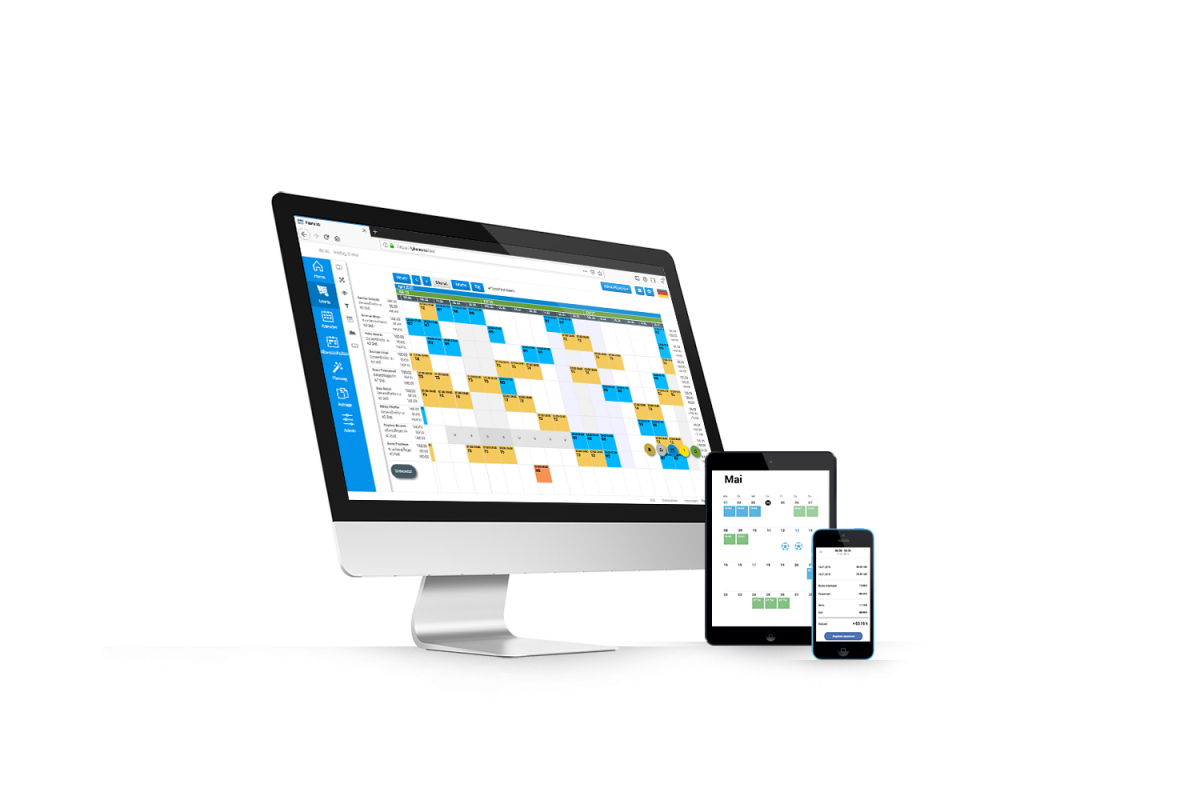
Markus Hinz: Stefan Klußmann (44) and I (53) are the two managing directors of Planerio, the Operating system for modern workforce management in healthcareWe offer intelligent software for automatic shift scheduling, time recording, and payroll accounting in hospitals, medical practices, and care facilities.
Stefan has a doctorate in neurobiology and, after many years at McKinsey, co-founded Planerio in 2016 – together with Robert Grüter, who is, among other things, co-founder of Brainlab, and with the ‘inventor’ of our planning algorithm, radiology professor Dr. Wieland Sommer.
I joined this year. After twelve years as a manager at Google and over 20 years of experience in digitalization, I was looking for a new challenge in digital transformation – preferably at a late-stage startup. Robert and Wieland, whom I had known personally for some time, sparked my interest in Planerio and the healthcare sector.
Dr. Stefan Klußmann: We're particularly proud of our founding story, as it actually began in the tea kitchen of the Großhadern Hospital. Wieland Sommer, a radiologist, had taken on responsibility for shift scheduling in his department – and suddenly found himself spending 25 hours a month managing his team's shift requests, applications, vacations, sick days, qualifications, and complaints. Together with a colleague, he came up with the idea of using an algorithm to automatically calculate the shift schedule – and the idea for Planerio was born.
The founding idea originated in the hospital tea kitchen
Munich Startup: What problem does your startup solve?
Markus Hinz: With our intelligent work-life management solutions, we aim to sustainably improve staff shortages and working conditions for employees in the healthcare industry – while simultaneously contributing to better patient care.
Thanks to our scheduling and time recording solutions, which focus on the needs and qualifications of our employees, they can not only better balance their private and professional lives, but also have more time for their patients in their daily work routine.
Dr. Stefan Klußmann: Not only employees, but also management benefits from greater planning and legal certainty and increased work efficiency. Our intelligent, digital processes enable new scope for action and the necessary data basis for all types of economic optimization (business intelligence).


AI as 'collective intelligence'
Munich Startup: But that's been around for a long time!
Markus Hinz: You'd think so, but there's no other scheduling solution based on artificial intelligence (AI) that offers such flexible, agile, and automated scheduling. And there's no other employee app with our comprehensive, employee-centric features, such as digitally entering shift requests, a shift swap platform, request management, and much more.
While some other providers consider simply copying the last month's schedule to be 'digitalization' or even 'automation,' we offer a truly automatic and digital creation of the roster according to individually defined rules. And our range of functions and solutions continues to grow with each new customer. In this context, we also like to translate AI as 'collective intelligence': Every month, our product is a little better because we have implemented another requirement from a doctor's office, hospital, or care facility.
How Planerio masters the battle for the best talent
Munich Startup: What have been your three biggest challenges so far?
Dr. Stefan Klußmann: I would say the biggest challenge is AI – that is, programming an algorithm that can actually handle the complexity of all planning variables in the healthcare system (such as legal regulations such as the Nursing Staffing Minimum Limits Ordinance) and automatically create the optimal roster for every hospital department, nursing facility, or doctor's office.
A second major challenge is certainly the ‘War for Talent' for us as an engineering and software startup here in Munich. The competition for the best talent is fierce. That's why we place great value on a corporate culture characterized by mutual trust and appreciation, lively knowledge sharing, and a passion for innovation. The fact that our innovative technology really makes a difference is also motivating! Through this, and through our rigorous focus on recruiting and networking, we have succeeded in building a sustainable organization.
And last but not least, there are many long-established software solutions and IT infrastructures in the healthcare sector. This poses a major challenge, especially for our sales department. Especially when working with hospitals, a multitude of different stakeholders must be convinced. But we knew from the start what we were getting into: The technological shift from on-premise to cloud solutions had long been underway and was only accelerated by the coronavirus crisis. Together with our shareholders, we have an excellent network and industry expertise. This means that the sales challenge can even turn into a long-term competitive advantage for us.
“Our team is growing rapidly”
Munich Startup: How are things going?
Dr. Stefan Klußmann: Planerio is already in use at over 500 hospitals, nursing homes, and medical practices in Germany, Austria, and Switzerland. With shift scheduling in large practices and over 100 radiology departments, we are now the market leader in Germany. Our team size, now at almost 50 employees, is also growing rapidly. The coronavirus crisis is accelerating the digitalization process in the healthcare industry and, with it, Planerio's success. Our revenue this year is in the nearly seven-digit range.
Munich Startup: How do you rate Munich as a startup location?
Markus Hinz: We value Munich as a hotspot for investors, service providers, potential customers, and valuable influencers from the healthcare sector. Naturally, the high recreational value for our employees also plays a key role. Because we're not the only ones who see it this way, Munich's attractiveness also comes with disadvantages, such as the aforementioned 'war for talent' and high rents. Nevertheless, we feel very comfortable here: Munich is Planerio's home.
Continue to perform well in the future thanks to quantum computing
Munich Startup: Risk or security?
Markus Hinz: I'd say it's a healthy mix of security and calculated risk. Our customers at over 500 locations need the security of a reliable partner to plan their future. And Planerio delivers: We haven't yet received any cancellations from customers who were already using our product.
We are also securing our innovative edge for the future with government-funded research projects. For example, with the help of artificial intelligence, we want to understand what demands 'New Work' will place on workforce planning in healthcare in two to three years, for example, with regard to flexible shift systems. And by using quantum computing, we want to ensure today that our system will be able to plan thousands of shift schedules simultaneously, efficiently and automatically, in the future.