Munich Startup: Please introduce yourselves briefly.
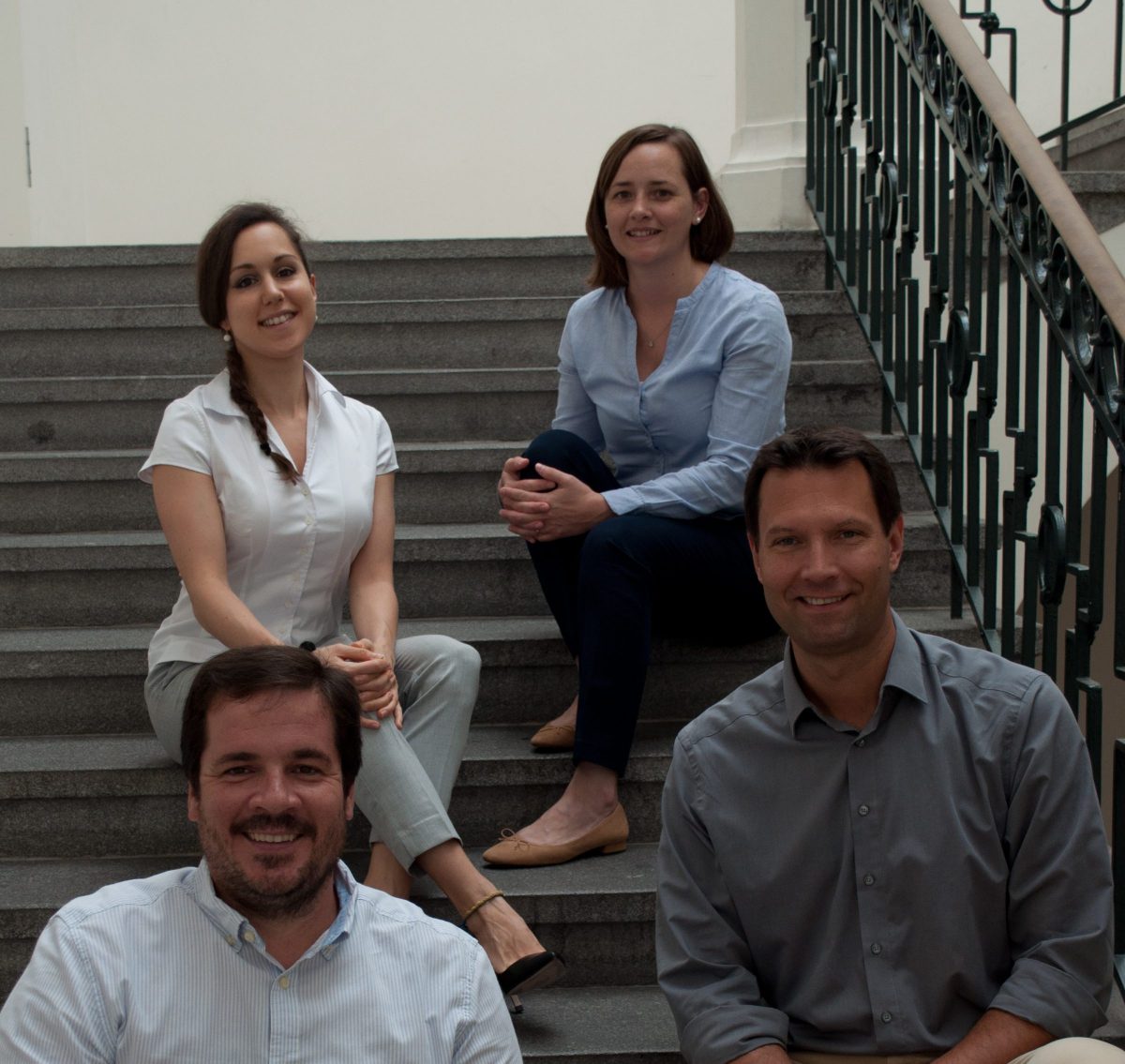
Neurevo: We are an international founding team with complementary qualifications. Francisco Pan-Montojo from Spain is a neurologist and our project manager. Yanina Dening from Argentina studied molecular biotechnology and focuses on in vitro cell culture research. Alexandra Chovsepian from Greece studied biology and neuroscience and holds a doctorate in neurobiology. She is our expert for in vivo experiments. Jochen Rheinwald, a business graduate, brings business expertise to the team and, as the only native German, occasionally lends a hand when necessary, proofreading texts in German.
Munich Startup: And what exactly do you do?
Neurevo: We have discovered two neuroprotective substances that have been successfully tested as therapies in vitro and in vivo models of stroke, Parkinson's disease, and ALS (Editor's note: amyotrophic lateral sclerosis). We also know the mechanism of action of both substances, which allows us to base our business model on two pillars: a) developing the promising substances into approved therapies – typical drug development; and b) using our knowledge of the mechanism of action and proprietary screening methods to identify further medical applications.
Munich Startup: What is new about your approach?
Neurevo: Currently, there is no causal or protective treatment for neurological diseases such as Parkinson's disease, ALS, or stroke. This means there is no treatment for the cell death of neurons that are specifically affected by the disease. Neurodegenerative diseases are typically treated purely symptomatically, meaning only the symptoms are treated, not the cause. We have discovered substances that have a neuroprotective effect.
Munich Startup: What challenges have you had to overcome?
Neurevo: Our first major challenge was obtaining funding through funding programs (e.g., the Bavarian FLÜGGE program or the EXIST research transfer program of the Federal Ministry of Economics) to advance the development of the substances. Now, our biggest challenge is finding investors to conduct the expensive clinical trials and bring the therapy to market.
“Through research we increase our company value”
Munich Startup: And how is business going at the moment?
Neurevo: We're proud to say that we've received €2 million in public funding so far, which is a clear sign of trust in the project and the team. Otherwise, in our case, we can't really talk about how the "business" is doing, but rather how the research is progressing, because this increases our future company value and makes us attractive to investors and the pharmaceutical industry. Regarding research, we can say that things are going very well, and every further successful experiment gives us the confidence to continue.
Munich Startup: How do you rate Munich as a location for startups and research?
Neurevo: From a strategic perspective, it is advantageous to be close to research institutes and startup hubs specializing in biotechnology, where relevant events take place or took place before Corona and where personal exchanges or the recruitment of qualified employees are facilitated.
The greater Munich area, especially the southwest around Martinsried, is one of the most important regions for biotechnologyCompanies and experts in Europe. Undoubtedly ideal for establishing a drug development company and also for acquiring laboratory and office space there.
Revolutionizing the treatment of neurological diseases
Munich Startup: What are your next steps?
Neurevo: We need strong investors on our side to join us on the journey to clinical proof of concept. If we demonstrate the efficacy of our compounds against brain cell death in neurodegenerative diseases and stroke in humans, we can revolutionize the treatment of neurological diseases. This is also reflected in our slogan: Neurevo – Revolutionizing neurological treatments.
Munich Startup: And last but not least: Does your corporate philosophy focus more on safety or risk?
Neurevo: There's no success without risk, at least in a business sense. But we're developing drugs that we want to test in humans, so safety in terms of human health always takes priority.