
With a total of 593 new startups, 11 more young, innovative companies were founded across Germany in the last quarter than in the same period last year. Of these, 129 were founded in the Free State, 82 of which are based in Munich. In Berlin, the number was just a few fewer, with 124 startups. This means that Bavaria has overtaken Berlin in this ranking for the first time. In third place is North Rhine-Westphalia with 103 new startups.
As in the previous year, the number of startups founded fell by 16 percent from April to June. However, according to Statista, this trend cannot be clearly attributed to the coronavirus crisis, as a similar decline was observed in the same period last year. This is also confirmed by a analysis the data from the Data & Insights Dashboard from Munich Startup: Total VC investments in the second quarter of 2020 were on par with the same quarters of the previous year. Large investments in the double-digit million range, the number of rounds above €2 million, and the total number of VC rounds were all higher than the same quarter of the previous year.
Women continue to be underrepresented in start-ups
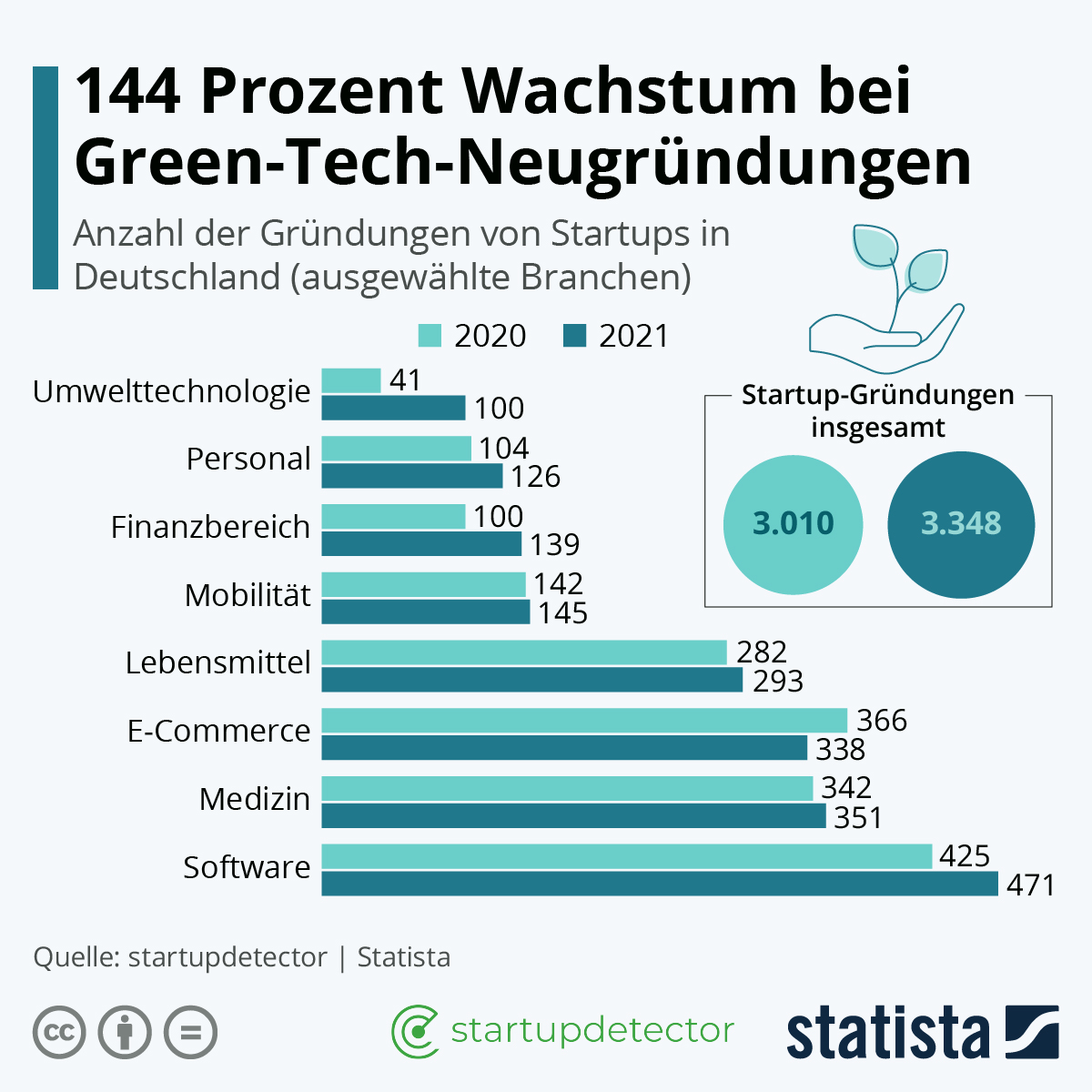
Overall, the software industry saw the largest number of new startups founded in the second quarter of 2020, with 105 companies (2019: 101 startups). Medicine followed in second place with 71 new startups (2019: 69) and e-commerce with 60 startups (2019: 39). The food sector experienced the greatest growth – 59 startups were founded there, more than double the number in the second quarter of 2019 (26).
The proportion of women among founders was only 16 percent in the second quarter, which is exactly the same level as the Female Founders Monitor for female founders in Germany. But while women remain generally underrepresented in the startup scene, figures from Startupdetector show that female founders appeared to prefer certain sectors from April to June. For example, the proportion of new startups with at least one woman as managing director was highest in the tourism sector at over 35 percent. This was followed by the education and services sectors with just under 30 percent. The fewest startups with female managing directors were in the construction, software, and energy sectors. This means that female founders, at least in the second quarter, showed a different focus than usual: The Female Founders Monitor located their focus primarily in the areas of health and lifestyle.
 You can find more infographics at Statista

