According to the Food and Agriculture Organization of the United Nations (FAO) 33 percent of all recorded fish stocks are overfished. 60 percent of stocks are fished at the maximum sustainable level. The use of chemicals in industrial shrimp farming and the associated environmental impacts on rivers and other waterways have long been known.
Not a good outlook for fish lovers. So what can you do if you still don't want to give up fish or seafood? It's always a good idea to use regional products. For example, the Greenpeace fish guide the local carp as 'unproblematic' – incidentally the only fish that can do this – and shrimp can now be caught from a Bavarian breeding Or you can choose a plant-based alternative.
Profitable business model and a more sustainable world
With Good Catch and New Wave Foods, there are already players in the American plant-based fish segment, and the German market is now Happy Ocean Food The founding team – consisting of Robin Drummond and Julian Hallet – wants to win over more than just vegetarians and vegans with their first product, the Happy Ocean Shrimp. Robin Drummond says:
"We have big goals and a clear vision. We believe that every individual can make a difference. If you change something in your behavior, it will influence others and make bigger waves. Let's make some waves. That's our motivation. Because with Happy Ocean Foods, we don't just want to build a very profitable business model, but also contribute to a more sustainable and healthier world. [...] We believe in making a big impact by becoming an internationally successful brand in the plant-based fish and seafood segment, which ultimately wins over fish eaters and thus the mass market."
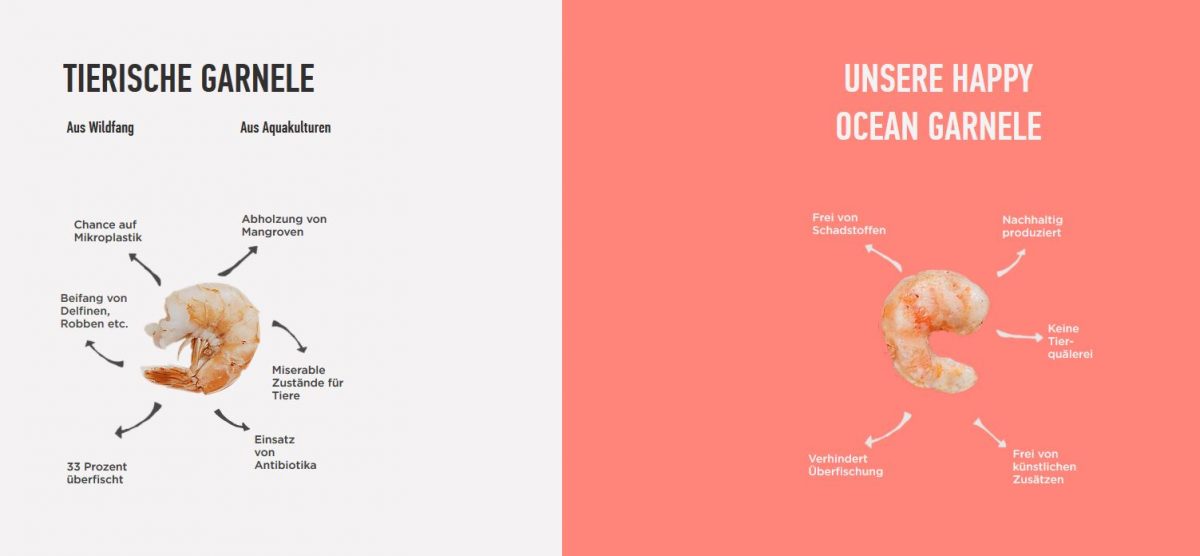
What exactly does the 'happy' shrimp consist of? Robin Drummond explains:
"We are developing plant-based alternatives to fish and seafood. We use a blend of plant-based proteins combined with algae extracts, spices, and natural flavors extracted from the algae to create our first product, a Happy Ocean Shrimp, which resembles a real shrimp in taste, texture, and appearance. Thanks to our ingredients, it's rich in important omega-3 fatty acids, which are otherwise mainly found in fish, and is a good source of protein."
Numerous experiments and several iteration loops
The Munich-based startup hasn't launched its shrimp yet, but the first restaurant sale is planned for August. What has been Happy Ocean Foods' biggest challenge so far? Robin Drummond comments:
"Developing a compelling product with an excellent taste experience that's truly healthy. During product development, we conducted numerous experiments, went through numerous iterations, and collected customer feedback through tastings to achieve a result with a wow effect. We are very pleased with the current state of our Happy Ocean Shrimp in terms of taste and nutrition."
The challenge will always be to convince the mass market of the substitute product, as this is the only way to achieve a lasting effect. However, brands like Beyond Meat and the Swedish oat drink manufacturer Oatly demonstrate that it's possible. Oatly's Barista Edition has found its way into the refrigerators of many people who previously had little interest in substitute products.
More fish substitutes are planned to follow the Happy Ocean Shrimp. Restaurant owners who would like to get started with the shrimp Variante can now register as a Happy Ocean Foods sales partner and make a small contribution to the plant-based fish revolution.