In just four years, three graduates from the Technical University of Munich have transformed their IT company into a global market leader. For this success story, TUM has now honored Celonis GmbH with the Presidential Entrepreneurship Award. The startup has developed process mining software that companies can use to evaluate and visualize their IT-supported processes and thus better understand their business operations. Also nominated were robot manufacturer Magazino and vaccine developer ImevaX.
Companies' IT systems contain countless data about the day-to-day processes that take place in their individual departments. Process mining, or automated business process discovery, is the name given to methods for bringing this process data to light and analyzing it in such a way that complex business processes become more understandable and can be improved.
Become a global market leader in a short time
Martin Klenk, Bastian Nominacher, and Alexander Rinke have developed such a technology – based on the research results they collaborated on as students of computer science, finance and information management, and mathematics at TUM. Their software can be used in all systems and can analyze business processes in real time. In 2011, the graduates founded Celonis; today, the startup is already World market leader in process mining. Its customers include companies from a dozen industries and several countries, including major global corporations. Celonis has more than doubled its revenue annually and currently employs around 60 people.
The Celonis team was supported by the TUM start-up advice supported and by a EXIST Start-up Grant The university provides a mentor and workspace. The entrepreneurs exchange ideas with various departments, not only during the startup phase but also during the ongoing process. They are also involved in several TUM programs on entrepreneurship and career guidance. In this way, they also serve as role models for students who are considering starting a business.
Magazino and ImevaX nominated
The Magazino GmbH builds robots that can measure, recognize, and reliably grasp objects using 2D/3D cameras. This enables them to autonomously assemble individual items in warehouses – something that has so far been done by humans. Nikolas Engelhard, one of the founders, studied computer science at TUM. In addition to EXIST support, the team was supported by UnternehmerTUM, the TUM's business incubator, and benefited from the "Design Enterprise" of the Chair of Industrial Design.
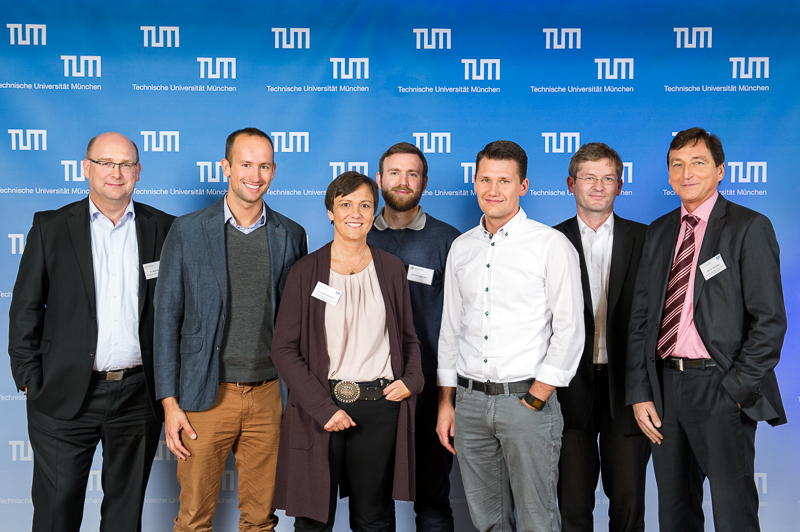
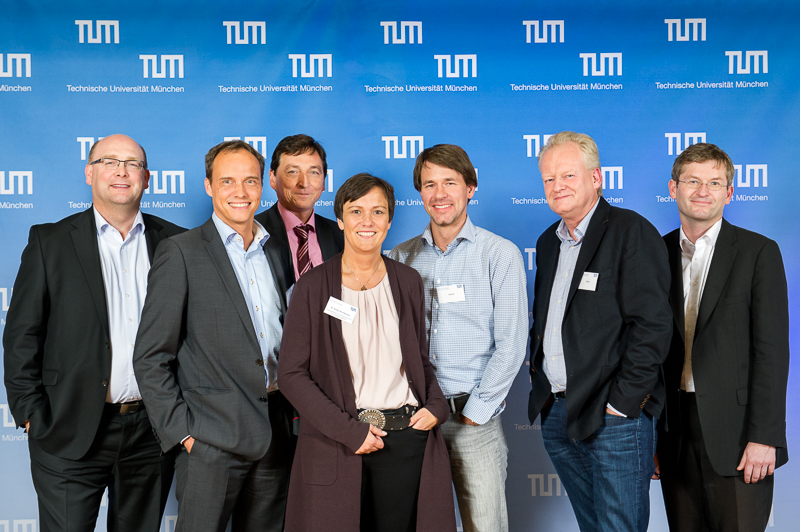
The ImevaX GmbH develops highly specific vaccines against pathogens that cause infectious diseases that are widespread around the world. The current focus is on the bacterium Heliobacter pylori, which can cause stomach ulcers and stomach cancer. The team led by Markus Gerhard, a professor at the Institute of Medical Microbiology, Immunology and Hygiene, was supported by the TUM startup advisory service.
TUM Presidential Entrepreneurship Award
TUM annually presents the Presidential Entrepreneurship Award to an outstanding spin-off from the fields of information and communications technology, medical technology, clean technology, or life sciences. Companies are selected whose business idea is significantly based on TUM research findings. Further criteria include high growth potential and secured initial financing. The prize is endowed with €10,000. The prize money is donated by the Association of Friends of TUM. Vice President Dr. Evelyn Ehrenberger presented the award at the TUM Entrepreneurship Day, where prospective founders can engage with TUM advisors and startups.
The award is a component of the entrepreneurship strategy with which TUM motivates students and researchers to pursue entrepreneurship. Together with the UnternehmerTUM, the Center for Innovation and Entrepreneurship, it supports startups through all phases of their development. Since 1990, more than 700 companies, currently employing around 14,000 people, have emerged from TUM. According to the latest "Start-up Radar" of the Stifterverband für die Deutsche Wissenschaft (Donors' Association for the Promotion of Sciences and Humanities in Germany), No major university supports start-ups as well as TUM.