The Munich investment firm MIG has invested almost 500 million euros in startups such as Konux, Navvis or Kewazo but also in medtech companies such as Amsilk. And 2018 accompanied MIG the internet telephony company NFON to the stock market. What do investors value? We asked Michael Motschmann, General Partner and Board Member at MIG.
What do you prefer to invest in?
The MIG The MIG funds managed by us have invested in around 40 high-tech startups since 2004. In the past, the focus was on biotechnology and medical technology; more recent investments have focused heavily on digitalization. We have a relatively broad portfolio of investments. In any case, however, we must be convinced not only of the business idea but also of the management team.
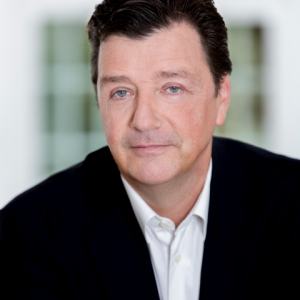
Do you scout for promising companies yourself or do you have consultants for this?
We have our own network, of course. Our partner team includes several experts who monitor the scene and markets and are also involved in the larger Startup competitions as a visitor or even as a jury member. Of course, external professionals also point us to interesting startups from time to time. As one of Germany's leading VC investors, many young companies also approach us directly. This means we receive several hundred business plans each year, which we systematically analyze.
Investment with close contact to management
Do startups have to be afraid that you will interfere too much?
Our investment approach is based on maintaining very close contact with management. Therefore, in addition to the business model, we thoroughly examine compatibility with the entrepreneurs. We then provide advice and support, but always in a cooperative manner.
At what stage do startups ideally approach you?
We typically invest between 1 and 10 million euros in new ventures. This means we are involved both in the seed phase and as an early-stage investor.
To be successful, a startup must…
… of course, you first have to have an outstanding idea. Like most VC investors We, too, look for groundbreaking innovations that have the power to transform markets. But entrepreneurial success is more complex. A great technology—that is, a product or application without an idea of how to bring it to the customer through sales and marketing—isn't enough. In addition, we also ensure, for example, that the companies we invest in already have an idea of what our exit might look like.
Tell us the knockout criteria for the pitch!
There are many things to consider. We often see that highly motivated founders sometimes tend to overestimate themselves and thus underestimate the complexity of the road ahead. Self-confidence is good, but overconfidence doesn't really help them overcome the diverse challenges of successful entrepreneurship.
Developments take longer than anticipated — this costs time and money
What have you ever miscalculated?
The business model of VC investors implies that not every investment will mature into a successful company. Developments often take longer than initially anticipated, and this costs both time and money. Markets also change, and companies must take this into account. We have also experienced this, but have always drawn appropriate conclusions that hopefully make us better. Despite all our careful considerations, these risks remain.
Last but not least: Who do startups approach when they want to talk to you?
Our website describes a fairly simple process for interested young companies to contact us.