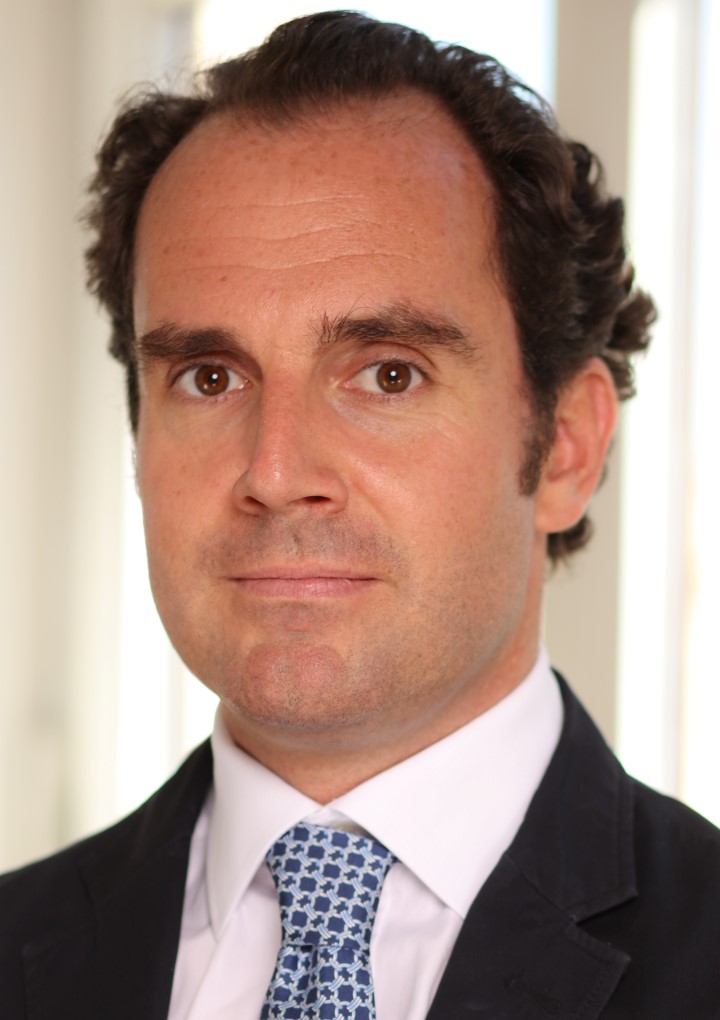
Munich is establishing itself as a pioneer of medical innovation in Germany. Alongside many healthcare startups, people like Dr. Dominik Pförringer are driving this development forward. The physician has been involved in research and teaching for many years in process optimization and the digitalization of medicine. What motivates and inspires him, where healthcare startups can find support, and what still needs to change for Germany to realize its potential here – we were curious to hear the co-founder of the 'Digital Healthcare Entrepreneurship' meetup's take on this, so we interviewed the doctor.
Dr. Pförringer, you work as a specialist in orthopedics and trauma surgery at a Munich hospital. You also work in the startup scene as a startup mentor and VC advisor. How did you become interested in these two—at first glance, very different—worlds?
Active medicine, that is, the daily curative approach to helping patients, is and will always be the most appealing profession in the world for me. I see enormous opportunity and great potential in the digitalization of medicine. The entrepreneurs who will be successful are those who have genuine medical expertise on their team and who continually seek continuous dialogue with active physicians. It is precisely at this interface that the medicine of the future is developing. Europe, and Germany in particular, has enormous potential to catch up internationally.
I see the great opportunities in the combination of digitalization and medicine, believe in its success, and fight for it every day. Many startups lack the medical expertise I bring from my daily clinical experience. This gives me a unique understanding of the supply and demand for digital solutions in medicine.
“Germany has enormous potential to catch up”
What motivates you to advocate for digitalization in medicine?
The future lies in digital technology. The escalating demands of bureaucracy, demographic change, the shortage of doctors, the explosion of knowledge. All of this calls for technological support for the best profession in the world. We doctors have the task of developing digitalization and its successful implementation ourselves and shaping it in the interest of our patients.
Furthermore, digitalization is fun. I'm fascinated every day by how we can use modern technological approaches to solve complex, yet also trivial, medical problems, and how this can lead to agile, successful companies.
What advantages does digitalization have for doctors in your opinion?
First and foremost, I'm concerned with the benefits for the patient and the healthcare system itself. Because the benefits for the physician practically follow from this. Digitalization is anything but a threat; rather, it's the knowledge-rich co-pilot of the modern physician. Ultimately, patients, solidarity systems, and yes, even we physicians, benefit from these innovative solutions.
How are Munich health startups supported?
Together with UnternehmerTUM they organize the recently established, very successful Munich Meetup Digital Healthcare Entrepreneurship. What was the motivation for this?
We—that is, Dr. Dominik Böhler, Marina Moskvina, and myself—realized that there was a lack of coordinating events on this topic in the south of Germany at that time. After an admittedly surprisingly positive first evening, we decided to continue the event quarterly. Since then, it has developed into a gratifyingly successful and recognized format within the scene, with growing interest.
Beyond the successful meetup – where can a digital health startup find support in Munich?
Once a year, we organize a conference on the topic of "Digital meets Clinical Healthcare" in Munich. Dominik Böhler and I teach the "Academy of Entrepreneurial Medicine" at the TU Munich once a semester for medical students. Furthermore, the MedInnovate program led by Prof. Navab and Dr. Christoph Hennersperger offers the opportunity to experience a hospital from the inside with a team and catalyze startup ideas.
In addition to all this, both the LMU and a number of private initiatives, such as those at Werk 1, offer opportunities for exchange, incubation, and acceleration. I am happy to provide advice and support to young teams who are either planning to start a company or have already founded a company, whether regarding the medical content, team structuring, or financing their venture.
You yourself spent time in the US and Asia. What inspiration did you bring back?
My time in California, as well as my MBA in Fontainebleau and Singapore, opened my eyes to entrepreneurship. These two experiences were extremely formative and positive for my future development. It's amazing to see how open-minded Americans are. There, I learned to approach things with the "anything is possible" attitude.
Germans, in general, struggle, recognize risks and reasons why something might not work. People in the US boldly approach new challenges, dare to take on something, and then work extremely hard to make it possible and put it into practice.
In your opinion, what significance do eHealth and telemedicine have in the German market?
Unfortunately, the number is still too small at the moment, but it will grow rapidly. The offerings from startups are growing, and patients and doctors are increasingly gaining trust. Modern, digital approaches can ease the burden on the existing system and create relief and simplification for patients, doctors, and payers. This can make medicine safer, more efficient, faster, and more affordable. All of this is inevitable, especially given demographic trends. We can still learn a lot from our European and North American friends here.
Guidance is currently missing
In my opinion, what's needed now is clear guidance for patients. In the jungle of options, patients deserve a structured overview and a well-founded evaluation of the innovative solutions offered. Furthermore, solid digital training for physicians is needed. This means that future physicians should learn how to deal with the opportunities presented by digitalization during their studies.
Where is the trend in eHealth going?
I see three positive core developments:
- Medicine is becoming safer, and the digital co-pilot will help doctors access significantly more data and experience in the future to optimally adapt their treatment to the clinical picture. A privilege that in analog medicine was reserved for physicians with sufficient experience.
- Medicine is becoming more transparent, which means that patients are becoming increasingly empowered and better informed.
- Medicine can become more efficient. Antiquated processes, media disruption, and analog search methods are being optimized or, in some cases, completely replaced by AI, deep learning, and a wealth of technical expertise.
Medicine of the future: The focus is on the patient
What do you imagine medicine will look like in the future?
I'm an optimist through and through. The medicine of the future will be free of time-wasters like redundant documentation, outdated bureaucracy, and antiquated processes. It will once again focus on the person at the center: the patient. Technologization and rapidly accelerating innovation will enable us physicians to always maintain control over optimal diagnostics and treatment. To achieve this, the course must be set correctly, wisely, and with foresight by experienced experts.
The doctor of the future will, even more than today, be primarily the patient's emotional, empathetic interlocutor. The core task of healing will thus once again be brought into focus.
Thank you for the insights and for the conversation.