The right relationships are crucial for business success. Startups, in particular, rely on a good network. Current research on relationships shows which success factors influence a successful relationship. You'll also learn how to test matchmaking for yourself and thus expand your personal and professional network.
Something new emerges when the right people meet. If you don't want to leave these encounters to chance, matching algorithms can help facilitate special encounters where the chemistry is right. However, the factors that determine relationship success from a research perspective are controversial.
The right relationship through similarity
Various research areas provide evidence that personal similarity plays a fundamental role. These research findings can be traced back to Byrne's (1971) similarity-attractiveness paradigm. It states that people appear more attractive if they are similar to oneself.
For example, mentoring programs are more successful when mentor and mentee share similar personalities, values, and attitudes. This also leads to increased support in achieving goals, increased personal and emotional development, and a better relationship quality. Mentoring participants also report higher levels of satisfaction and a greater learning experience.
In working relationships, it has been shown that the quality of the relationship increases the greater the similarity between supervisor and employee.
The right relationship through diversity
However, it's not just personality similarity that influences the success of relationships; diversity, for example, in terms of age, gender, cultural background, or professional experience, also plays a role. How dyadic relationships or teams should be composed and which aspects of diversity should be considered depends particularly on the task and goal.
Cultural diversity can increase creativity and satisfaction within a team, but can also be associated with increased task conflict and reduced social integration. If team members have different levels of extraversion and emotional stability, this can have positive effects on team performance.
How startups benefit from the findings
There is hardly any scientific basis for successful matchmaking and the research on successful relationship prerequisites speaks for both similarity and diversity.
Startups, in particular, can nevertheless leverage previous research findings to consider diversity and similarity when assembling tandems and teams. If the focus is on a creative outcome, the team should be culturally diverse. To support the initiation of relationships, it is important to ensure similarity in personality.
Would you like to expand your network through matching?
A study by the LMU is now intended to provide further insights. In collaboration with the Chemistree GmbH We want to find out what the biggest lever for a successful match is.
If you're looking to expand your network and meet the right people, this study offers you the opportunity to try out how matching works for free. You'll receive a personalized match based on your preferences.
You can participate directly in the matchmaking study here. You can find more information about the study here.
About the authors
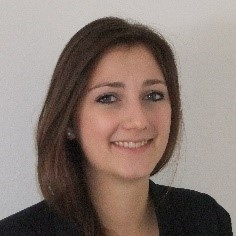 Anna-Maria Scholz She is currently studying Business, Organizational, and Social Psychology at LMU Munich. She completed her bachelor's degree in Psychology at Paris Lodron University Salzburg. Since October 2017, she has been working as a student employee at Chemistree GmbH and is responsible for diagnostics and matching projects. She is currently writing her master's thesis at the Chair of Psychological Methodology and Statistics at LMU, in collaboration with Chemistree GmbH.
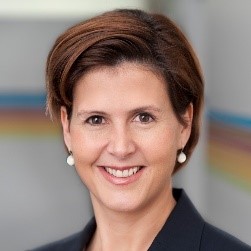 Rosmarie Steininger is the founder and CEO of Chemistree GmbH in Munich. She holds a degree in economics and business informatics from the University of Regensburg and a master's degree in European Studies from the London School of Economics. During her work in change management and as a project manager at the BMW Group, she gained eight years of experience in algorithm development. She subsequently spent six years as a project manager and deputy managing director of the Eberhard von Kuenheim Foundation of BMW AG, and as a senior manager at the BMW Foundation Herbert Quandt.