
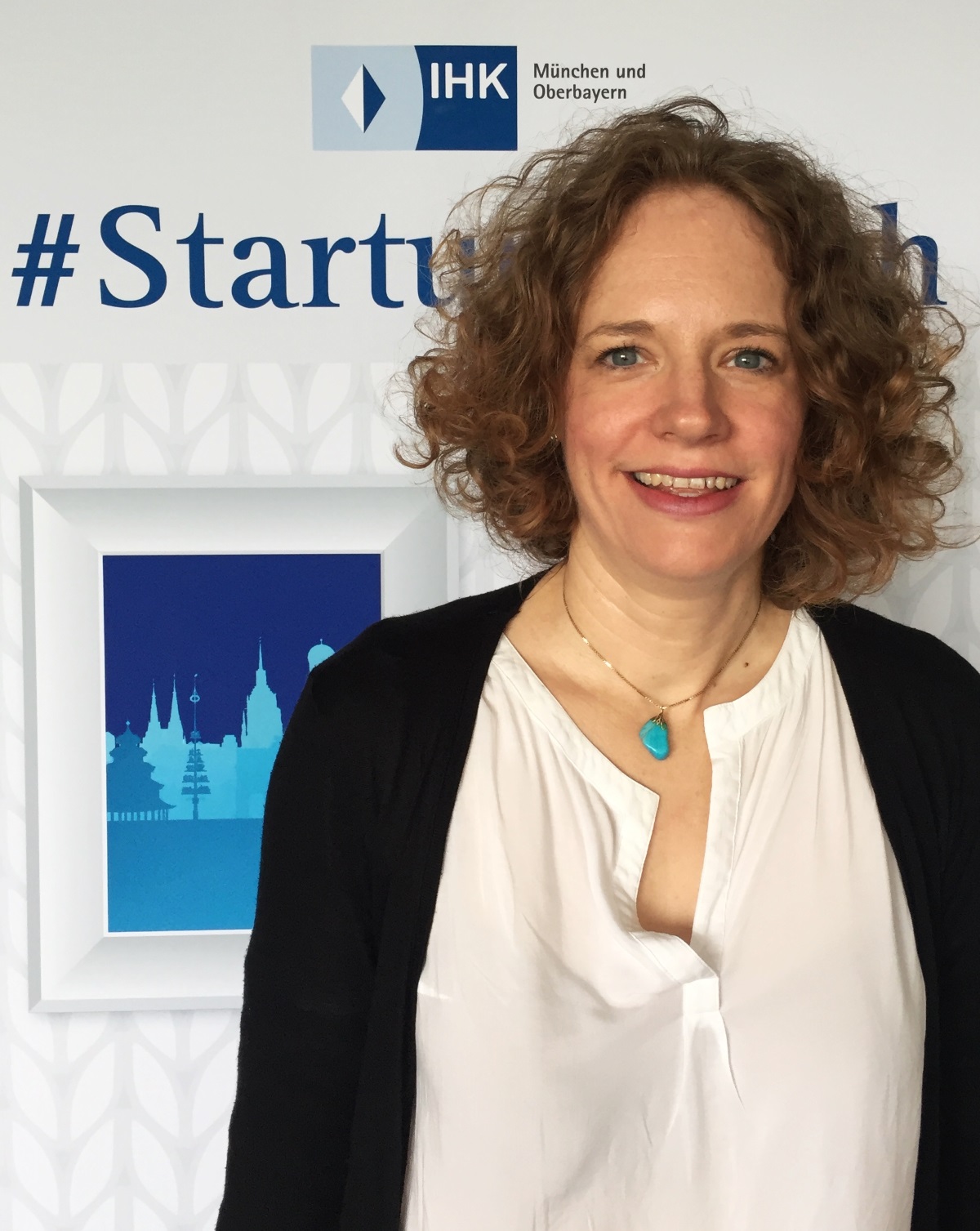
In the digitalized world of the internet, there are no things or objects, but many intellectual, intangible, yet consumable goods. If you want to use someone else's property, you ask the owner first—this also applies online. This can raise some questions for startups. Copyright law, which applies worldwide and extends to almost all online content, establishes rules for fair use. This regulates the endless supply of videos, texts, films, music, and the content of countless websites and social media platforms. Amelie Winkhaus, an expert in intellectual property and competition law at the Chamber of Industry and Commerce for Munich and Upper Bavaria, explained the topic of copyright in an interview.
Ms. Winkhaus, what is protected by copyright and how do I recognize it?
Every perceivable result of creative work is protected by copyright. For example, texts, music, artwork, images, photographs, artistic buildings, and even software. A protected "work" is usually recognizable by its individuality or creativity. To put it bluntly: If I like something, it's probably the work of someone else and protected by copyright.
How does copyright work and what is permitted?
There is no register for copyrights. Copyright arises automatically as soon as a creative idea is perceptible to the outside world, e.g., by writing it down, saving it, or performing it. Conversely, this means that ideas as such are not protected. The author has the sole right to publish, distribute, copy, or adapt their work; others may only use their work with their permission, i.e., a "license." Under strict conditions, permission is not required for private copies for personal use, quotations, or simple consumption (viewing, listening). But permission-free does not mean free! You must pay the author a reasonable amount even for permission-free use.
Nothing is free
Are there any golden rules for dealing with copyrighted works in everyday life that startups need to pay particular attention to?
In fact, a few rules of thumb can help in everyday life:
- Be careful when: copying, publicly reproducing (e.g. uploading to the internet), editing (changing) — in case of doubt, permission is required.
- The “©” is an indication of copyright, but its inclusion is not mandatory.
- The more original or individual the work, the stronger the protection in case of doubt.
- What I like bears the “signature” of someone else and is protected.
- Free? – That practically never happens.
- “Small coin” means: Almost everything is protectable, e.g. short texts or image excerpts
As a startup, how can I obtain permission to use a copyrighted work?
Permission to use the work is obtained through a contract, known as a license agreement. It doesn't matter what the contract is called (e.g., publishing contract, software purchase), what matters is its content. This agreement stipulates, among other things, who may use the work, to what extent, and what it costs. The contract is concluded directly with the author or the holder of the exclusive exploitation rights (e.g., publisher, film company).
“I didn’t know” — doesn’t count!
How does the author get his money or what do collecting societies like GEMA actually exist for?
Since it is tedious for authors to monitor every use themselves, they often involve intermediaries, namely collecting societies, for billing purposes. Every creative industry has its own collecting society, e.g., VG Wort for authors, GEMA for the music industry. These collect royalties for each use of their work on behalf of the authors and distribute the revenues to the authors according to an internal distribution key. However, there is no obligation for authors to involve a collecting society.
In summary, can you give a few important tips for startups, Ms. Winkhaus?
- Never underestimate the issue of copyright in a company: there are no “private copies” here and, in case of doubt, nothing is free either.
- I didn't know, but it doesn't apply: Everyone has to do their research. What I like is, in case of doubt, protected as someone else's creative work. If you can't find the author of a work, you'd better leave it alone.
- Be careful when linking: Anyone who links to a work, e.g. a YouTube video, can infringe copyright if the linked work has been placed on the Internet without the author's permission.
- Leverage your own capital: You can profitably exploit your own works through licensing agreements, and you can negotiate fair terms. Copyright protection also exists for software—the complexity of the program and the secrecy of the source code are the best protection against imitation.
Thank you very much for the interesting conversation!

