The Munich-based startup UrbO has won the "KPIT Sparkle Platinum Award," netting €10,000 in prize money. UrbO is developing a very lightweight and compact vehicle with a unique folding mechanism.
“With our comfortable and flexible solution, you are highly mobile.”
This is the answer that Felix Ballendat, Jakob Karbaumer and David Heid want to use to solve the transport problem of the future, as this was the theme of this year's innovation competition "KPIT Sparkle Munich". Their idea was awarded Strascheg Center for Entrepreneurship (SCE) The startup, which was supervised by students from the Munich University of Applied Sciences (HM), was awarded the “KPIT Sparkle Platinum Award”, which comes with prize money of 10,000 euros.
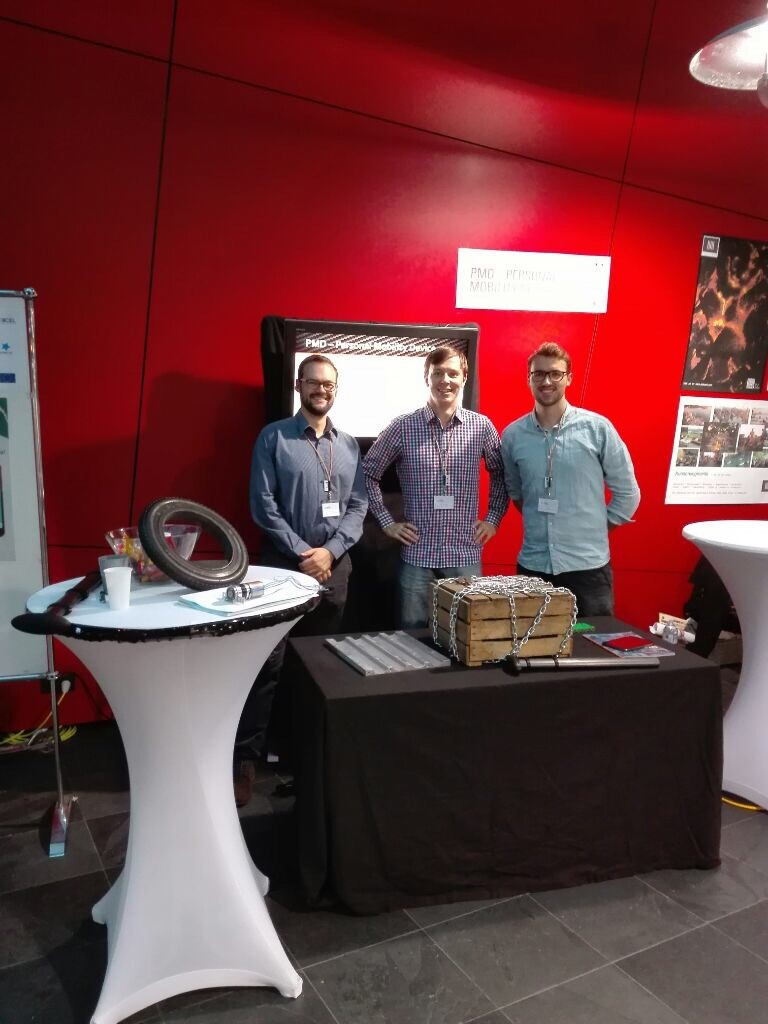
The basis for this ultra-lightweight vehicle is a folding mechanism and the high-tech carbon fiber material used for the vehicle body. According to the founders, the vehicle can be folded in just two seconds and can then be taken anywhere.
“Thanks to KPIT Sparkle, we were able to turn this idea into an award-winning prototype,”
said the winning team.
“Groundbreaking ideas”
Meanwhile, the “UTOP” team from the Munich University of Applied Sciences (HM) and the Technical University of Munich (TUM) won gold, while silver went to the “Individualization of Local Public Transport” team from the Technical University of Munich (TUM).
Anup Sable, CTO of KPIT, explained:
"The groundbreaking ideas submitted to us in the first German edition of our competition demonstrate how well young students can identify problems and solve them using their imagination and scientific thinking. We are pleased that KPIT Sparkle has proven to be a platform for young inventors, encouraging them to develop great ideas and think outside the box."
Launched in April 2016, the competition gave students the opportunity to submit their futuristic ideas on the competition theme. The top ten teams were invited to present their prototypes in the final round on Friday, February 24, 2017, at Hohenkammer Castle. A jury consisting of professors and industry experts selected the winners based on the criteria of innovativeness, social relevance, technical expertise, and completeness of the prototype.