
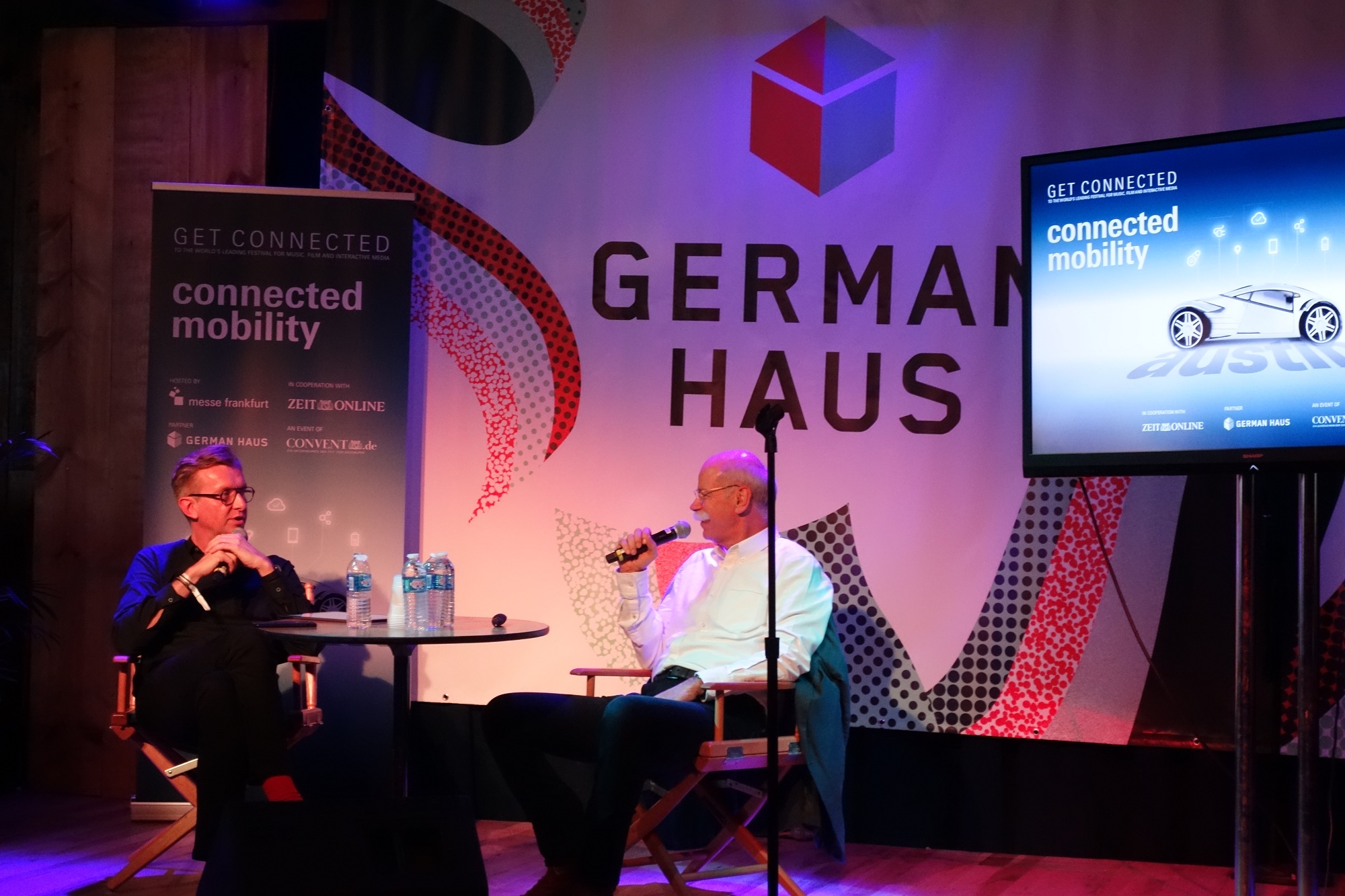
Daimler CEO Dr. Dieter Zetsche visited the German representative office right at the opening of the German Haus. Casey Neistat wowed the SXSW audience.
The German Haus is open. The German startup scene has its own presence at Barracuda, a bar in Austin's legendary nightlife district. A nonstop program will now take place daily on the stage at the German Haus. The combination of networking space, event venue, and bar gets off to a somewhat rocky start on opening day: The noise from the conversations at the bar sometimes makes it difficult to listen. Jochen Wegner, Editor-in-Chief of Zeit Online, hosts the first panel on Connected Mobility. When the Daimler CEO Dr. Dieter Zetsche comes on stage to talk to Wegner, it becomes noticeably quiet in the German house.
Zetsche chats with Wegner, as usual, openly and without reservation about the current challenges facing the German global corporation. And, according to Zetsche, these are quite a few:
“Digitization changes everything.”
In the context of such transformations as we are currently experiencing with digitalization, leading companies have gone under in the past:
“We are playing against the odds.”
The more likely scenario, therefore, is that the existing car companies will disappear from the market in the long term. This cannot be an option for Zetsche, however, and so he also explains how Daimler has already repositioned itself as a mobility service provider, what significance the car will have in the future, when fully autonomous driving will be possible (by the end of the next decade), and how to buy the Map service here to cooperate with BMW and Audi.
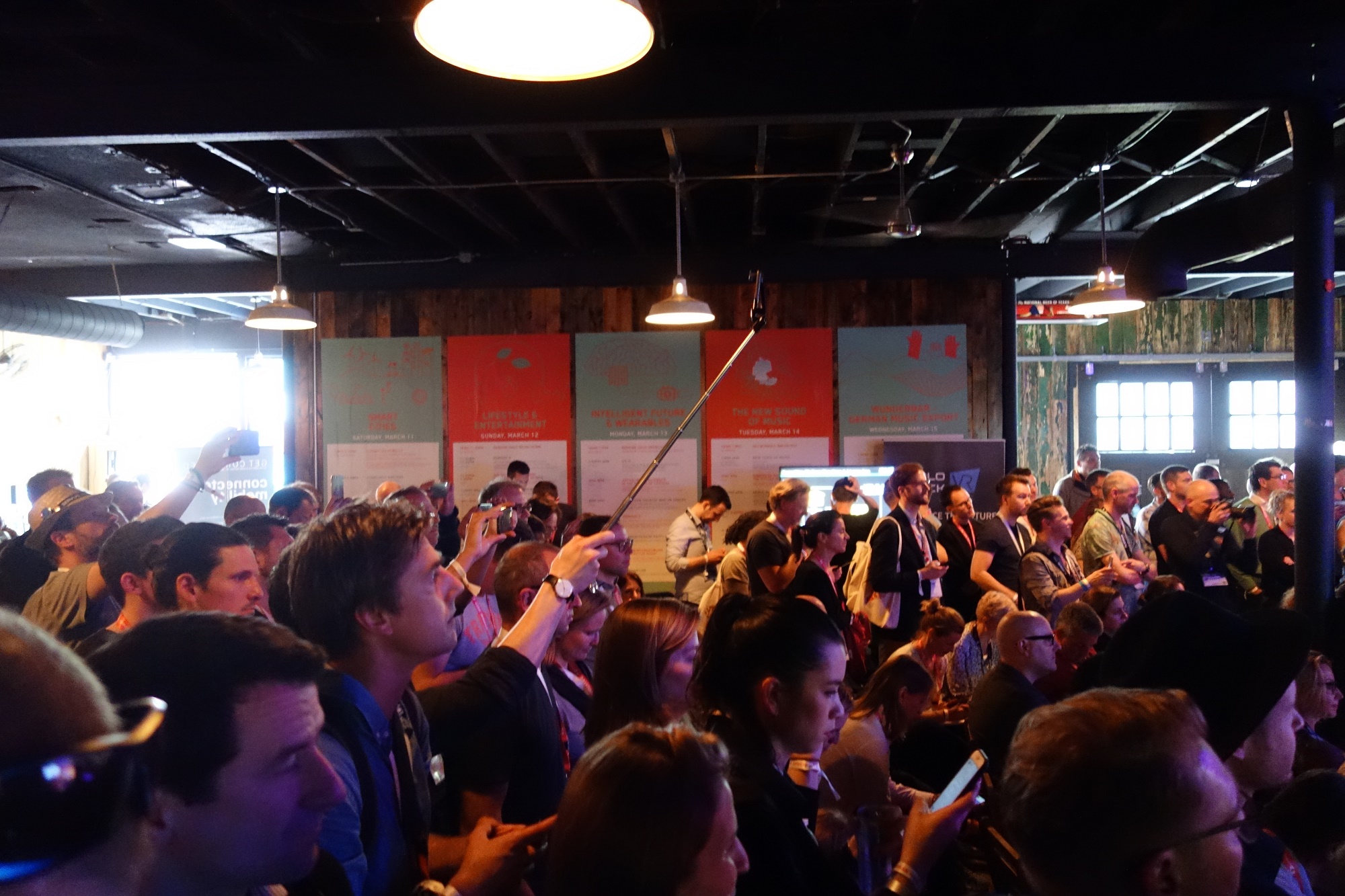
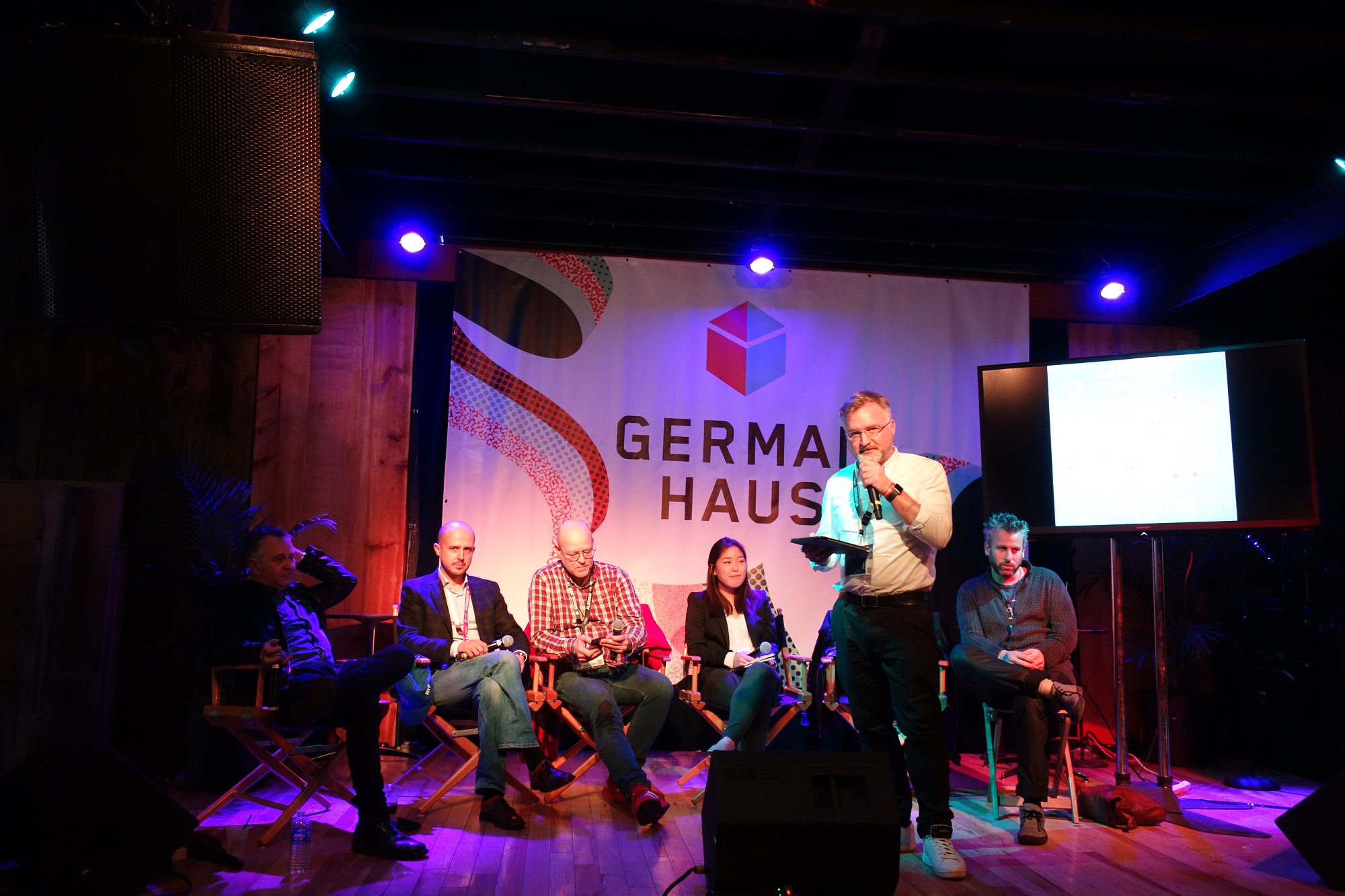
Some impressions from the German House:
Toposens wins pitch competition
In the afternoon, top German startups from the field of smart cities will compete in a pitch competition. Richard Gutjahr manages to keep the noise level somewhat under control with his moderation. In the end, the Munich-based sensor startup Toposens against top-class competition, including Cologne's Lions' Den veterans Evopark. The Munich team secured a €10,000 media budget as a prize.
Tech for Good
Jürgen Enninger, Head of the Competence teams for the cultural and creative industries of the city of Munich, the panel "Tech for Good" will begin with a keynote speech. He will explain how the city of Munich became the first point of contact for refugees last year and how it dealt with the situation. Enninger emphasizes the power of the startup and tech scene in tackling humanitarian crises. The panelists, including Bernhard Kowatsch, Head of the Accelerator of the UN World Food Programme and Mike Butcher with his project TechFugees (read Here is a mini-interview with Mike Butcher about Bits & Pretzels), discuss different approaches to how people in the tech scene can take on this task.
Do what you can't
SXSW continues beyond the German Haus, of course. Filmmaker Casey Neistat In a packed hall, he explained how he made it from penniless to bicycle courier, to commercial and series director, and finally to YouTube star with more than a billion channel views. His recipe for success is astonishingly simple:
“Do what you can’t!”
The audience celebrates the do-it-yourself star.

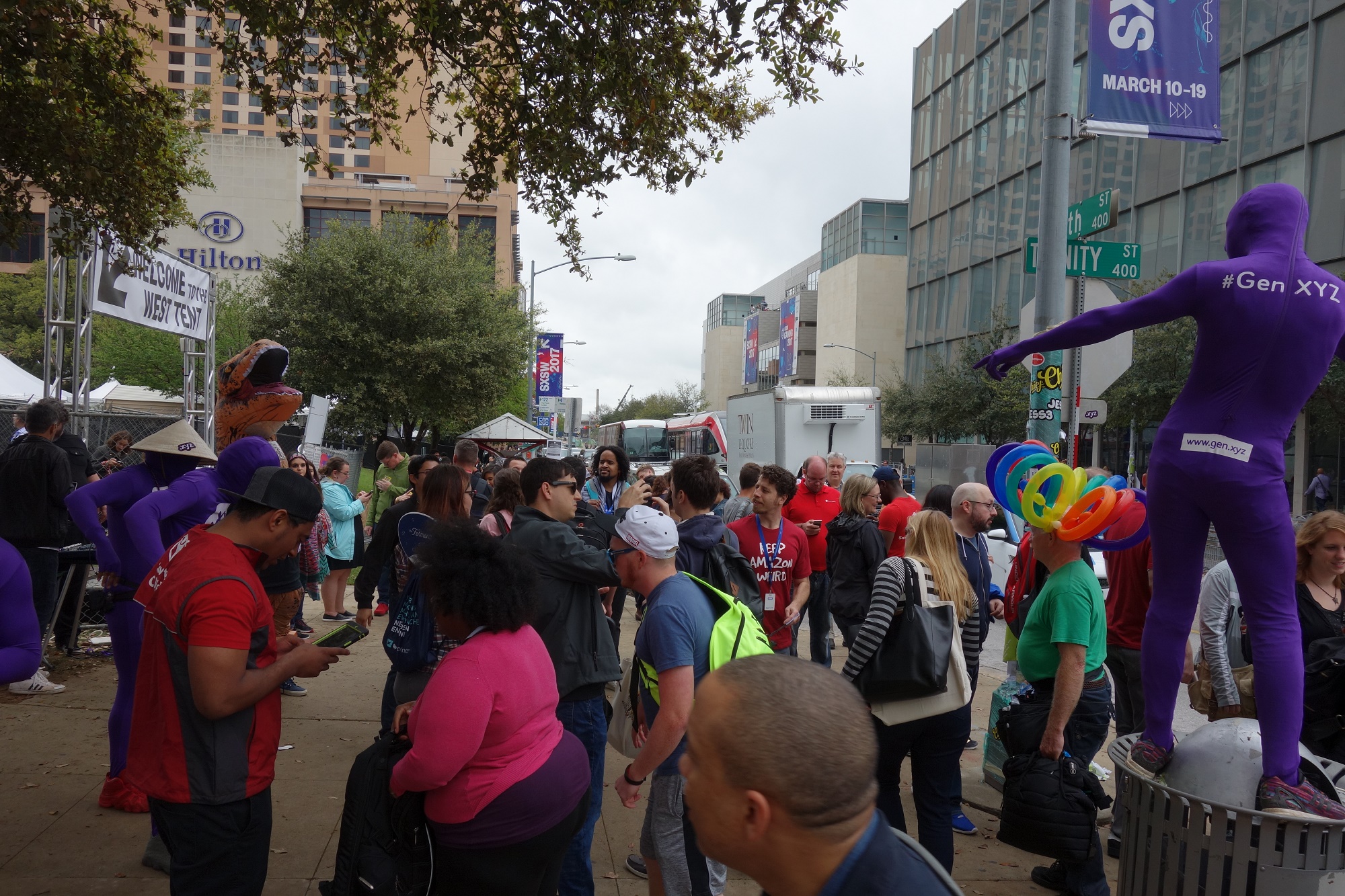
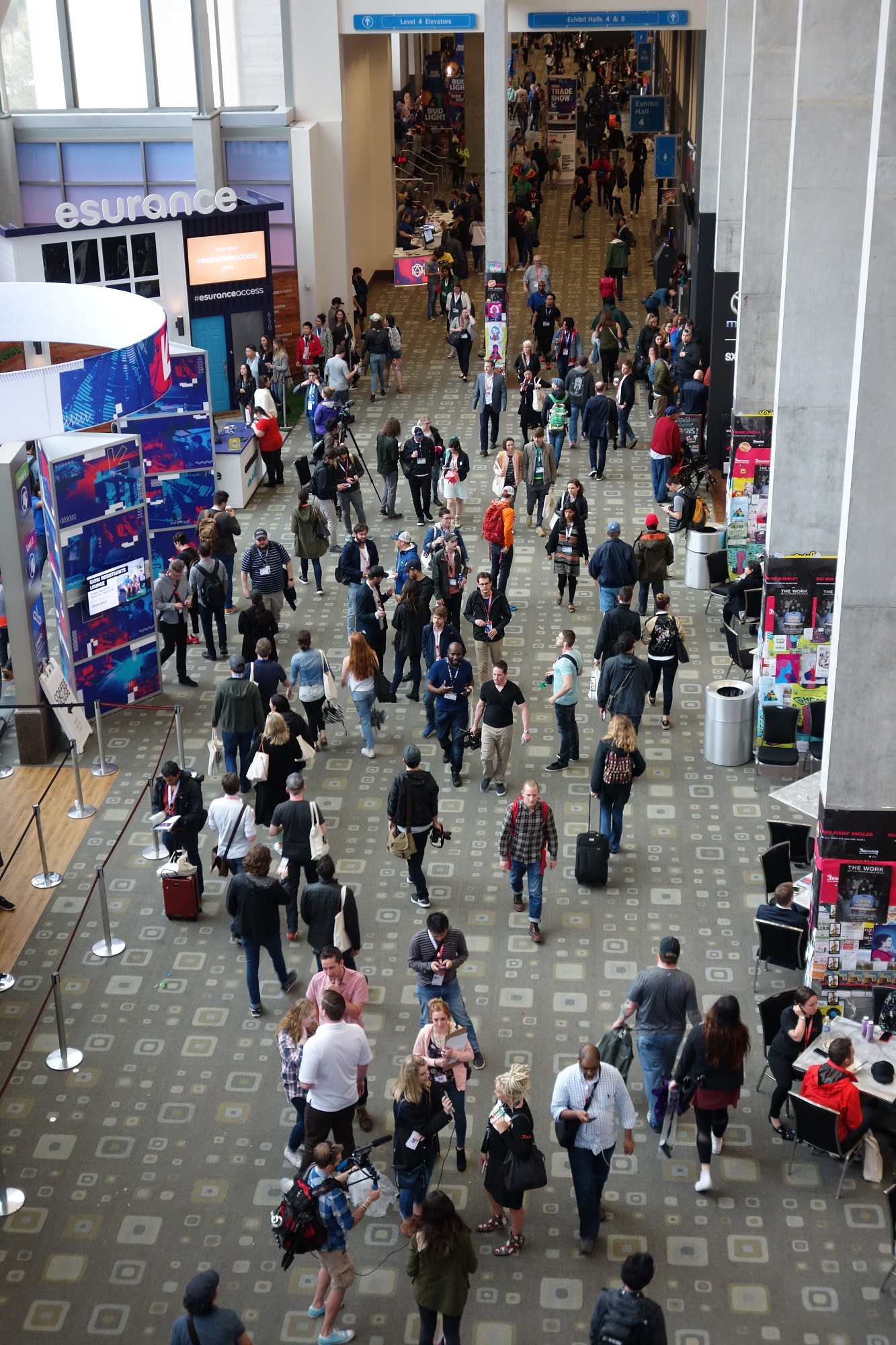
Neistat not only has the SXSW audience on his side. His video "Bike Lanes" gave him his breakthrough in 2011 and even convinced the New York Times to hire him.
And finally: In the daily video of Werk1, Florian Bergmann talks today with Bohemian and startup mentor Jewell Sparks. Enjoy!
https://www.facebook.com/werk1muenchen/videos/vb.154417924705456/789025404578035/?type=3&theater

