At the Munich University of Music and Performing Arts, cultural professionals learn entrepreneurial theory and practice. Participants in the "Cultural Entrepreneurship Lab" presented their business ideas on Friday.
Only recently, a large-scale data report The importance of Munich's cultural and creative industries: The sector ranks third in terms of the number of local employees. The Munich metropolitan region is also one of Europe's creative hotspots. The results even surprised some insiders—after all, the economic importance of the industry and the artistic self-image don't really mesh. Artists and creatives generally don't work for the mundane money.
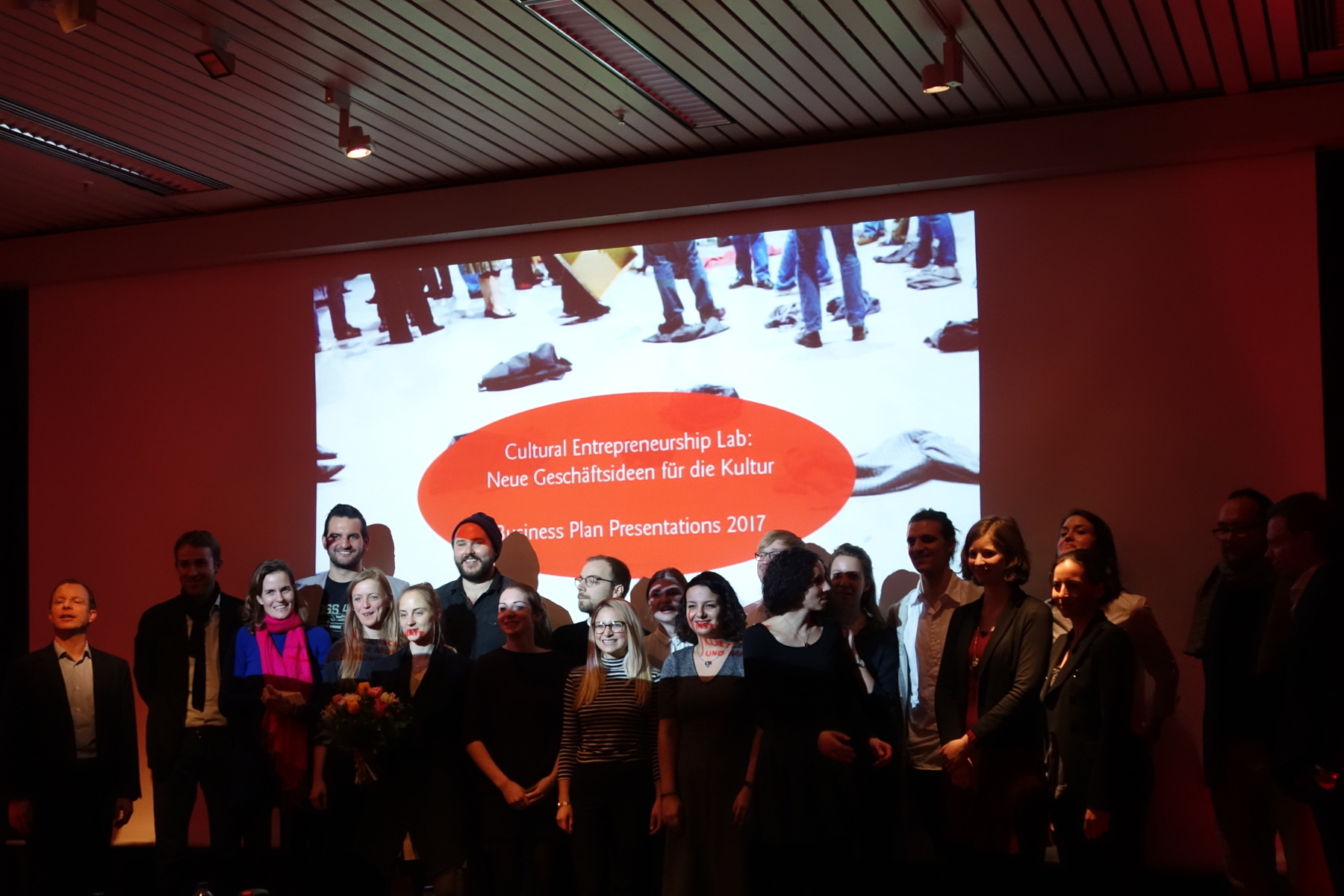
Nevertheless, the cultural sector has long been developed as a field of entrepreneurial activity. The necessary knowledge to create value from cultural products is provided by the Institute for Cultural Management and Media of the University of Music and Theatre Munich. In the "Cultural Entrepreneurship LabWithin two semesters, students develop a cultural business model, from the initial artistic vision through market and competition analysis to a complete business plan. Last Friday, the teams presented their business ideas at Munich's Gasteig cultural center.
No reservations between cultural workers and entrepreneurs
After a welcome by the head of the institute Prof. Maurice Lausberg The entrepreneur and lecturer Marco Janezic the jury: here the “good” jury members Nicolas Reis from the fundraising portal Altruja and Ellinor Schweyer, founder of Financing Agency for Social Entrepreneurship FASEThere, “the bad guys”, “capital”, embodied by Dr. Bernd Klosterkemper, Investment Director at Ananda, and Dr. Michael Weber, Partner at Riverside Europe. All of this was, of course, coquettishness, as the event showed—no trace of any reservations about the relationship between culture and entrepreneurship.
Longer than any elevator ride
Four project teams then pitched their business plans. Instead of elevator pitches, the event focused on longer, more in-depth presentations. Each team was given 15 minutes to present and another 15 minutes to answer questions from the jury. In a relaxed atmosphere, the experts reviewed the presentations for any weaknesses.
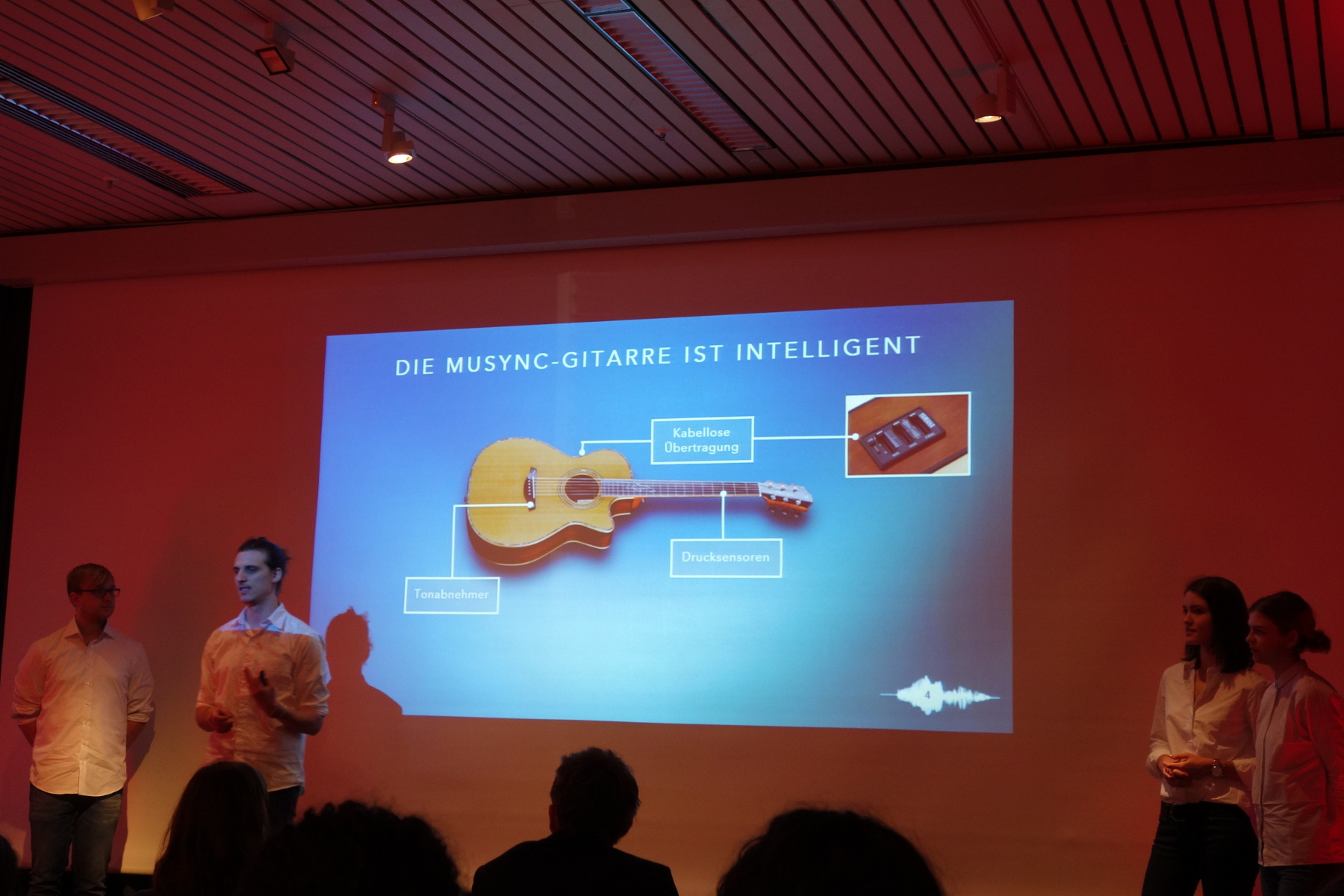
Musync presented an intelligent acoustic guitar that uses pressure sensors to provide feedback on playing style. Users can also compete against each other online via an app. This is intended to enable the target group of tech-savvy professionals to learn to play the guitar independently.
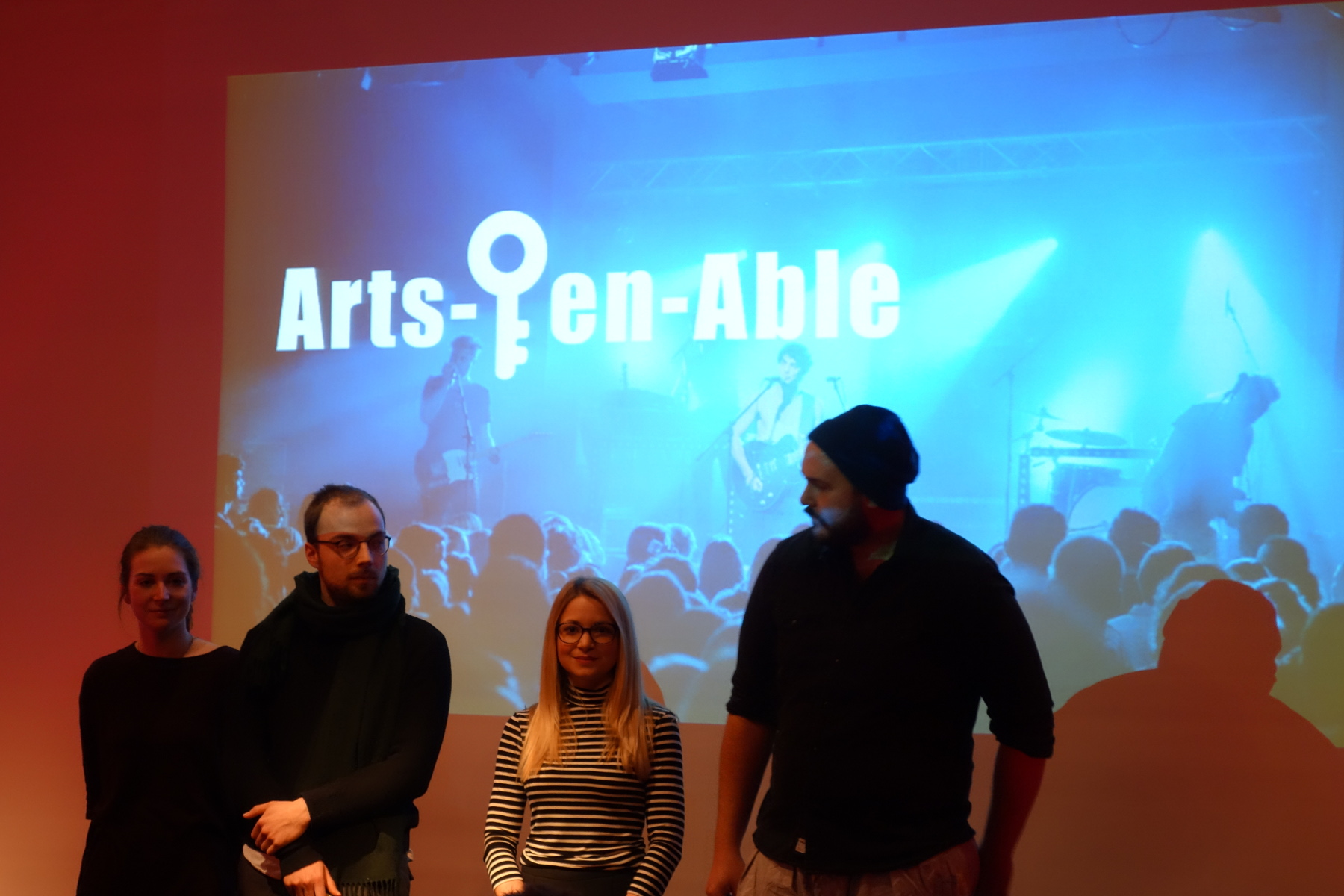
About the crowdfunding platform Arts-en-Able Fans can continuously support their favorite band financially. In return, they receive exclusive content and information. The American model Patreon shows that the concept can work.
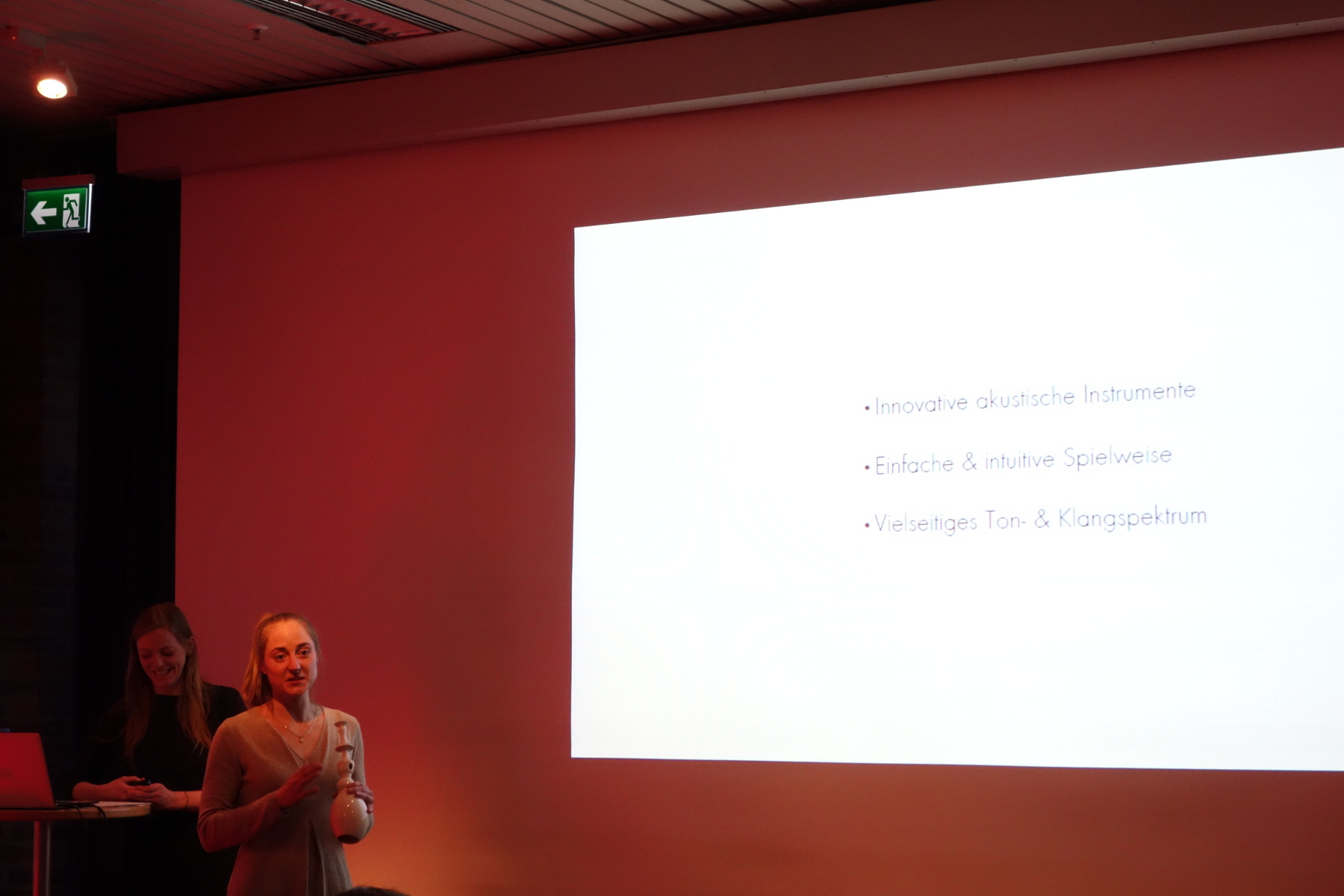
Two product designers develop innovative acoustic instruments. Their first product is the Vokophon, a vase-like instrument that echoes and amplifies the sound of one's own voice. The target audience: people who enjoy trying out new instruments, as well as street musicians, voice coaches, and music educators.
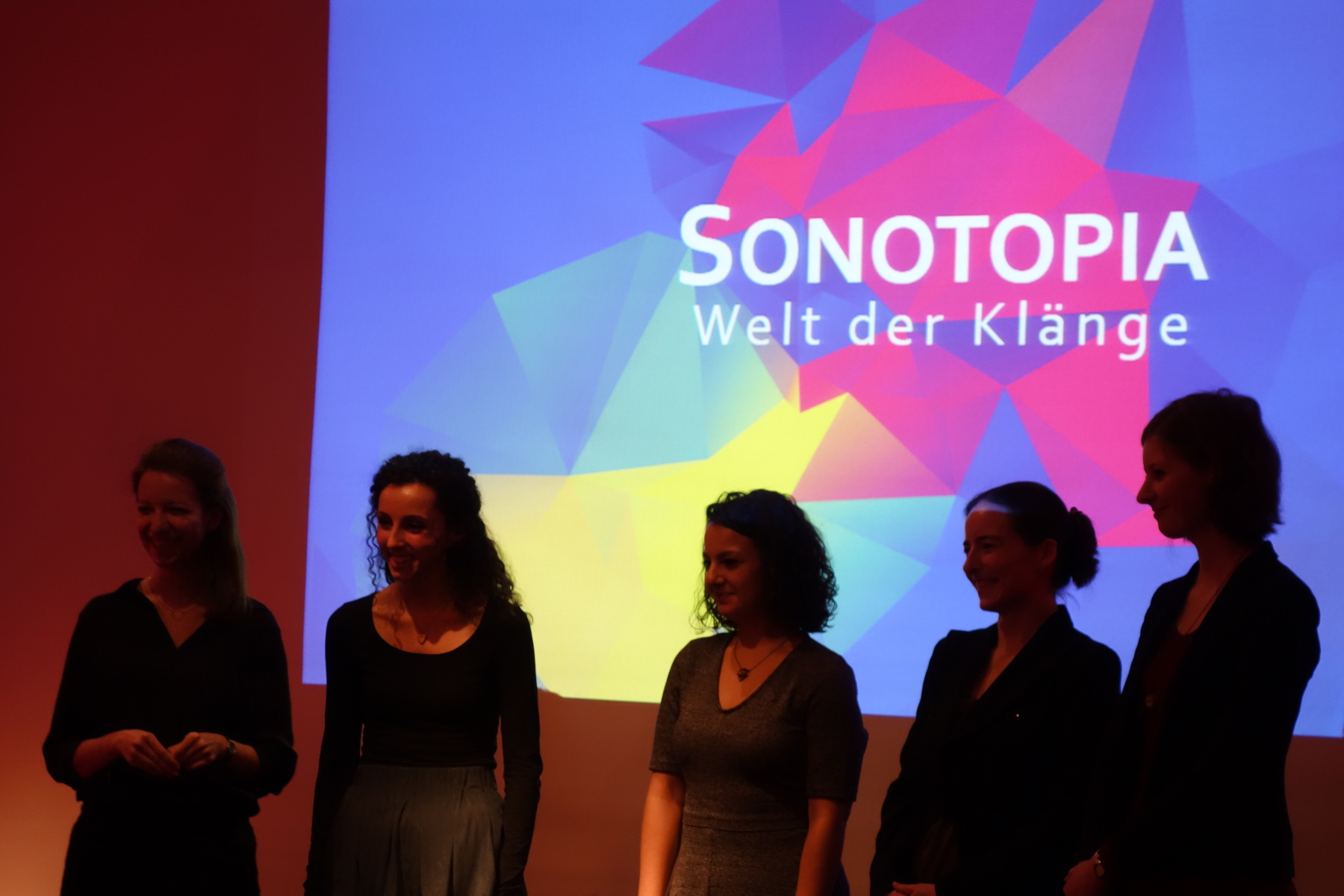
The team behind the planned traveling exhibition Sonotopia aims to create a world of sound experiences. Visitors will experience sounds in several rooms. The concept is based on successful traveling exhibitions of recent years.
A good vintage
The jury was surprised by the high level of the presentations. Both the market analysis and the business figures seemed plausible, the projects well-thought-out, and the speakers' performance confident. Jury member Michael Weber praised all participants:
“This vintage has raised the bar significantly.”
The jury finally chose the VokophonMaurice Lausberg said to the two winners Franziska Dierschke and Marie-Susann Zeise addressed to:
"It's clear that this is your topic. I'm convinced you'll succeed with the energy and passion you bring."