Mind the Gap — In its fourth edition, the network congress of the BR magazine Zündfunk focuses on the digital-analog gap.
There's a gap between digital natives and digital illiterates, urban cosmopolitans and left-behind analogues, virtual and bourgeois identities—at least, that's the claim of this year's Zündfunk Network Congress. With lectures and discussions, the congress last weekend offered a day and a half of reflection on the (divisive) effects of digitalization on society and our everyday lives.
BR Director General Ulrich Wilhelm opened the Digital Congress with a keynote speech on Friday. Until Saturday evening, 51 speakers explored various aspects of digital transformation in countless sessions on the two stages of the Volkstheater and in two conference rooms of the adjacent Haus des Fußballs.
Network policy and practice
A broad range of speakers' themes brought together as many perspectives on the digital as possible. Evgeny Morozo explained his highly political concept of “technological sovereignty" and calls for greater mistrust of how companies process our data. His political demand: more government regulation for big data companies.
The presentation by Anna-Mareike Krause, social media coordinator for Tagesschau. Together with her team, Krause reviews around 12,000 comments daily and tries to rein in the hate spread by some users. Her team has set itself a clear policy:
“For us, human dignity trumps freedom of expression.”
Say: Hate speech will be deleted, repeat offenders will be banned, and this will be communicated openly. Otherwise, according to Krause, the few haters and trolls would make any discussion impossible:
“If we don’t intervene, a loud minority will benefit.”
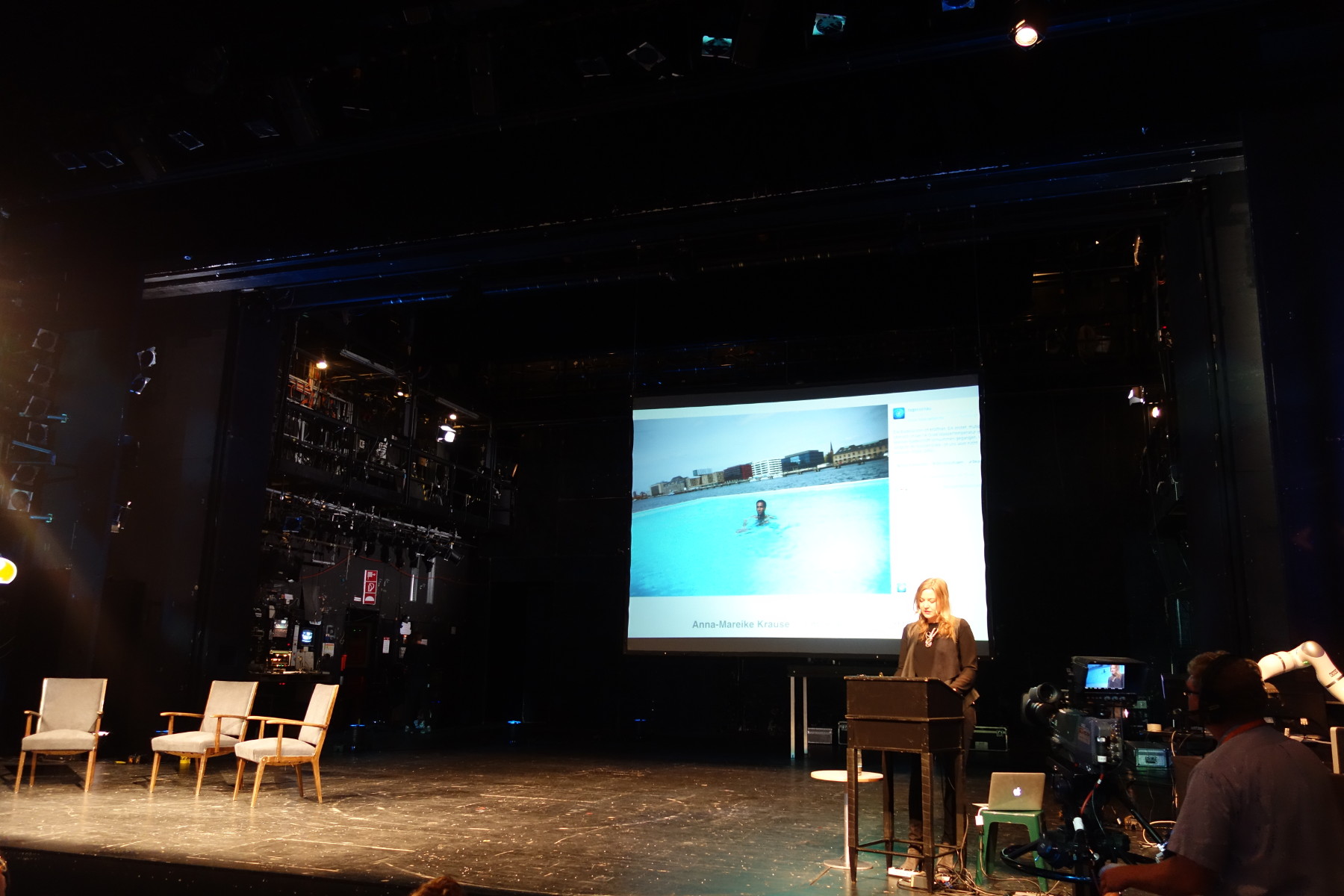
Krause would like to see active users who object to hateful comments. Unlike many politicians, she doesn't hold Facebook itself responsible for the content. However, she would like the social network to offer technical features that would make her work easier: For one thing, it would be helpful to be able to prevent headlines and teasers of shared content from being maliciously manipulated. And, furthermore, the ability to close discussions under posts after a while.
An experience of the social media professional that many users can share: The nicest community can be found on Instagram.
Learning like the Terminator
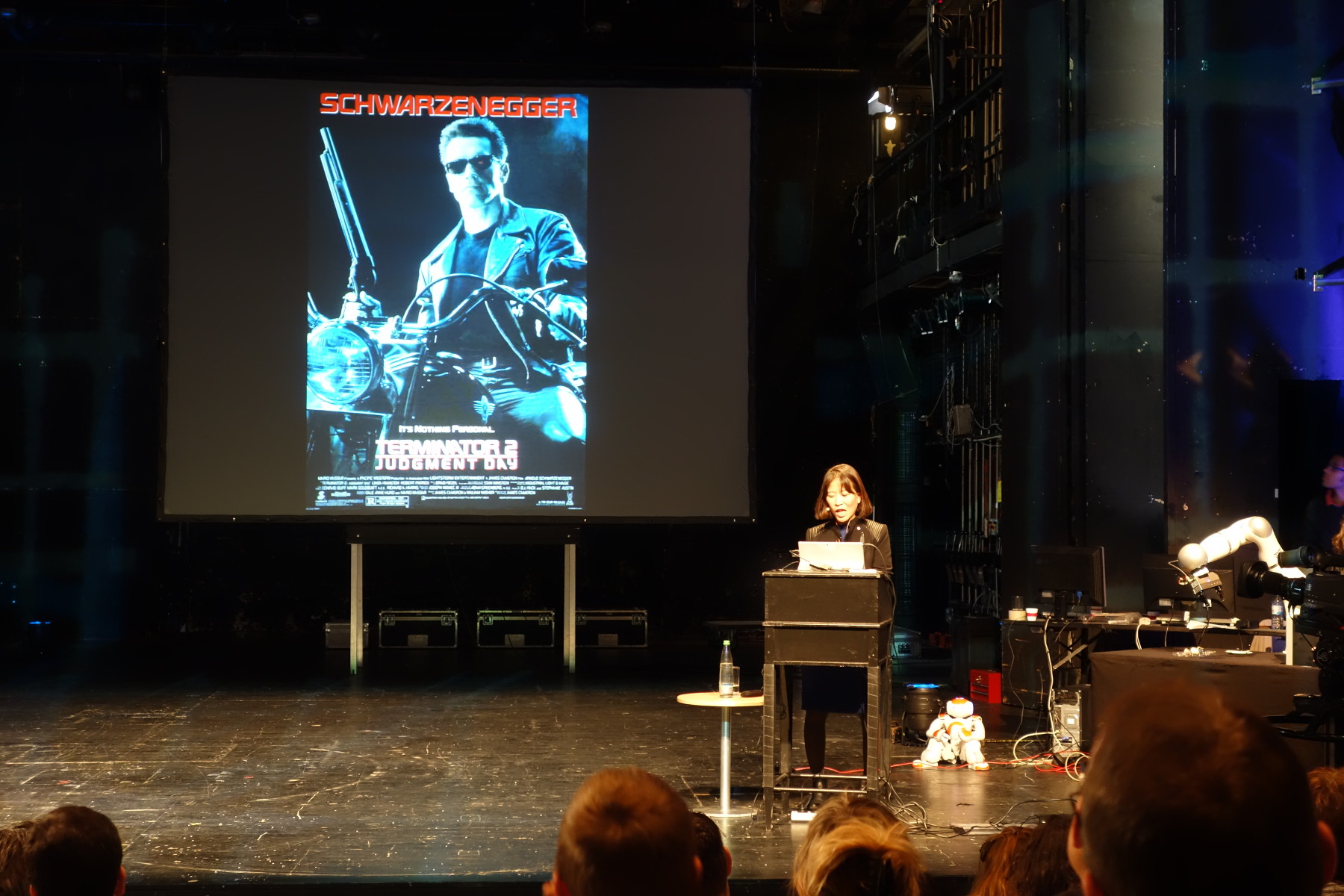
A robot led the lecture by TUM professor Dongheui Lee and then to the speaker. Lee is interested in the question of how robots can learn from humans. She teaches her robots new skills the way humans learn: by imitating what they see and correcting it with the teacher. The goal of her work is to create robots that live with humans and with whom we interact intuitively. Her best practice example: In the film Terminator 2 The teenage protagonist John Connor teaches the fighting robot a high-five — without understanding the slightest thing about robots.
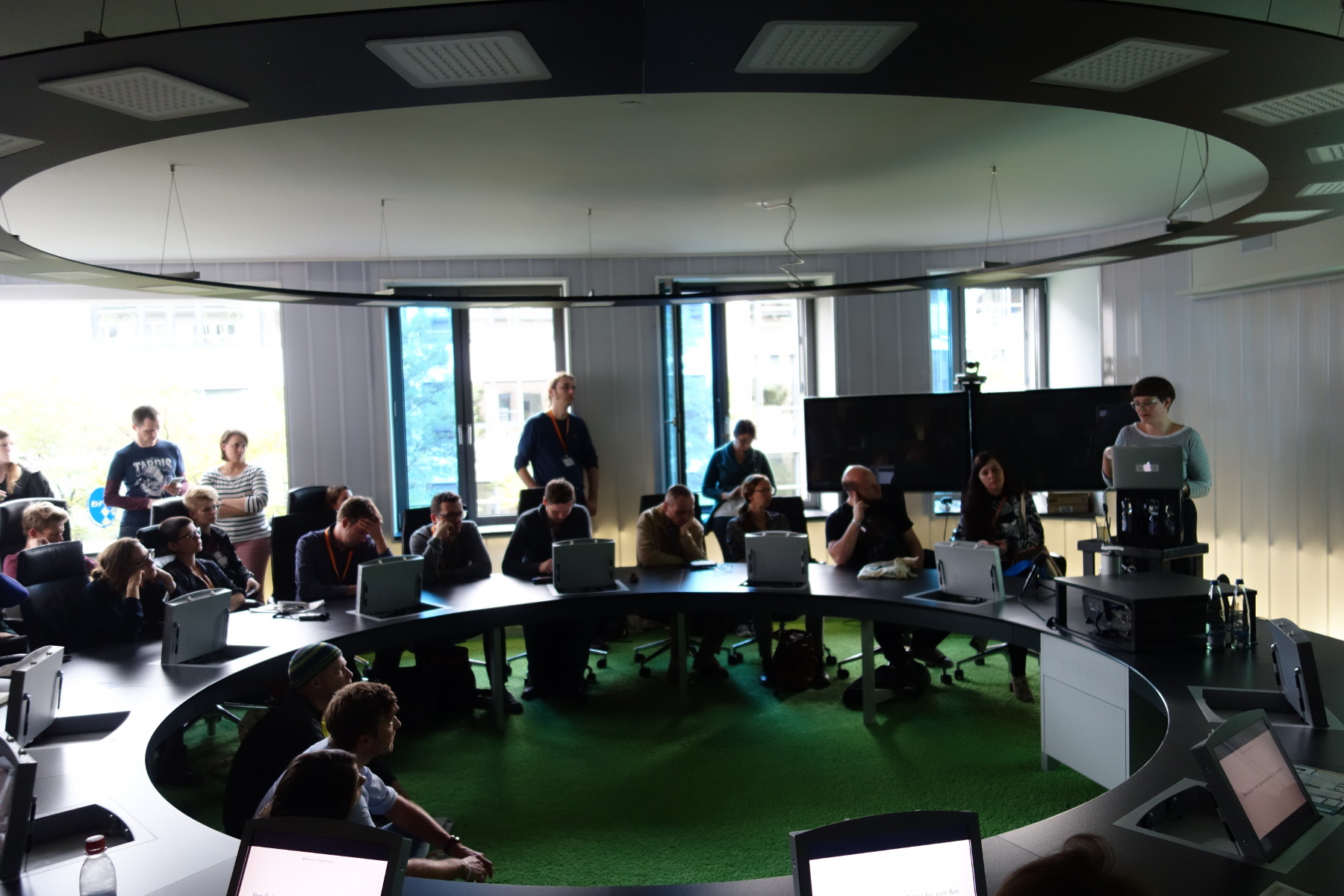
The data journalists Vanessa Wormer and Frederik Obermaier reported on their analysis of the Panama Papers for the Süddeutsche Zeitung. BR journalist and editor of the gaming-meets-feuilleton bookazine WASD Christian Schiffer discussed with his colleague Christian Alt and the VR experts Sara Lisa Vogl and Katharina Tillmanns about the hyped topic of virtual reality. Meanwhile, in a corner of the Volkstheater foyer, visitors were able to try out the virtual experience.
The reflection continues
The message of the congress: Hardly any area of society remains untouched by digitalization. Beyond the big stages, the congress in the adjacent House of Football addressed many other shifts: Journalist Laura Gehlhaar talked about how the internet made her disability visible. Another session, with the excellent title "Grandpa Has Cancer — WTF?", addressed the horror of family chats. Workshops addressed Bitcoin and biohacking.
The Internet Congress had already announced in advance that it would not be able to close the aforementioned new divides. So, all we can do is continue to discuss and reflect. There are worse things.