Seven questions, seven answers. Munich Startup in conversation with HR instruments.
1. Who are you? Please introduce yourselves briefly!
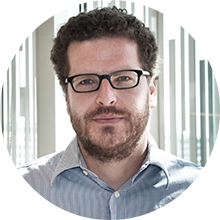
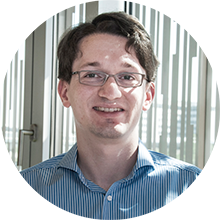
We launched HRinstruments in January 2015 in Munich Technology Center founded. With Philipp Lehmayr and Dr. Simon Werther, we have two founders who complement each other perfectly: Philipp is the technical head of the company, as he brings extensive experience in technology, development, and data protection as an IT specialist. Simon is the content head of HRinstruments, as he has worked in the human resources field for many years as a psychologist. Even before the company was founded, we had worked together very successfully on various projects, so the decision to work together to make a startup a success was a very easy one for us. Before the company was founded, Simon worked as a management consultant in addition to his role as managing director of a further education institute, where he noticed many deficiencies in practice, especially in employee surveys and feedback instruments in general. The idea for HRinstruments was born from this experience.
2. What product do you want to use to change the world?
HRinstruments is characterized by both traditional and innovative feedback tools. The ability to connect to existing instruments such as traditional employee surveys or 360° feedback was particularly important to us, allowing companies to continue using existing tools – albeit expanded with innovative formats. From traditional scenarios such as an annual employee survey or traditional management feedback to modern requirements such as global instant feedback via app or agile project monitoring with weekly pulse surveys – our feedback tools can bring real added value to every company.
All tools are implemented with great flexibility and intuitiveness, both technologically and content-wise, allowing our customers to conduct surveys of any kind independently, fully compliant with data protection regulations and maintaining complete anonymity. Furthermore, comprehensive analyses and statistics – keyword People Analytics – are available directly via the software in real time. Instant Feedback, in particular, enables a completely new form of interaction and feedback within companies. Employees can thus proactively provide or request feedback across all hierarchies. The iOS and Android apps are also easily accessible on mobile devices, meaning even retail and manufacturing, as well as travel-intensive industries, can benefit greatly from it.
We are convinced that collaboration and communication will, and must, take place more on an equal footing in the future, as companies will otherwise no longer be able to meet the increased demands of their employees. Instant feedback and pulse surveys are important steps on the path to a democratic feedback culture in which working (and collaborating) is fun and a natural part of further development.
3. But that's been around for a long time!
Traditional feedback tools are indeed available from many providers, but the market is very saturated, especially for employee surveys and 360° feedback. However, more and more medium-sized companies and large corporations are approaching us because they are very dissatisfied with the effectiveness and sustainability of existing tools. For this reason, our interdisciplinary team invests a lot of development and research time in the further development of feedback tools. Designers, business economists, computer scientists, psychologists, and many other disciplines are called upon to work together to rethink existing tools.
To our knowledge, instant feedback in this form is not yet available in German-speaking countries – at least, that's what our market research has shown, and the feedback from numerous customers points in exactly this direction. It currently seems to us that many established companies are resting on their laurels, but true innovation is very rare here. This is completely different for us, as we are constantly developing our feedback toolbox together with our customers. Not a week goes by without us implementing new features to bring us one step closer to the feedback of the future.
4. What are the three main ingredients for your recipe for success?
Passion is very important to us because we truly enjoy our work and want to make a real difference. Our customers also feel this, as we are passionate about new ideas and want to put them into practice right away.
Seriousness This also plays a major role for us, as passion and creativity should not be equated with unprofessionalism. We work with our clients' highly sensitive employee data, and in many cases, our software is directly connected to their IT systems. Accordingly, seriousness and professionalism in terms of reliability, security, data protection, and anonymity are a given for us – it's simply impossible to work in the HR environment.
Co-creation is certainly another aspect that sets us apart from other companies and is therefore a key ingredient in our success. We are constantly working with our customers on our feedback tools – after all, we can only be successful together and help shape the working world of the future together.
“In the HR environment, Munich can already compete with Berlin”
5. Let’s get down to business: How is business going?
We are very pleased with the development since our founding. We have already acquired numerous customers – from Munich's municipal utilities and Hirschvogel Holding to EOS GmbH and MTU Aero Engines. At the same time, we are operating in a very challenging environment, as the average sales cycle often lasts 6-12 months due to the involvement of works councils and staff councils, as well as data protection officers and IT managers. Accordingly, 2016 will be a very exciting year for us, but we anticipated this from the start, so we are very well positioned.
6. What does Munich mean to you?
Munich is, of course, an ideal environment for a B2B startup like ours. Numerous medium-sized companies and large corporations in and around Munich make it easy for us to establish contacts, and numerous business networks enable us to quickly pilot new products. Munich's startup scene is also growing rapidly, and especially in the HR environment, Munich can already compete with Berlin. Simon is active as chairman of the HR Startups specialist group in the Federal Association of German Startups and is therefore monitoring this development very closely. At the same time, Munich is challenging in terms of rent and recruiting new employees, but with the Munich Technology Center and our fantastic team, we've found a very good path here so far.
Personally, Munich is simply home, especially for Simon. What could be better than enjoying the city in a beer garden in the summer and the Christmas market in the winter, or visiting the mountains and lakes in the surrounding area? Munich and Bavaria are definitely more than worth living in, so the decision to move to a new city is naturally a personal one, as is where we see our lives. Philipp is still drawn back to Pfaffenhofen, where we grew up, but since it's also easily accessible from Munich, we've found a perfect middle ground.
7. Isar or beer garden?
The Isar River is simply wonderful, especially when we head out of town and leave the crowded Flaucher far behind us. What could be better than a refreshing swim after a long day at work, followed by a picnic by the Isar or a visit to a beer garden—even if the workload hasn't gotten any less since the company was founded, there still needs to be that much time every now and then.